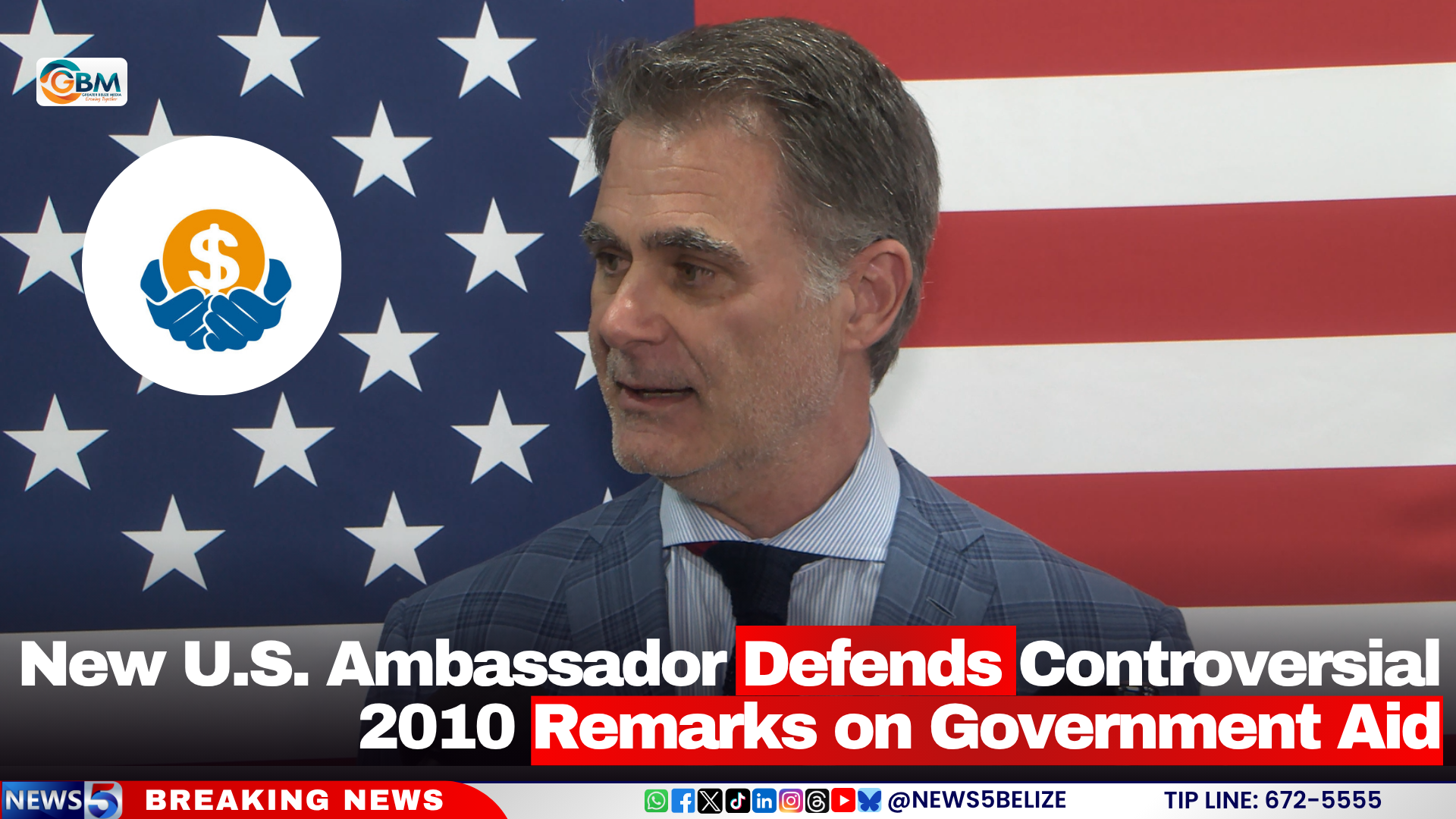
More than 15 years after igniting public backlash with inflammatory remarks about government aid for low-income communities, newly confirmed U.S. Ambassador to Belize Andre Bauer is pushing back against criticism, arguing his words were taken out of context and misrepresented by political opponents.
The controversy dates back to 2010, when Bauer, then serving as an elected official in the U.S., made a now-infamous comparison during a public town hall meeting focused on federal and state assistance programs. During the discussion, he equated ongoing cash aid for unhoused and low-income people to feeding stray animals, a comparison that immediately drew fierce condemnation from across the political spectrum and cemented a reputation for harsh rhetoric around social policy that has followed him to his new diplomatic post.
In his first public comments addressing the issue since taking up his ambassadorial role, Bauer pushed to reframe the conversation around what he says was the core point of his 2010 remarks. He claims the commentary was never intended to demonize people living in poverty, but rather to critique the structure of long-standing government aid programs that he argues fail to address intergenerational cycles of economic dependency.
“It was about a generational problem where we don’t lift people up,” Bauer explained in a recent interview. “If you just give someone enough dollars to get by but you show them no vehicle to lift themselves up, America is about opportunity. It’s about giving people a vehicle, pathway to better themselves and their family.”
Adding personal context to his perspective on social assistance, Bauer also opened up about his own experience growing up in economic instability. He shared that he qualified for free school lunch programs throughout his childhood, raised in a broken home facing significant financial hardship. This personal experience, he says, has shaped his belief that aid programs should be structured to create upward mobility, not just temporary financial relief.
Instead of direct, unconditional cash assistance, Bauer argues that government support should focus on wrapping around services that remove barriers to economic self-sufficiency. He points to three key investment areas: affordable healthcare, reliable transportation, and accessible childcare, all of which he says remove common obstacles that prevent low-income people from accessing stable employment or continuing education to boost their long-term earning potential.
At the core of his policy stance is a consistent belief that government should prioritize expanding access to opportunity and creating onramps for economic advancement, rather than enabling permanent reliance on public assistance. As he settles into his role as the top U.S. diplomatic representative to Belize, this framing makes clear his approach to development and aid policy will likely focus on sustainable, self-directed economic progress for recipient communities.