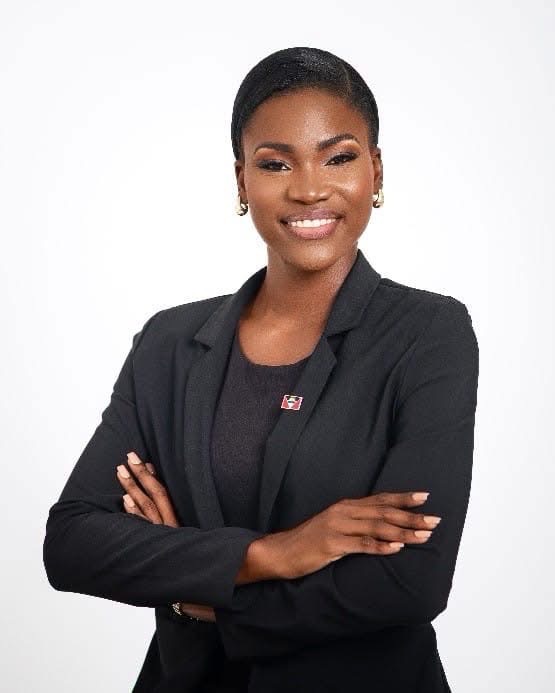
The Caribbean Community (CARICOM) Secretariat has made a landmark announcement for regional youth development: Janet Simon, a youth advocate hailing from Antigua and Barbuda, will take up the post of Dean of the CARICOM Youth Ambassador Corps starting September 1, 2026.
Simon has outlined a clear, action-focused agenda that will shape her one-year rotating tenure, with six core priorities at the forefront of her leadership: expanding evidence-based nutrition education across regional education systems, scaling up prevention initiatives for non-communicable diseases (NCDs), expanding accessible youth mental health support, advancing community peacebuilding, boosting practical life skills training for young people, and creating clearer, more equitable pathways to sustainable youth employment. Her overarching mission is to arm Caribbean young people with the knowledge, capabilities, and systemic support they need to become engaged, active citizens and drive the future direction of the CARICOM bloc.
In a statement following the announcement, Simon shared her enthusiasm and on-the-ground perspective for the role. “I am deeply honoured to take on this responsibility as Dean of the CARICOM Youth Ambassador Corps,” she said. “My years of work alongside young people across every corner of the region have made clear just how urgent it is that we strengthen mental health services and improve nutrition access for our youth. I firmly believe that by empowering young peers to lead outreach and service design, we can fundamentally transform how young people access the support they need.”
Michele Small-Bartley, the CARICOM Secretariat’s Programme Manager for Youth Development, extended a warm welcome to Simon, highlighting the unique value she brings to the regional programme. “Janet arrives in this role with a profound, long-standing passion for youth development, a creative approach to longstanding challenges, and an unwavering commitment to public service,” Small-Bartley noted. “I am particularly encouraged by her dedicated focus on mental health advocacy and the fresh, thoughtful strategies she plans to bring to the CARICOM Youth Ambassador Programme. Her leadership comes at a key moment as we work to expand the voice, increase the visibility, and strengthen the meaningful participation of CARICOM Youth Ambassadors across the entire region.”
Beyond her regional work, Simon has already built a robust track record of impactful youth-focused initiatives at the national level. She is widely recognized for her national School Tour programme, which has delivered practical life skills education to thousands of secondary and primary students across Antigua and Barbuda, as well as her innovative “Peace through Art” community series, which uses creative expression to resolve conflict and build social cohesion. She also regularly leads capacity-building workshops for local and national youth organisations, and is an active core member of Healthy Caribbean Youth, where she has led advocacy for comprehensive school nutrition policies and expanded school-based mental health services. Her advocacy has also extended to the global stage, where she has presented Caribbean youth priorities to senior leaders at both the World Bank and the United Nations, centering the unique needs of small island developing states’ youth populations in global policy conversations.
To contextualise the role, the position of Dean of the CARICOM Youth Ambassador Corps rotates annually among CARICOM Member States and Associate Members, following an alphabetical order rotation system. The CARICOM Youth Ambassador Programme (CYAP), which the Dean leads, is the official youth wing of the 15-nation regional bloc. It functions as a dynamic regional network of young leaders, tasked with advocating for the needs of their peers, amplifying youth perspectives in regional and national policy discussions, and advancing the bloc’s core Caribbean integration goals.
The programme traces its origins back to 1993, when it launched under the name Regional Youth Ambassador Programme (RYAP) during the CARICOM Conference of Heads of Government, held to mark the 20th anniversary of the signing of the Treaty of Chaguaramas. It was formally established as an official CARICOM programme in 1994, initially operating under the coordination of the Culture Desk at the CARICOM Secretariat, before being transferred to the reactivated Youth Desk in 1997. Since its founding, the programme has delivered three core long-term impacts: it has expanded young people’s knowledge and awareness of regional CARICOM priorities and challenges; it has raised the profile of youth leadership at both national and regional levels; and it has created formal pathways to integrate the views and experiences of young people from across the Caribbean into national, regional, and international policy and programming.