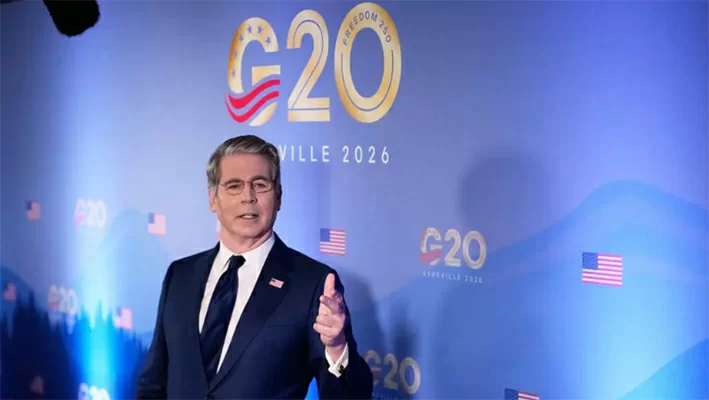
Global finance leaders from the G20 wrapped up two days of high-stakes talks in Asheville, North Carolina on Tuesday, securing broad consensus on a final joint declaration even as deep rifts over Russia’s participation and disagreements with China threatened to derail progress. The summit, hosted by the United States in its rotating 2026 G20 presidency, brought together top financial officials to address a slate of pressing global issues ranging from the ongoing war in Ukraine to Middle East tensions, trade frictions, and systemic global economic imbalances.
Controversy erupted ahead of the gathering over the invitation extended to Russia’s Finance Minister Anton Siluanov, a move that sparked fierce pushback from European allies that support Ukraine in its defense against Russia’s full-scale invasion. European officials formally protested Siluanov’s presence at the summit, resulting in the Russian minister skipping the traditional group photo that is a staple of G20 gatherings. A European Union spokesperson noted that the invitation for Siluanov was announced only at the last minute, creating unnecessary “inconvenience” for participating delegations.
Canadian Finance Minister François-Philippe Champagne acknowledged that the debate over Russia’s participation cast a shadow over the summit’s working atmosphere. EU economic commissioner Valdis Dombrovskis emphasized that normalizing Russia’s participation in multilateral global forums is unacceptable at this juncture, pointing to Moscow’s ongoing unprovoked aggression and documented attacks on civilian infrastructure and populations across Ukraine.
Despite the widespread European frustration, U.S. Treasury Secretary Scott Bessent, who opened the summit, defended the decision to include Russia. Speaking to reporters after the summit concluded, Bessent stressed that keeping lines of communication open remains a critical priority for global diplomacy, noting that Siluanov is not currently subject to international sanctions and that productive dialogue is necessary even amid deep diplomatic disagreements. Bessent also confirmed that Russia’s presence did not disrupt the formal negotiations on key agenda items.
Beyond the dispute over Russian participation, the summit also exposed new divisions between Western nations and China over geopolitical and economic issues. One key provision in the final declaration calls for “free, safe and predictable navigation through the Strait of Hormuz” — a critical global energy chokepoint that has seen repeated disruptions since a new escalation of regional conflict in February. China refused to endorse this specific section of the text.
Additional disagreements emerged over language addressing persistent global economic imbalances. The U.S. pushed for language calling out that “excessive and sustained imbalances create risks and can cause economic disruption,” a reference to longstanding international criticism of China’s industrial overcapacity, which many trading partners argue creates unfair competition in global markets. Beijing formally objected to this provision in the final statement.
Founded in the aftermath of the 1997-1998 Asian financial crisis, the G20 brings together 19 major national economies plus the European Union and African Union, with a core mandate of promoting global financial and economic stability. this year’s finance minister summit serves as a precursor to the full G20 leaders’ summit, scheduled to be hosted by U.S. President Donald Trump in Miami this coming December.
On the sidelines of the main G20 negotiations, finance ministers from the G7 group of advanced economies held separate talks focused on coordinating continued support for Ukraine, where combat operations have intensified over the past summer. German Finance Minister Lars Klingbeil highlighted the recent “surge in brutal missile attacks against civilian populations” in Ukraine and reiterated the international community’s commitment to ending Russian aggression. Ukraine’s finance minister joined the G7’s support coordination discussions remotely, as the country continues to work with international partners to secure long-term financial and military assistance.