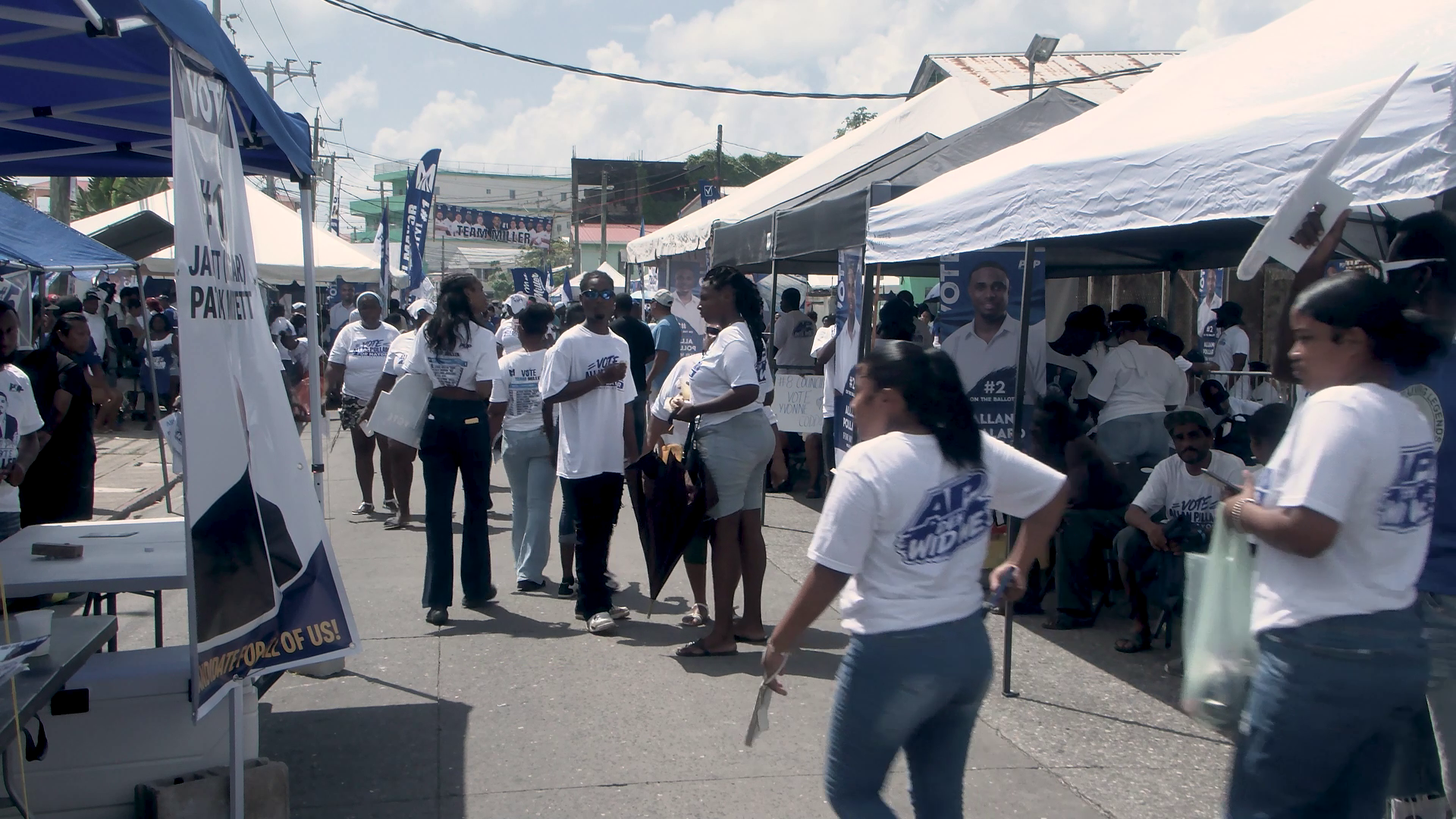
After the dust settled on Sunday’s People’s United Party (PUP) internal convention that confirmed a winner for the party’s mayoral nomination, a new, far more controversial question has moved to the forefront of political discussion: just how much money did that competitive victory cost?
The two candidates vying for the nomination, Eluide Miller and Allan Pollard, both joked that their grueling, weeks-long campaign left their personal finances drained. But behind those lighthearted quips lies clear evidence of a well-resourced, highly organized political operation on both sides, indicating that large sums of capital were poured into the internal party contest. Independent preliminary estimates suggest total spending across the campaign and convention day could have climbed as high as one million dollars total, split between the two candidates.
This unprecedented scale of spending for an internal party vote has drawn sharp scrutiny from within the PUP itself. Kareem Musa, the Area Representative for Caribbean Shores and the country’s Minister of Governance, has publicly raised questions over whether internal party elections have become unacceptably expensive, and is pushing forward long-awaited campaign finance reform legislation.
Speaking to reporters on the ground following the convention, Musa acknowledged the scale of spending was staggering. “When you see all the custom-branded t-shirts, all the large event tents, and the full-scale mobilization efforts across the constituency, it is impossible to miss that a significant amount of money was laid out today. It’s concerning for me, same as it is for you. This has been an ongoing issue in our politics for generations, but that will change once we pass formal campaign finance legislation. As Minister of Governance, I am confident and hopeful we will deliver that change.”
When asked about pressure from the National Trade Union Congress of Belize (NTUCB) and other key social partners to move forward with reform, Musa confirmed he has already held multiple working meetings with stakeholder groups, and pledged that a full draft of the campaign finance legislation will be completed before the end of 2026. He confirmed he will throw his full support behind the bill when it comes to the Cabinet for approval.
Political analyst Paul Lopez put forward his own estimate of the spending, suggesting that each individual candidate likely spent at least $500,000 dollars when factoring in pre-convention campaigning investments. Musa pushed back slightly on that exact figure, noting that an accurate total is hard to pin down, but agreed that the final sum is substantial regardless. “It is hard to give an exact number, but there is no question the party machinery here is extremely robust, and the turnout and energy are good signs for the PUP heading into the next cycle,” Musa said.
When Lopez pressed whether that level of spending for an internal convention can be justified, Musa noted that this vote marks the first mayoral convention in the entire history of the PUP, making the contest high-stakes and explaining the unprecedented investment from both camps.
With the convention process now completed, the next critical test for the PUP will be unifying the party’s factions behind the nominee ahead of the national municipal elections scheduled for March 2027. It remains to be seen whether the bitter, expensive contest will leave lingering divisions that hurt the party’s electoral chances, or if the push for campaign finance reform will address growing public and internal concern over the commercialization of internal party politics.
*Note: This report is adapted from a televised evening news transcript, with standard orthography applied to Creole-language comments where applicable.*