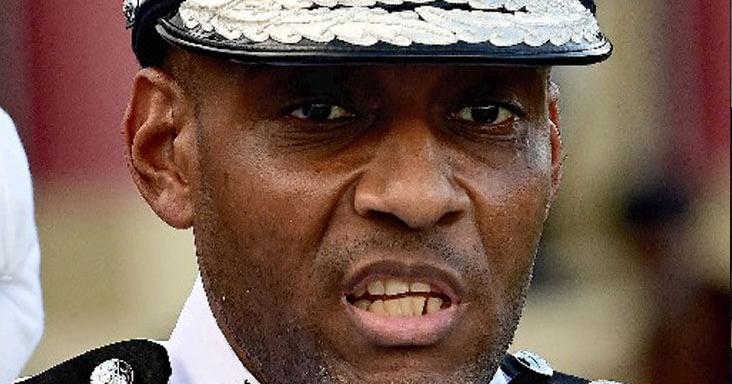
In the wake of a widespread wave of fake bomb threats that targeted critical public and private facilities across Trinidad and Tobago between mid- and late-August, the country’s top law enforcement official has confirmed that all alerts were deliberate hoaxes crafted to sow public panic and disrupt regular operations of targeted organizations. Police Commissioner Allister Guevarro issued a public statement via voice note from the Trinidad and Tobago Police Service (TTPS) on Monday, warning that the individuals behind the coordinated campaign cannot evade capture by hiding behind the anonymity of digital cyberspace.
Guevarro detailed the scope of the threats, noting that the targets spanned a broad cross-section of national infrastructure, including magistrates’ courts, national government ministries, a popular commercial shopping mall, multiple hotels, state government offices, and foreign diplomatic missions. On just the first day of the campaign, August 19, 11 separate threats were delivered across a 40-minute window, hitting eight district magistrates’ courts along with three high-profile sites: Kent House, Valpark Shopping Plaza, and Tobago’s central judicial building. Additional coordinated threats were registered on August 22 and August 28, this time targeting government offices, hospitality properties, and diplomatic missions, according to official records.
Every threat report was prioritized for full investigation by the TTPS’s specialized Explosive Detection and Disposal Unit, which received full operational support from the Trinidad and Tobago Fire Service. Guevarro confirmed that after systematic searches of every targeted location, no explosive materials or suspicious devices were ever recovered at any site.
“These hoax threats were intentionally designed to disrupt daily operations at these key institutions, and more than that, they represent a cowardly attempt to spread fear among ordinary members of the public,” Guevarro said in his statement. He classified the hoax campaign as a criminal act of profound irresponsibility, noting that the perpetrators sought to undermine public trust, disrupt the delivery of justice through the court system, and drain limited public resources that could be allocated to other pressing community needs. “These fake threats weaken our national security framework and divert law enforcement attention away from legitimate policing priorities. The public must understand that anyone who carries out these acts is attacking the core stability of our democracy and the safety of our local communities,” he added.
Guevarro also moved to reassure the public that there is no credible intelligence to support claims of a planned violent attack tied to the country’s upcoming Independence Day celebrations, or any planned attack against state institutions or diplomatic missions. “The national threat level remains low. The primary risk stemming from this hoax campaign is public panic and operational disruption, and no single credible threat of a real attack has been uncovered,” he explained. Despite the lack of credible risk, Guevarro confirmed that TTPS has already elevated its operational alert status and rolled out enhanced security measures to guarantee that all scheduled Independence Day events can proceed without disruption or safety concerns.
Investigations into the origin of the threats remain active, Guevarro confirmed, though he noted that complex cybercrime probes often require extended timelines as investigators work to gather admissible legal evidence. He referenced a parallel cyber threat case from the previous year to underscore that digital anonymity is not a barrier to prosecution. In that earlier incident, a perpetrator launched a cyber terror campaign against Rio Claro Secondary School, incorrectly believing that the internet would allow them to remain untraceable. “That person foolishly believed that the internet gave them the luxury of anonymity. Right up until the moment my officers removed their freedom, they still thought they could not be caught. And then the handcuffs clicked,” Guevarro recounted. That case concluded with the arrest of a 16-year-old boy in May of this year, who faces multiple harassment charges for cyber threats made against students and staff at the school between November 2025 and February 2026.
Addressing the perpetrators directly, Guevarro called the group unpatriotic, cowardly “keyboard warriors” and emphasized that law enforcement will not back down from pursuing them. “Time is longer than twine. These hoax threats are no joke. They are an attack on our courts, our institutions, and our people, and the TTPS will follow every lead relentlessly. Those responsible will face full justice under the law,” he said. “I give my assurance to all citizens that Independence Day celebrations will proceed safely, securely, and without interruption.”
Homeland Security Minister Roger Alexander echoed Guevarro’s firm stance in a separate warning issued Saturday, after TTPS announced it was probing an unconfirmed new threat targeting embassies, diplomatic facilities, and government buildings over the Independence Day holiday weekend. Addressing anyone planning to carry out violent or disruptive acts over the holiday, Alexander said: “Don’t you dare! We will do anything we have to, by any means necessary, to put down and end any madness you attempt. And we will do it as easily as drinking water, and continue the day’s proceedings like nothing ever happened.”