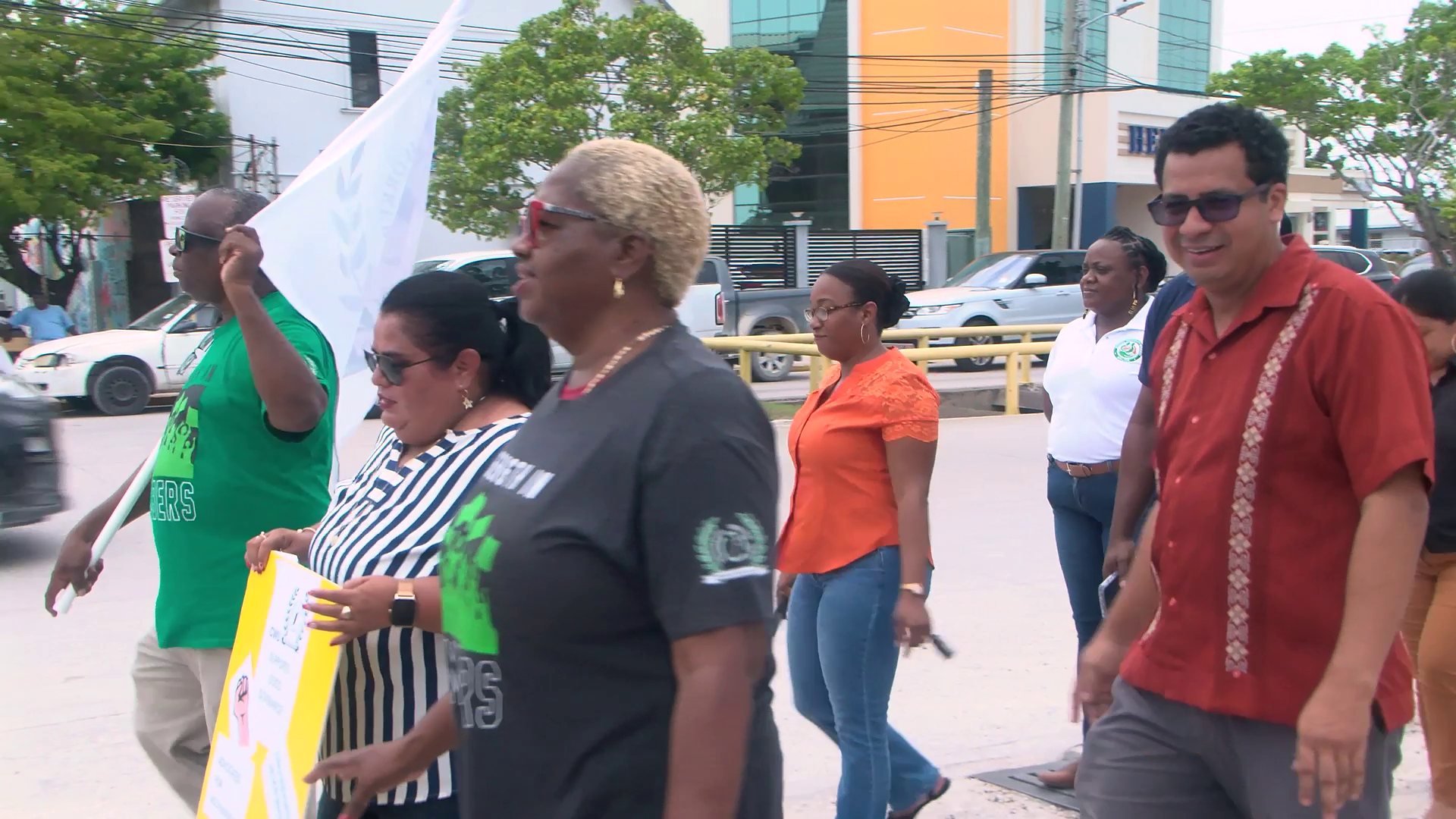
As August 2026 enters its final week, organized labor in Belize has built two straight weeks of sustained public pressure on the Briceño administration, with no official response to their collective demands leaving unions poised to ramp up mass action across the country.
The standoff began when major labor groups joined forces to formally present a list of priority concerns to Prime Minister Briceño, following a public, two-hour press conference that laid out their shared demands. First the Public Service Union took demonstrations to the streets, and the National Trade Union Congress of Belize (NTUCB) quickly followed with its own coordinated protest actions. With no clear policy or administrative response coming from the Government of Belize (GOB), questions have grown over whether the administration prioritizes the concerns of organized labor and working citizens.
Union Senator Glenfield Dennison emphasized that grassroots labor movements rely on deliberate momentum to push for change, noting that the high-profile Digicel controversy had already sparked public anger that the unions are building on. Beyond that high-profile issue, Dennison pointed to a range of long-simmering problems the movement is working to highlight, including the longstanding SARA issue and growing concerns over pension security raised by the Communication Workers Union (CWU). Dennison argued that political power only responds to pressure when forced, confirming that unions have a graduated action plan to continue building momentum, with the Belize National Teachers Union (BNTU) set to join the movement as the next major phase of escalation. When BNTU joins, Dennison said, cross-union unity will draw widespread public participation, forcing the government to engage rather than ignore the demands.
NTUCB President Ella Waight called the Prime Minister’s ongoing silence not just disappointing, but outright disrespectful to all Belizean citizens. Waight stressed that the unions’ demands are not arbitrary or self-serving – they are rooted in concerns collected from rank-and-file union members, ordinary citizens across the country, even leaks from sitting cabinet members. With public frustration already spilling out across social media, Waight urged Belizeans to move beyond online commentary and join physical protests to demonstrate the strength of public discontent.
She called out so-called “Facebook warriors” who only voice anger from behind computer screens, noting that current protest participants are already sacrificing their lunch breaks to stand in the sun and demonstrate their commitment to change. Waight argued that visible, in-person public action is the only way to force the government to acknowledge and address the widespread concerns that have brought the unions to the streets.
This report is based on a transcript from a local Belizean evening television broadcast, with all statements from speakers preserved accurately.