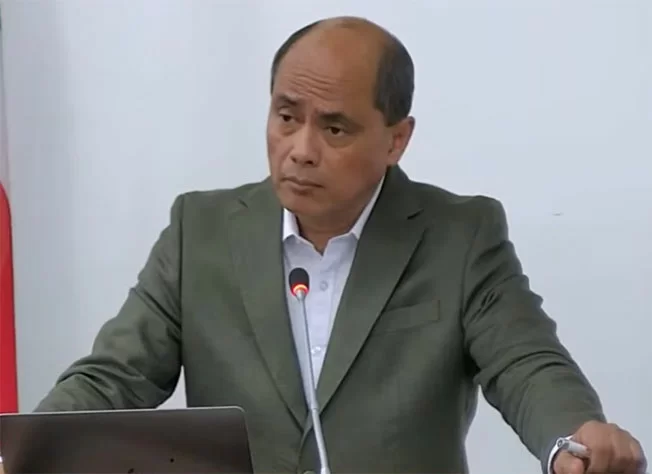
As debate over the new General Tax Act (AWB) gets underway in the Dutch National Assembly, the leader of the NPS parliamentary faction, Jerrel Pawiroredjo, has voiced conditional support for expanding the Dutch Tax and Customs Administration’s (Belastingdienst) powers to crack down on tax evasion and the untapped informal economy, while raising urgent alarms over unregulated authority, inadequate institutional capacity, and threats to taxpayer rights.
Pawiroredjo’s core argument centers on a fundamental balance: a powerful tax administration can only function effectively within the framework of a strong rule of law that equally protects the rights of compliant taxpayers. For the system to retain public trust, he argues, the government must demonstrate that expanded fiscal powers are paired with clear boundaries, principles of due process, and a guarantee that compliant citizens will not face unnecessary punitive measures.
Addressing the problem of the informal economy, Pawiroredjo noted that currently registered, tax-compliant individuals and businesses are already easily audited, while large swathes of economic activity remain entirely outside the tax system’s oversight. He stressed that the AWB’s new expanded powers should not be used to pressure already compliant taxpayers, but exclusively to root out unreported economic activity. Under the new legislation, the Belastingdienst will gain broader authority to request financial data and documents, audit business records, obtain information from third parties, and access private buildings and properties under specific conditions. Pawiroredjo has called on the ruling government to provide clear details on how these powers will be targeted: what data sets will be cross-linked, which high-risk informal sectors will be prioritized, and what specific strategies will be used to identify unregistered operators.
While Pawiroredjo stressed that he has no ideological opposition to a robust tax authority, as insufficient powers would prevent the agency from fulfilling its legal mandate to collect revenue for public services including education, healthcare, infrastructure, national security, and social welfare, he insisted that all government authority must be bounded by law. Core legal principles including procedural fairness, proportionality, legal certainty, and equal treatment must guide every use of new powers. A power being formally written into law, he argued, does not grant the agency carte blanche to use it in every scenario without assessment. The government, he said, must outline explicit thresholds for when the agency can request third-party data, audit private records, demand access to business premises, or impose fines, and must always prioritize the least intrusive measure possible to achieve compliance.
One key provision drawing Pawiroredjo’s scrutiny is the rule that filing an objection to a tax assessment does not automatically suspend the requirement to pay the assessed amount. While he acknowledges the rationale for this rule — to prevent bad-faith objections from being used solely to delay payment — he warned that serious harm can be done to legitimate businesses that file well-founded objections. If the tax authority proceeds with collection actions such as asset seizure while the objection is pending, and the assessment is later found to be incorrect, the business may already suffer irreversible financial damage. To address this, he called for a clear collection policy that allows for deferred payment or suspension of enforcement actions when a properly motivated objection is submitted, noting that the relevant legislative article should not become a free pass to deploy the harshest possible measures early in a legitimate dispute.
Pawiroredjo also drew attention to risks stemming from the Belastingdienst’s ongoing digital transformation. While electronic communication and digital tax services offer clear efficiency gains, he pointed out that technical failures can create unintended barriers to taxpayer rights: notifications may fail to send, digital portals can experience outages, and documents may be marked as delivered in administrative systems even if the taxpayer never actually received them. To avoid penalizing taxpayers for administrative or technical errors outside their control, he demanded clear rules outlining when objection periods officially start, and which party bears the burden of proving that an electronic message was actually sent and received. No taxpayer should lose their right to appeal through no fault of their own, he emphasized. As the tax authority gains greater access to personal and financial data from banks, suppliers, shareholders and other third parties, Pawiroredjo also stressed that taxpayers must be guaranteed full access to all information used to generate assessments or fines, with clear protocols for due process and access to personal tax records.
Beyond questions of rights and power, Pawiroredjo raised a critical practical concern: does the current Belastingdienst actually have the institutional capacity to implement the sweeping new law effectively? The AWB imposes new obligations not just on taxpayers, but on the tax authority itself: more audits mean more open cases, expanded objection procedures require additional trained staff, robust due process demands more time per case, digital transformation requires reliable, secure information infrastructure, and fair imposition of fines requires well-trained, expert personnel. Pawiroredjo has called on the government to confirm whether a full implementation capacity analysis has been conducted ahead of the vote, and to disclose how many additional staff will be required, what IT upgrades will be needed, what the total implementation cost will be, and when the agency will be fully prepared to roll out the new framework. “When we introduce a modern piece of legislation into an organization that lacks the capacity to implement it, we create a massive problem for ourselves,” he warned.
Pawiroredjo also called for a broader cultural shift within the tax administration, arguing that the agency should move away from a default presumption of guilt toward taxpayers, and that the government must get its own administrative house in order. He highlighted common cases where taxpayers have made payments that are never properly processed administratively, leaving the taxpayer to bear the burden of proving they already fulfilled their obligation. He also proposed a default minimum two-week response period for taxpayers answering information requests from the agency, except in cases of verifiable urgent need.
The NPS faction will submit a full list of proposed amendments to the minister leading the legislation. A portion of the changes are technical adjustments, but many directly address core issues of legal certainty, taxpayer protection, and limits on executive power. Repeating his core position, Pawiroredjo stressed: “I absolutely support a strong Tax Authority. We need one.” But ultimately, he said, the goal must be “a strong taxpayer in a strong rule of law.” He even suggested that compliant taxpayers willing to fulfill their tax obligations should be welcomed and supported by the government, noting they have every right to a state that helps them rather than creates unnecessary barriers to compliance.