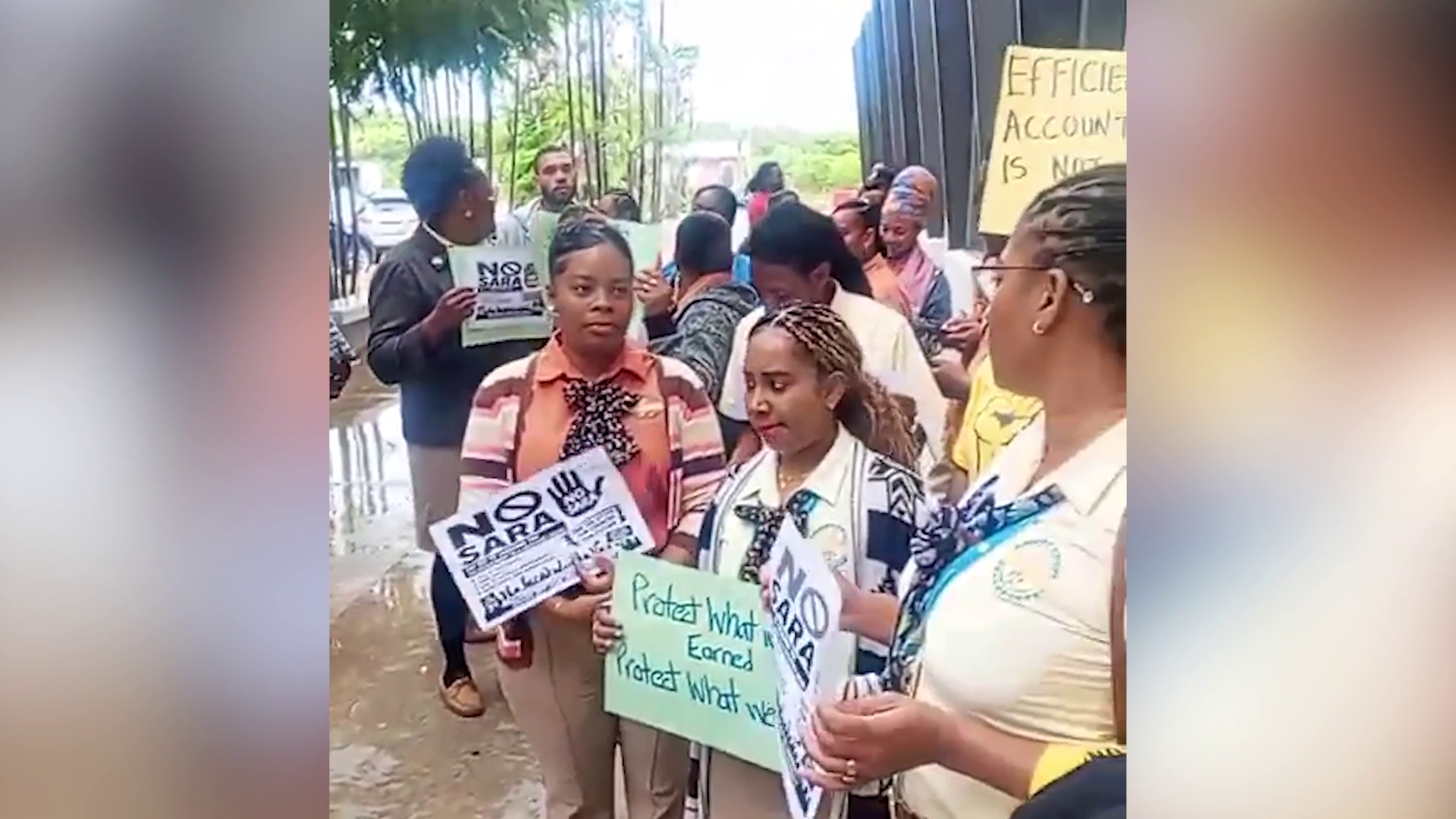
A heated debate has erupted in Belize over the government’s plan to establish the Semi-Autonomous Revenue Authority (SARA), a proposal designed to overhaul the country’s outdated tax system and adapt it to the shifting demands of the 21st-century digital economy. While state officials frame the reform as a critical step toward modernization, public sector workers and prominent legal experts have raised sharp objections, triggering industrial action and exposing deep divisions over how tax administration reform should proceed.
On Wednesday, hundreds of public officers staged a walkout to rally alongside tax employees opposed to the SARA initiative. The Public Service Union has sounded the alarm that the restructuring would strip workers of core job protections that have long been enshrined in public sector employment agreements. Despite this growing pushback, Michelle Longsworth, director of the Belize Tax Services (BTS), has defended the proposal, arguing that SARA is the natural culmination of seven years of incremental modernization work already underway at the agency.
Longsworth explained that the changing global tax landscape demands specialized skill sets that the current rigid public sector structure cannot easily accommodate. From data analytics and forensic auditing to risk-based assessment and cross-border tax cooperation, new domains of tax administration have emerged as Belize takes on greater international compliance obligations. Under the current system, she noted, the agency lacks the autonomy to reshape its workforce, upskill existing employees, and create clear growth pathways for staff. SARA would grant the agency greater flexibility in human resources management, she said, delivering the efficiency gains required to keep pace with a rapidly evolving digital economy.
Critics, however, question why a brand-new statutory body is needed to deliver these changes, when BTS is already making progress on modernization. Leading the opposition is Darrell Bradley, a prominent constitutional attorney and lecturer, who acknowledges that greater efficiency in tax administration is a necessary goal, but argues the government has failed to justify creating a new semi-autonomous agency as the solution.
Bradley argues that if inefficiencies exist within the public tax service, the appropriate fix is to reform existing public sector institutions, not spin off a new statutory body. He contends that the core problems plaguing Belize’s public service — lack of merit-based promotion, insufficient transparency, and gaps in professional accountability — can be addressed within the current framework. Rather than creating a new entity to manage tax revenues, Bradley says the government should focus on strengthening existing governance structures to protect public funds and ensure fair tax collection.
He also emphasized that the government has a duty to collaborate with key stakeholders, particularly labor unions, from the earliest stages of policy design. “Government does not belong to politicians; it belongs to the people,” Bradley noted, arguing that the current confrontation, sparked by union pushback after the plan was already drafted, could have been avoided through inclusive partnership. He further challenged the government to present empirical evidence demonstrating that a semi-autonomous structure will deliver better outcomes for taxpayers and the public than targeted reforms to the existing system.
Notably, all sides involved in the debate agree that some form of tax system reform is necessary to meet Belize’s evolving economic needs. The core points of contention are not whether change is needed, but what shape that change should take, which stakeholders get a seat at the table during policy formation, and how to protect the rights and job security of public workers who will be affected by the transition. As the debate continues, the future of Belize’s tax modernization effort remains hanging in the balance.