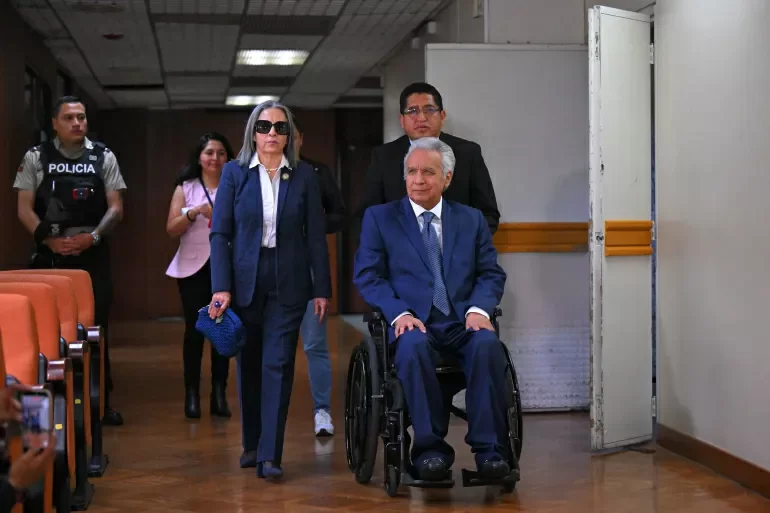
In a landmark ruling that marks one of the biggest corruption cases in modern Ecuadorian history, a national court in Quito has found former president Lenin Moreno guilty of bribery linked to widespread graft surrounding the construction of Ecuador’s largest hydropower facility, the Coca Codo Sinclair project.
The 73-year-old former head of state has been sentenced to five years in prison, and handed a lifelong ban from holding any public office in the country. The case centers on allegations of systemic fraud and bribery connected to the 1,500-megawatt hydroelectric plant, which entered commercial operation in 2016 but has been plagued by persistent technical issues and corruption accusations from its early development stages.
Prosecutors launched the formal investigation into the project in March 2023, uncovering alleged ties between Moreno, his immediate and extended family, local business partners, and Chinese commercial entities linked to the project. Presiding judge Manuel Cabrera confirmed that the evidence presented in court fully supported the bribery charges brought against the former president. According to court documents, China’s state-owned engineering firm Sinohydro paid approximately $76.1 million in bribes between 2009 and 2018, routed through a network of fake consultancy contracts to conceal the illegal payments.
In addition to Moreno’s conviction, multiple members of his family have also been found guilty in the scheme. His wife Rocio Gonzalez Navas, his daughter, two brothers, and the brothers’ spouses all received two-and-a-half year prison sentences. The court also sentenced Cai Runguo, the former Chinese ambassador to Ecuador, to five years in prison in absentia over his alleged role in the corruption network.
Investigators traced the illegal funds through a complex web of offshore bank accounts and shell companies registered in tax havens before the money reached Moreno and his family members. Court records show Moreno received more than $1 million in illicit payments during his tenure as Ecuador’s vice president between 2007 and 2013, a period when the Coca Codo Sinclair project was being negotiated and finalized.
Moreno has forcefully denied all allegations against him throughout the legal process. During his trial, he argued that he was never involved in signing or overseeing the project’s contracts, and claimed responsibility for the corruption lies with other officials who handled the contract negotiations and solicited bribes. Moreno, who served as Ecuador’s president from 2017 to 2021, voluntarily returned to Ecuador from Paraguay ahead of his trial to face the judicial process.
The Coca Codo Sinclair project is a strategic infrastructure asset for Ecuador’s national energy supply, and was developed with major loan financing from Chinese institutions. For years, it has been overshadowed by both costly technical malfunctions and persistent corruption claims. The high-profile conviction of a former president highlights growing global scrutiny of corruption risks associated with large-scale infrastructure development projects across Latin America, many of which involve significant foreign investment and partnership.