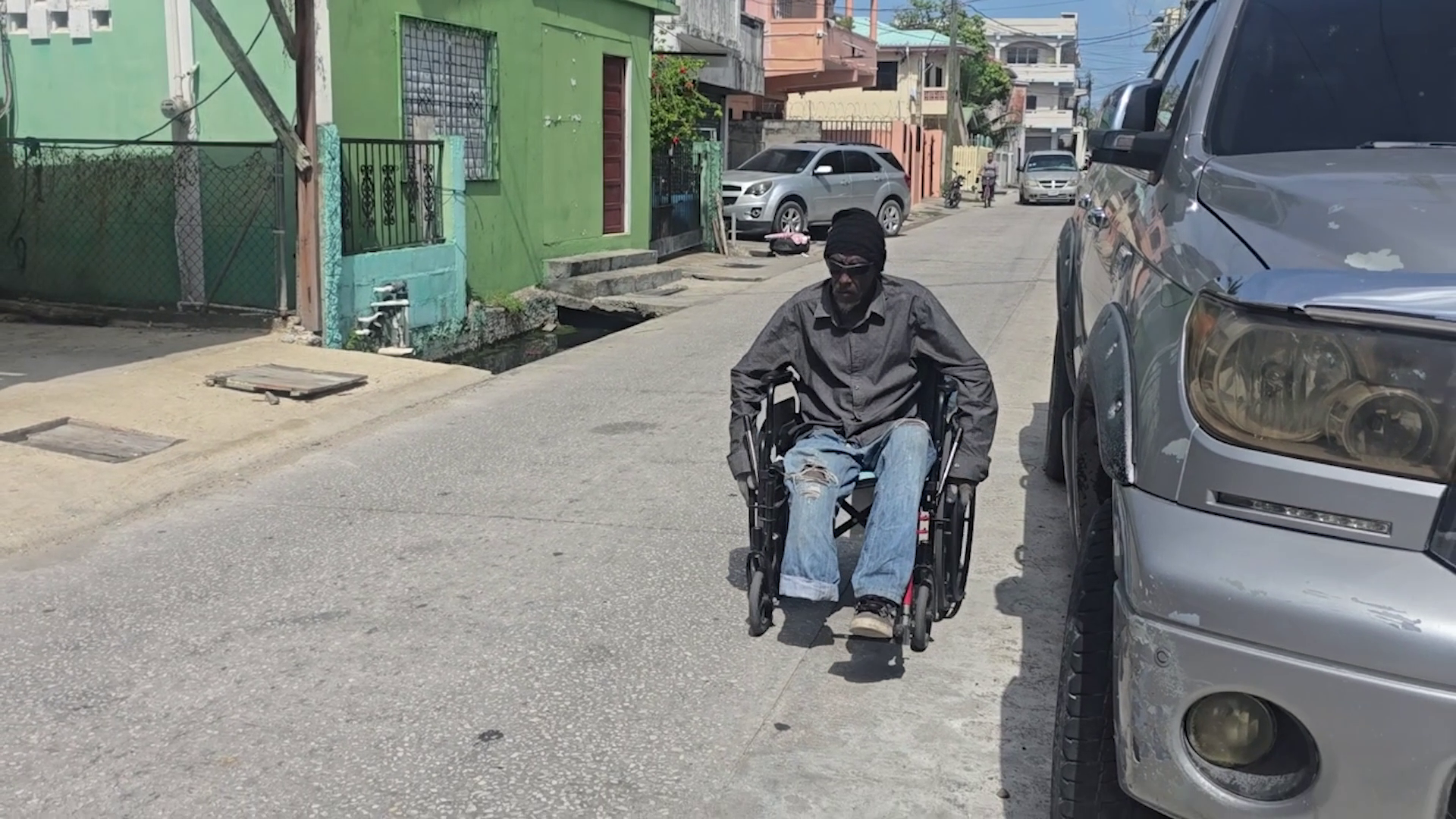
For millions of people around the world, the ability to quickly flee danger and access safe spaces is an unspoken, taken-for-granted part of daily life. But for wheelchair users and people with limited mobility across Belize, this basic security remains out of reach – a gap that disability advocates argue has made disabled people increasingly targets for violent crime, with deadly consequences in recent years.
The crisis came into sharp public focus following a string of high-profile fatal attacks targeting disabled Belizeans between 2024 and 2025. In 2025, Evadnie Jones and her son Luke were shot and killed inside their own yard. Their murders came just after the fatal shootings of two other wheelchair users, Trayson Gibson and Gion “Gizmo” Bernard, highlighting a pattern of targeted violence against this vulnerable community.
Marshall Nunez, Disability Desk Coordinator at Belize’s Ministry of Human Development, condemned the attacks as a mark of a deep, disturbing lack of societal empathy for disabled people. Speaking to local outlet News Five, Nunez criticized the perpetrators for targeting people who cannot escape or defend themselves. “That’s bad already [when people shoot indiscriminately]. But when you do that to one vulnerable person, you know, wheelchair man. That is despicable. That is unconscionable. Where is our humanity?” he said.
For Belizeans like 63-year-old Austin Burgess, the daily reality of disability-related vulnerability is a recent, life-altering shift. Just four months ago, Burgess underwent an emergency amputation after a late diagnosis of poor circulation in his foot, a complication that left him wheelchair-dependent overnight. Never expecting to face disability, he now lives alone, navigating a world that offers little structural support for limited mobility.
Burgess now relies on occasional charity from neighbors to access food and basic necessities, a sharp change from his former independent life. “It changed big time for me. Because then I have people weh de deh for me. But like I said, they only just bring the stuff. You understand me? I eat if I eat and if I no eat, then that’s up to me. What happened is, I no got nobody to do nothing for me otherwise,” he explained. He now urges all Belizeans to cultivate greater compassion for disabled community members, noting that disability can impact anyone at any time, whether from birth, illness, or random violence. “One of these days, it might happen to you. I da mi never expected this,” he said.
In a promising step forward, Belize passed its landmark first Disability Act in 2024, introducing sweeping legal protections for disabled people and mandating equal access to core public services including education and healthcare. But Nunez emphasized that legislation alone is not enough to solve the systemic exclusion and vulnerability disabled Belizeans face.
Passing the law, he explained, is only the first critical step toward full inclusion. The act is designed to protect the dignity and inalienable human rights of all disabled Belizeans, but cultural shift must follow legal change. “But the best we could do is to reach out to the society, to the community and make it be sensitive to our vulnerable people, to the people with disabilities,” Nunez said.
Looking ahead, Belize is moving forward with plans to launch a formal National Disability Commission, which will lead nationwide public education and awareness campaigns focused on disability rights and inclusion. Advocates hope the new body will help bridge the gap between legal protections and on-the-ground safety, ensuring that disabled Belizeans can live free from the threat of targeted violence and exclusion.
This report from Britney Gordon of News Five was first broadcast on August 27, 2026.