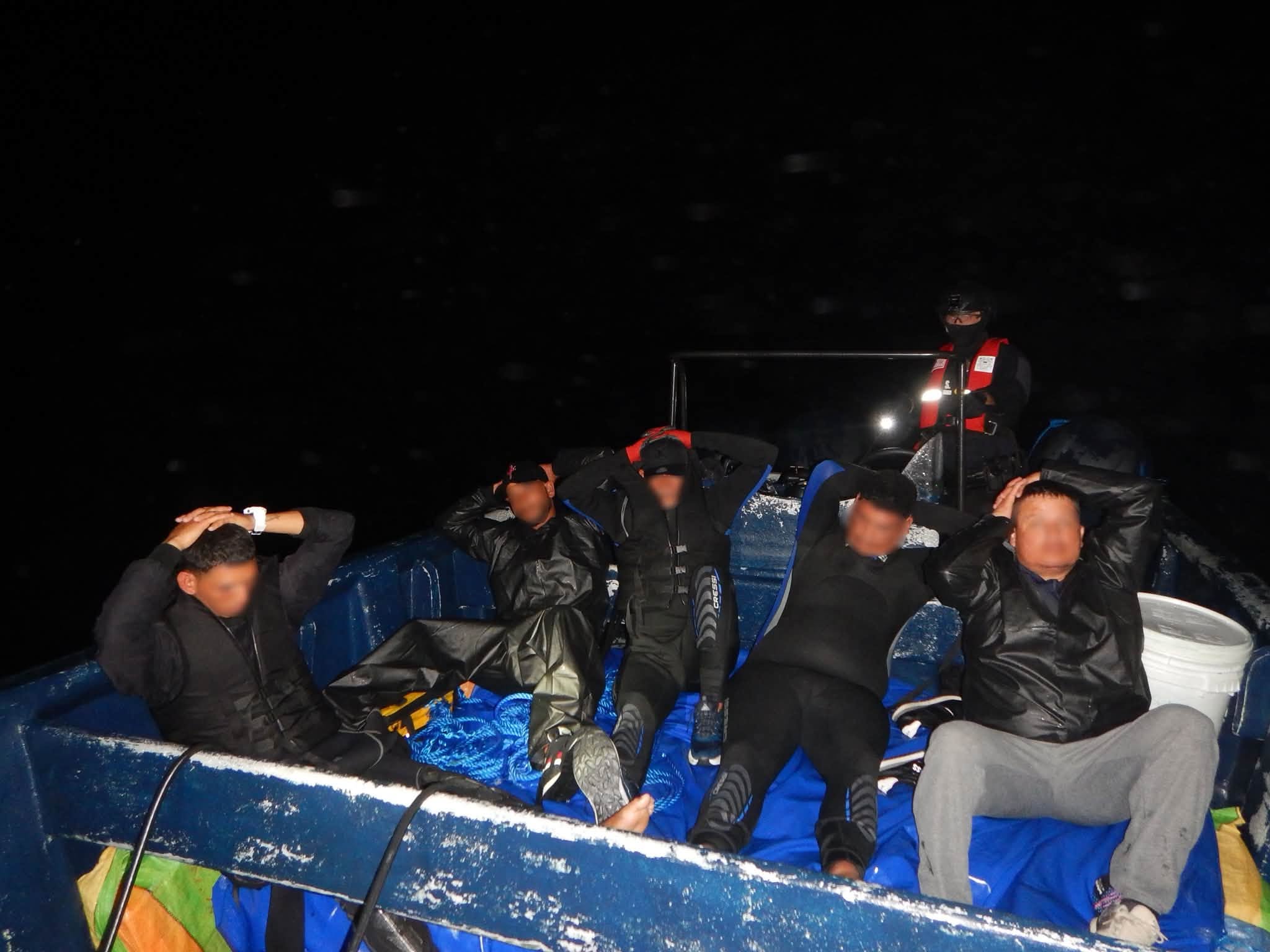
In a major successful maritime drug interdiction operation conducted in waters south of Puerto Rico, the U.S. Coast Guard has removed more than 7,200 pounds of cocaine from the Caribbean smuggling network, with an estimated street value of $54.5 million.
The interception unfolded on August 22, when the crew of the U.S. Coast Guard cutter Richard Dixon detected and intercepted a suspect vessel linked to drug trafficking approximately 50 nautical miles off the southern coast of the U.S. territory. This coordinated operation received critical airborne and on-water support from U.S. Customs and Border Protection’s Air and Marine Operations division, highlighting close inter-agency cooperation in counter-narcotics efforts.
Once officers boarded the 30-foot ‘go-fast’ speedboat — a vessel commonly used by smuggling rings for its ability to evade law enforcement — they discovered five individuals alleged to be connected to narco-terrorism networks, along with 25 separate bales of bulk cocaine packed for distribution. All five suspects were taken into custody, and they remain detained as federal investigators continue to unpack the details of the smuggling operation and trace the shipment’s intended route and connections to larger criminal networks.
Because the intercepted speedboat posed a significant risk to civilian and commercial navigation in the open ocean, authorities made the decision to destroy the vessel after removing contraband and detainees.
Lt. Cmdr. Michael Torgesen, commanding officer of the Richard Dixon, spoke publicly following the operation, praising the relentless commitment of his crew to countering maritime smuggling. “I’m constantly humbled by my crew’s dedication,” Torgesen said. “We’re proud to serve alongside them as we protect the nation’s maritime borders in the Caribbean.”
This seizure marks one of the larger cocaine busts in the Caribbean region this year, underscoring the ongoing priority of U.S. law enforcement to block smuggling routes that funnel illicit narcotics into the United States through Caribbean maritime chokepoints.