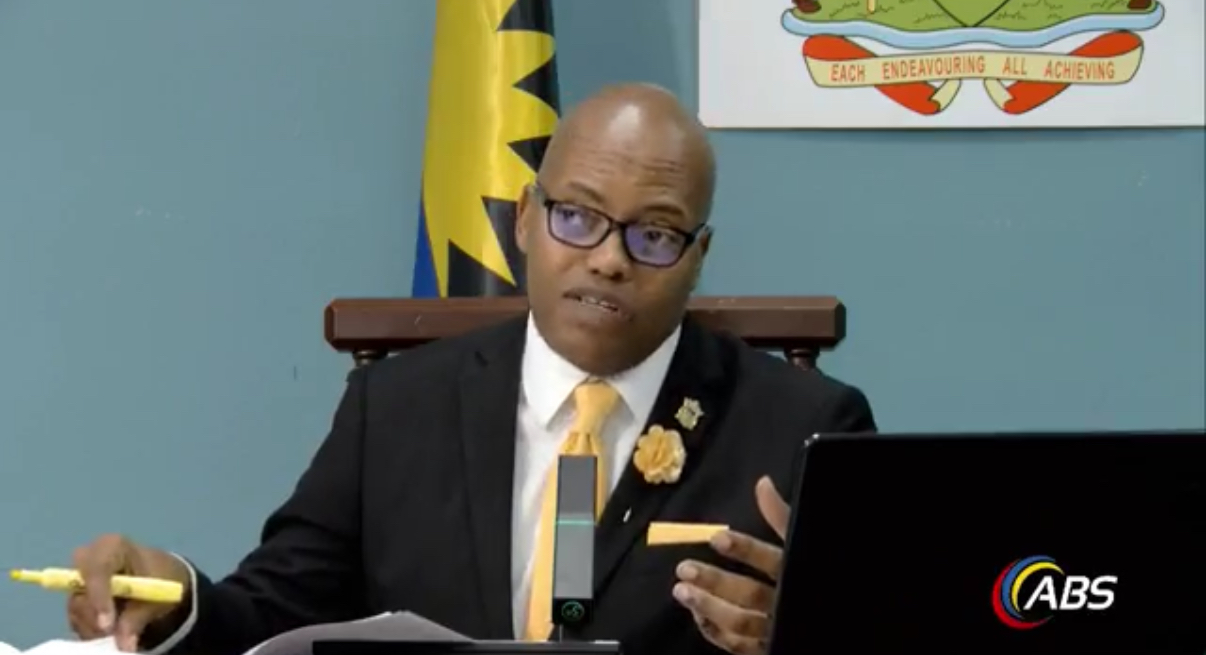
On Wednesday, August 26, 2026, the Cabinet of Antigua and Barbuda convened its weekly plenary session, opening with a devotional meditation led by a local pastor. Drawing from passages in the Book of Isaiah, the pastor centered his message on themes of divine constancy, national purpose, and collective dependence on wisdom beyond human capacity. He encouraged the Cabinet to seek spiritual guidance in deliberating on matters of national importance, prayed that members would receive wisdom to make just decisions, courage to confront crises, and compassion to prioritize public welfare, and called on all Antiguans and Barbudans to embrace values of unity, forgiveness, respect, and mutual care to build a peaceful, prosperous shared society. The devotional concluded with a dedication of the national government and its people to divine stewardship.
Following the opening meditation, the Cabinet advanced a series of critical policy and operational agenda items, starting with a renewed push for national food security. Facing persistent risks of prolonged dry seasons and erratic rainfall patterns driven by climate volatility, the administration directed the Ministry of Agriculture, Lands, Fisheries and the Blue Economy to drastically scale up efforts to build and rehabilitate agricultural water infrastructure, including dams, retention ponds, and other rainwater catchment systems. Minister Anthony Smith Jr. reported that his team had already begun pre-positioning work to capture forecasted rainfall, but the Cabinet called for accelerated expansion of the program to create a robust, interconnected national network of water storage for agricultural use.
The directive builds on an existing whole-of-government food security strategy that has already delivered tangible progress: earlier in 2026, 150 acres of underutilized public farmland were repossessed, with 75 acres allocated specifically to new youth and women producers to bring idle acreage back into productive use. Additional ongoing initiatives include the operation of a new Tissue Culture Laboratory in Bethesda, which produces disease-free, high-yield planting stock for local farmers, and technical partnerships with the Inter-American Institute for Cooperation on Agriculture (IICA) and the Caribbean Agricultural Research and Development Institute (CARDI) to develop climate-resilient crop varieties, strengthen seed security, and train producers in sustainable farming practices. Cabinet emphasized that all these efforts must ultimately result in greater volumes of affordable, locally produced food reaching domestic consumers, hotels, and restaurants, cutting the nation’s reliance on costly food imports and strengthening resilience against global supply chain disruptions.
A second key agenda item focused on finalizing security preparations for the 2026 Commonwealth Heads of Government Meeting (CHOGM), which Antigua and Barbuda is scheduled to host. Senior leadership from the Royal Police Force of Antigua and Barbuda and the Antigua and Barbuda Defence Force delivered a comprehensive joint briefing on the multi-layered security framework under development, which brings together national border security agencies, law enforcement, and defense assets in a coordinated, multi-agency approach supported by regional and international partners. Preparations cover not only protection for the summit venue and visiting delegates but also enhanced border and airport security, public safety protocols, cybersecurity defenses, and critical infrastructure protection, with deliberate planning to minimize disruptions to daily life for local residents and businesses. Cabinet expressed satisfaction with progress to date, called for continued joint training, simulation exercises, and readiness drills ahead of the summit, and reaffirmed the government’s commitment to providing all necessary resources for a safe, successful event.
In a related development aligned with CHOGM’s people-focused agenda, a delegation from the CHOGM 2026 People’s Forum and the Commonwealth Foundation presented a proposal to accelerate the growth of Antigua and Barbuda’s creative economy. The delegation, which included Commonwealth Foundation Director-General Razmi Farook and local People’s Forum leadership, outlined the significant untapped potential of the creative sector, particularly to create jobs and entrepreneurial opportunities for the nation’s youth. While Antigua and Barbuda already has a vibrant informal creative scene spanning music, film, visual arts, festivals, and performing arts, presenters noted that targeted policy interventions—including formalization of business registration, updated legislation, targeted incentives, improved data collection, and institutional support—could grow the sector’s contribution to GDP, mirroring success stories in other Caribbean nations. Jamaica’s creative economy contributes an estimated 5% of national GDP after formalization reforms, while the Dominican Republic’s targeted film industry incentives have driven massive expansion in local and international production. The delegation also highlighted opportunities to integrate creative industries with Antigua and Barbuda’s core tourism sector, including luxury tourism packages centered on music and arts experiences that attract international talent and generate additional economic activity. A White Paper and formal implementation roadmap for the sector is currently under development, and Cabinet welcomed the initiative, expressing strong interest in technical assistance from the Commonwealth Foundation to update national creative policies and build out a supportive legislative framework.
Turning to public sector labor issues, the Cabinet initiated a review of remuneration for public service heavy-duty equipment operators, a role critical to the delivery of the nation’s infrastructure development and maintenance programs. The work of these operators requires specialized training, advanced technical skill, experience, and carries significant responsibility operating expensive, high-risk machinery. After receiving a briefing on current pay rates and factors influencing the role—including prevailing market rates in the private sector, working conditions, and varying skill levels across job classifications—Cabinet agreed that a full, detailed review was warranted to ensure pay reflects the demands of the role while aligning with the government’s broader public sector wage structure and fiscal sustainability commitments. A dedicated subcommittee, comprising the Minister and Junior Minister of Works, the Attorney General, and the Minister for Social Transformation, was established to lead the review. The subcommittee will compare public sector pay rates to private sector comparables, evaluate job classifications and requirements, and consult with the recognized trade union representing operators to incorporate worker perspectives into final recommendations. Cabinet emphasized that no final decision on pay adjustments will be made until the subcommittee’s work is complete, and the government remains committed to balancing fair compensation for public workers with responsible fiscal management.
In infrastructure and security news, Cabinet welcomed upgrades to emergency response and aviation security capabilities at V.C. Bird International Airport, Antigua and Barbuda’s primary international gateway and critical economic hub for the nation’s tourism sector. Long-term partner Allen & Co. has delivered two new dedicated emergency response vehicles to support airport fire and medical teams, building on a history of partnership that includes a prior donation of a Jaws of Life rescue tool. The company also announced a new donation of an XRC 60-40 X-ray screening machine to enhance the airport’s aviation security screening capabilities. Allen & Co. outlined a commitment to long-term partnership beyond equipment delivery, including targeted training for operators, ongoing maintenance support, and access to replacement parts— a critical consideration for small island developing states facing unique logistics and sustainability challenges. Cabinet welcomed the partnership, emphasized that equipment investment must be paired with consistent training and maintenance to deliver long-term value, and commended airport personnel for their daily work to maintain safe, efficient operations. The government reaffirmed its commitment to ongoing investment in the airport’s safety and security capabilities to meet evolving international standards and support the nation’s economic growth.
Finally, Cabinet received an update on progress to implement a regional Passenger Name Record (PNR) framework to strengthen border security and combat transnational crime, with support from the CARICOM Implementation Agency for Crime and Security (CARICOM IMPACS). Antigua and Barbuda has already enacted national PNR legislation, a step CARICOM IMPACS has recognized as a critical milestone for both national and regional security. Under the proposed arrangement, Antigua and Barbuda will gain access to CARICOM’s existing regional PNR platform, which enables secure collection, processing, and analysis of passenger data to identify high-risk travelers, while adhering to strict national data protection and privacy requirements. The partnership will also support the establishment of a national Passenger Information Unit (PIU), with CARICOM IMPACS providing support for policy development, operational protocols, and specialized training for PIU officers in risk analysis, data protection, and intelligence development. A regional approach allows Antigua and Barbuda to leverage existing infrastructure and expertise, achieving significant cost savings compared to developing and maintaining a standalone national system. Cabinet approved the arrangement, clearing the way for final implementation planning and timeline development, as part of the government’s broader efforts to modernize border management and deepen regional security cooperation.