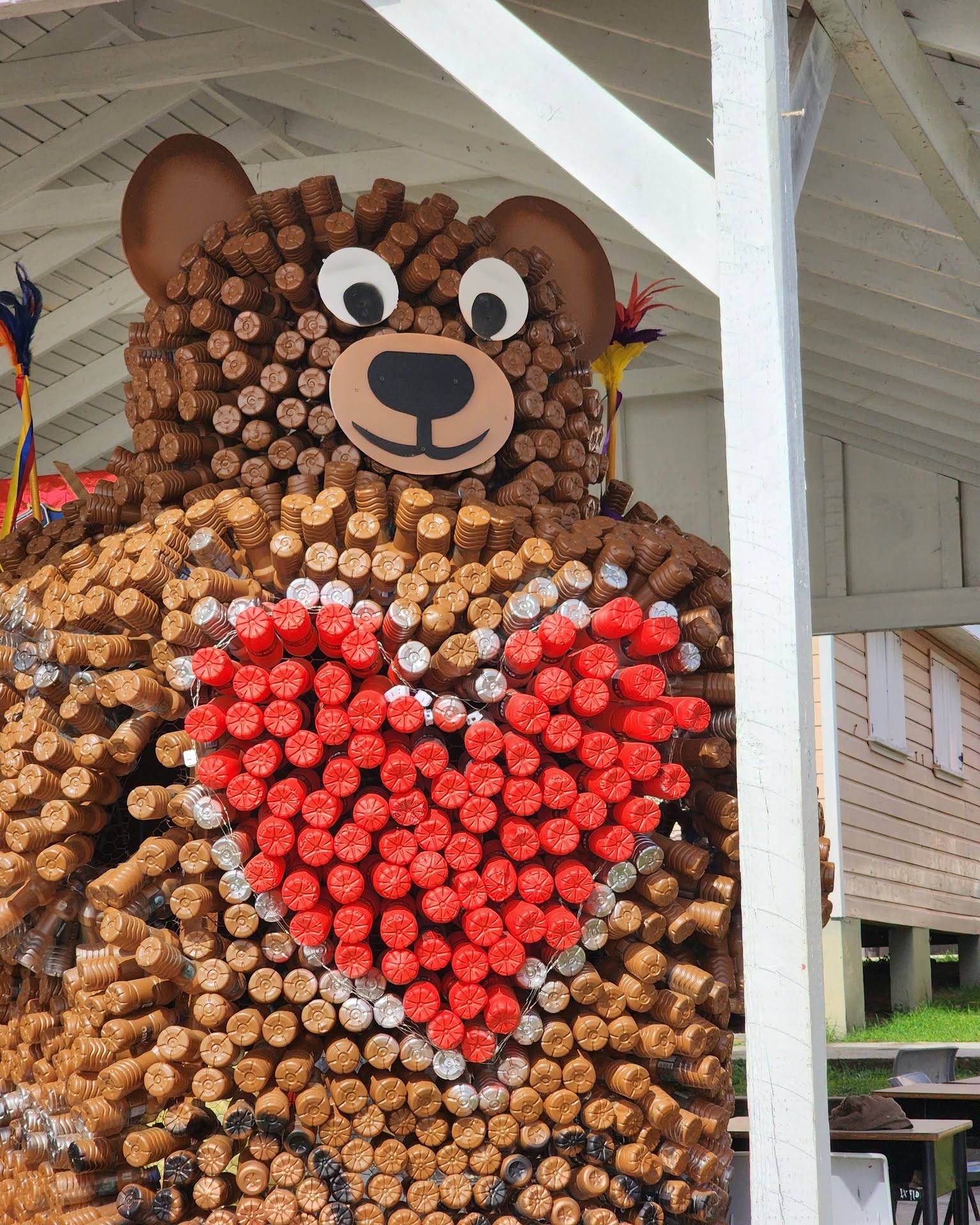
A creative environmental advocacy organization, Good Humans 268 Inc., has sparked public conversation about waste reduction by turning thousands of post-consumer discarded plastic bottles into an eye-catching 10-foot teddy bear sculpture. The ambitious art project is the group’s latest effort to reframe public perspectives on single-use waste, challenging the widespread assumption that thrown-away materials have no further value.
Unveiled to the public recently, the oversized upcycled sculpture was intentionally designed to stand out in public spaces, catching passersby off guard and drawing spontaneous attention to the issue of plastic waste. Good Humans 268 explains that unconventional, surprising creative works are often the most effective tool to shift ingrained attitudes toward waste: by presenting a product most people would send to a landfill as the core material for a memorable piece of art, the organization forces people to reconsider their default approach to discarded goods. The teddy bear is built to spark curiosity, stop audiences in their tracks, and open up discussions about the untapped potential of everyday waste.
Beyond raising questions, the project also aims to build broader public enthusiasm for recycling and circular economy practices, proving that innovative approaches to waste can unlock unexpected creative possibilities. This 10-foot teddy bear is only the first step in the organization’s ongoing creative environmental campaign, however. Good Humans 268 has already announced plans for its next public art initiative: crafting the official flags of all 56 Commonwealth nations entirely from recycled plastic bottle caps.
“Today, it’s a 10-foot teddy bear. Tomorrow, it’s 56 Commonwealth flags made from bottle caps,” the group shared in a statement outlining its roadmap. Looking ahead, the organization says it is planning even larger-scale community-focused projects that merge creative expression, public education, and collective participation to boost global environmental awareness. “We are changing the conversation around waste, one wild idea at a time,” the group added.