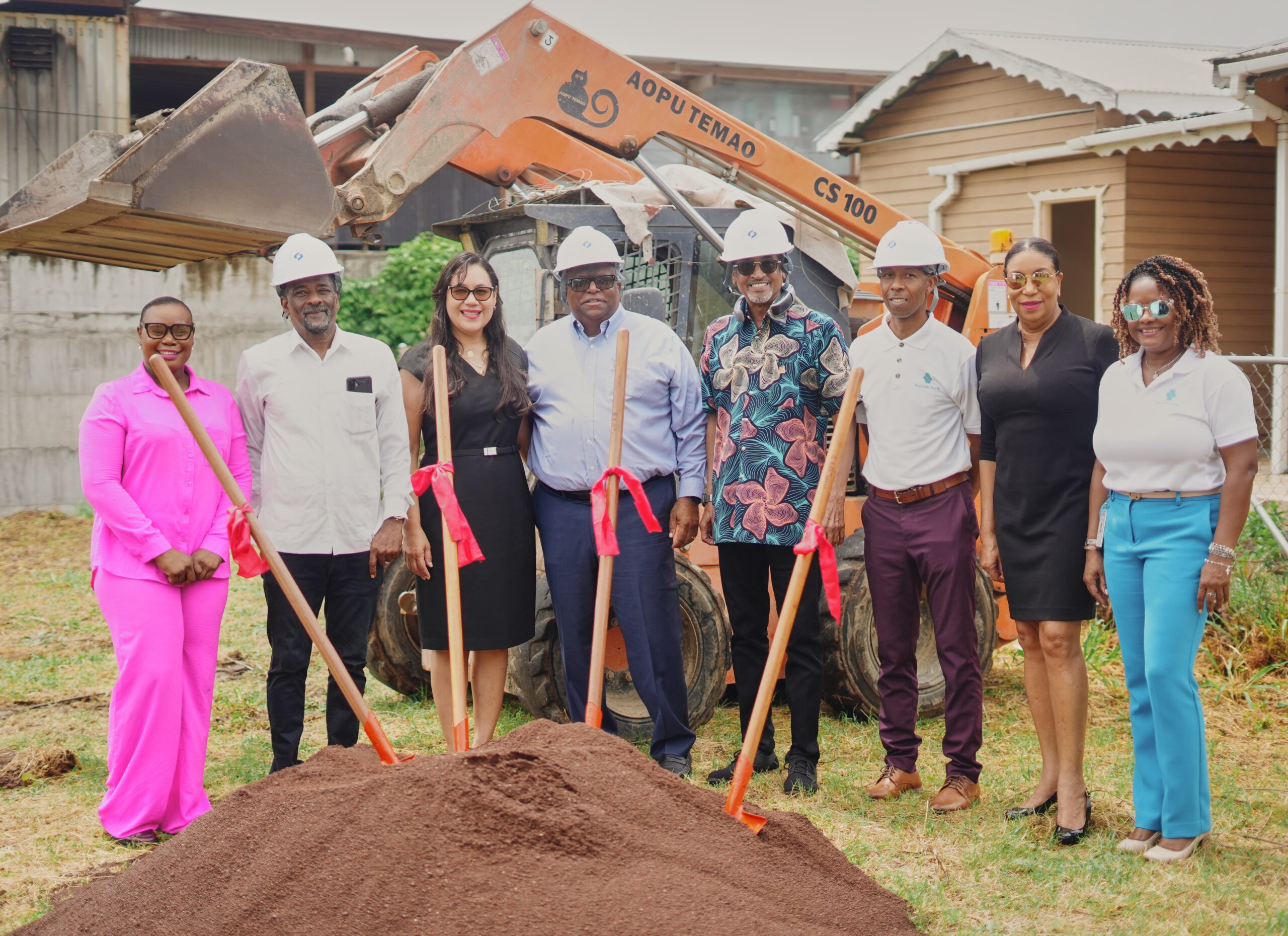
On August 21, a landmark new construction project officially kicked off in True Blue, Grenada, as developer RIEAST Developments held its groundbreaking ceremony for Hideaway Too, a 23-unit mixed tourism and student accommodation development slated to welcome its first guests and residents in January 2028.
What sets this project apart from many real estate developments in the region is its commitment to inclusive local ownership, rather than the traditional model of outright foreign purchase of local land. When local landowner Ernest Sanderson reached out to RIEAST Developments Chairman and President Dr. Richard A. Nixon to discuss selling the family-held plot of land near St. George’s University, Nixon proposed an alternative collaborative structure: Sanderson would contribute the land as equity in the project, allowing him to retain a permanent ownership stake in the development rather than ceding full control for a one-time payout. Nixon emphasized that this collaborative framework aligns with his core vision of empowering Grenadians to build long-term value from the assets they already hold, rather than selling them off.
For project shareholder Stephen Scoon, whose family roots trace back to Gouyave, the project carries deep personal meaning. Scoon explained that his late father was a Grenadian native, and for generations his family had never been able to develop or invest in their ancestral homeland’s land — making this partnership a meaningful fulfillment of his family’s legacy.
Unlike RIEAST’s earlier nearby development Hideaway True Blue, which was structured under Grenada’s popular Citizenship by Investment (CBI) immigration program, Hideaway Too will not rely on CBI funding for its current development phase. Nixon confirmed that the project is instead primarily financed through a mix of direct shareholder equity and commercial lending from Republic Bank, though the company has not permanently ruled out integrating the CBI program into the project at a later date.
Republic Bank Corporate Banking Manager Devon Thornhill outlined the key factors that led the financial institution to back the development. The bank’s confidence in the project stemmed from three core pillars: the significant equity contribution from the project’s investors, its prime location adjacent to St. George’s University that guarantees consistent demand for student accommodation, and the proven track record of the development team in delivering and financing the first phase of the Hideaway project successfully. Nixon added that his track record of never defaulting on financing for the first phase — even through the economic volatility of the global COVID-19 pandemic — played a critical role in building the bank’s trust for this second phase.
In line with the project’s focus on local benefit, Nixon announced that construction is projected to employ a 70% local and 30% foreign workforce. This split is intentional, designed to create immediate job opportunities for Grenadian workers while supporting cross-border skills transfer that builds long-term local capacity. Construction will be carried out by Grenada State Engineers over an expected 18-month timeline, keeping the project on track for its planned January 2028 opening.
The Hideaway Too project addresses growing demand for accommodation near St. George’s University, one of Grenada’s major higher education and economic anchors, while introducing a more inclusive ownership model that prioritizes local wealth building over outside control. For stakeholders involved, the development represents both a business venture and a test of collaborative development that centers local interests.