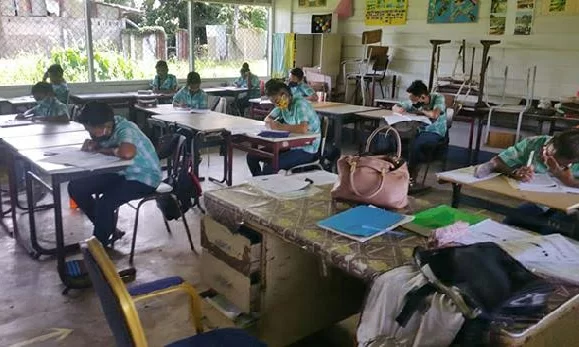
Suriname is currently facing a long-running crisis that threatens the core of its public services: a growing exodus of trained teachers and nurses leaving the country for better opportunities abroad. Now, President Jennifer Simons is taking a first step to reverse the trend, with a urgent public appeal to young students to enroll in teacher training programs at pedagogical institutions across the nation.
To remove initial barriers to entry, Simons announced that incoming trainees in the 2024-2025 academic year will receive full government support covering key costs, including enrollment fees and required study materials. For the administration, this initiative reflects the government’s ranking of education as a top policy priority, and a renewed commitment to building a pipeline of highly qualified, well-prepared teachers for Suriname’s schools.
But the challenge facing the country runs far deeper than low enrollment numbers, observers warn. For decades, Suriname has grappled with the persistent issue of skilled professional emigration, a problem that hits both the education and healthcare sectors equally hard. While offering financial incentives to attract new trainees is a critical opening move, retaining those trained professionals within the country’s borders remains an entirely separate and far more complex challenge.
Teachers and nurses play irreplaceable foundational roles in shaping a healthy, functional society. Teachers guide children, adolescents and young adults to grow into fully developed, responsible citizens, equipping them with the knowledge, core values and practical skills that form the bedrock of a stable, forward-moving nation. Nurses, meanwhile, safeguard public welfare by caring for vulnerable people during illness and recovery, providing life-changing support that bridges the gap between suffering and healing, and upholding the overall health and function of local communities. Without a strong, stable workforce in these two fields, Suriname cannot build a resilient, thriving society.
Working in either profession is widely recognized as a calling, not merely a job. It is a choice made from conviction: a commitment to nurturing young people with care and giving them the focused attention they need to grow, or to tending to patients with compassion to help them heal in comfort. But in modern Suriname, the conversation around these roles has increasingly shifted to financial compensation, driven by growing dissatisfaction among working professionals. Teachers and nurses have repeatedly spoken out demanding better pay, all while carrying out their duties under strained, often difficult working conditions.
This situation is deeply distressing, because the problem extends far beyond inadequate salaries. It is also a matter of public recognition and professional respect. People who enter these fields choose a life of dedication and service to their communities. But when that choice is not matched by fair working conditions and a clear path to long-term security, many young professionals opt to leave the sector entirely, or cross borders in search of better opportunities abroad.
President Simons’ appeal and financial support package mark a welcome step in the right direction, but experts emphasize it is only the first step. Suriname must look far beyond covering up-front enrollment fees and study materials to address the root causes of emigration. The nation needs to invest in building a working environment where teachers and nurses feel truly valued, seen, and supported at every stage of their careers. Only through that kind of systemic change can the country retain trained professionals not just through their training, but for their entire working lives in service to Suriname.
Education and healthcare are the foundational pillars of a healthy, developed society. If those pillars are weak and unstable, the entire structure of national progress will falter. Retaining talent in these essential professions is not an act of charity — it is a matter of national urgency. Suriname must therefore act decisively to deliver fair working conditions, widespread public respect, and clear growth opportunities, so that the professionals who hold the nation together choose to stay and build their future at home.