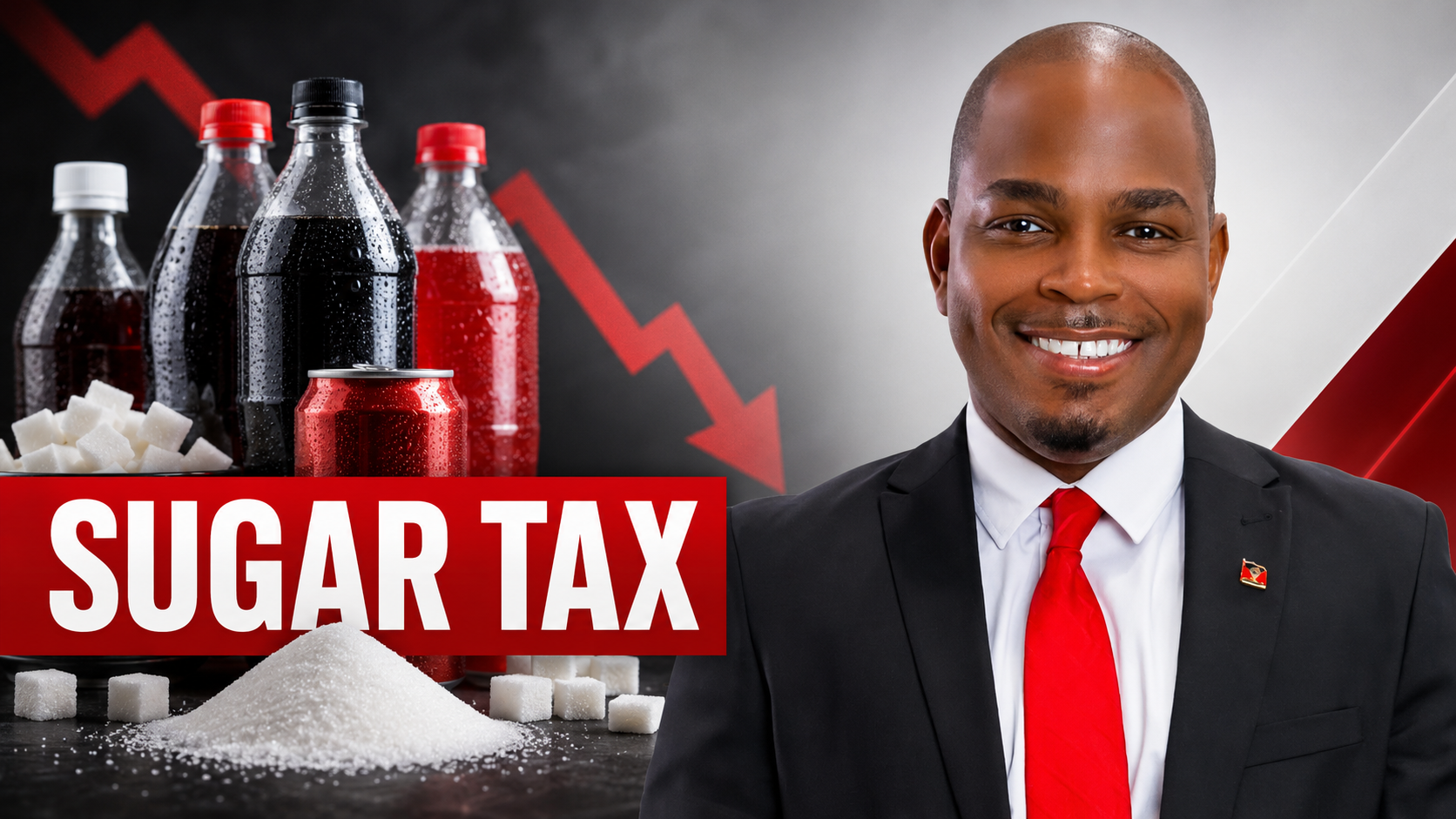
The government of Antigua and Barbuda is on track to submit landmark sugar tax legislation to national Parliament before the close of 2026, the country’s Health Minister Michael Joseph has publicly confirmed. The policy initiative, designed to curb a growing public health crisis linked to poor dietary habits, remains in active collaborative development between the Ministry of Health, the Ministry of Finance, and the Office of the Chief Nutritionist, with ongoing negotiations fine-tuning the proposal’s details.
Speaking during an appearance on the Browne and Browne Show this past Saturday, Joseph revealed that high-level discussions over the framework were still progressing at pace. “As recent as Thursday, I held a meeting with the financial secretary,” he stated. “I have made clear to the chief nutritionist that my priority is getting this sugar tax proposal before Parliament by the end of the year.”
All revenue generated by the new levy will be earmarked for specific public health priorities: expanding preventive healthcare services, scaling up public nutrition education campaigns, and funding community programs that promote sustainable healthy lifestyles, according to Joseph. The policy comes as the twin-island nation grapples with two interconnected pressures on its public health system: steadily rising healthcare costs driven by advancing medical technology and growing patient demand, and an epidemic of preventable noncommunicable diseases (NCDs) tied directly to unhealthy diets and inactive daily routines.
Regional public health data underscores the urgency of the crisis: NCDs account for roughly 75% of all deaths across the Caribbean, and cause approximately 50% of all long-term illness and disability cases in Antigua and Barbuda. These chronic conditions, which include type 2 diabetes and hypertension, often lead to devastating outcomes such as limb amputation, loss of mobility, and impaired speech, placing unsustainable financial and operational strain on the country’s public healthcare infrastructure.
Joseph framed the tax as a practical solution to align consumer behavior with public health needs. “If people choose to live unhealthy lifestyles that create an extra burden on the public health budget, we need dedicated resources to manage that strain,” he explained. To build public support for the measure, the minister has ordered administrators at the country’s flagship Sir Lester Bird Medical Centre to calculate the total cost of caring for patients hospitalized for two weeks with uncontrolled high blood sugar or hypertension. The resulting data will be released publicly to help residents understand the severe economic toll that entirely preventable illnesses impose on the national health system.
Before the proposal can move to public input, it must first receive formal approval from the Ministry of Finance. Once cleared, government officials will launch a series of public consultations to outline exactly how the tax will work, which sugary products will fall under the levy, and answer questions from community stakeholders and industry groups.
The minister noted that the government has already invested in softer public outreach campaigns to encourage consumers to choose healthier food and beverage options, but rising mortality rates have convinced policymakers that more decisive regulatory action is required. “If we fail to act now, our people will keep dying, and they are dying younger from these preventable noncommunicable diseases,” Joseph warned.
He also added that public health officials share deep concern over the high levels of harmful additives, including high-fructose corn syrup and artificial preservatives, found in many processed foods widely consumed across the country. At this stage, the government has not released details on the proposed tax rate, nor has it confirmed a timeline for when the levy would take effect if the legislation is approved by Parliament.