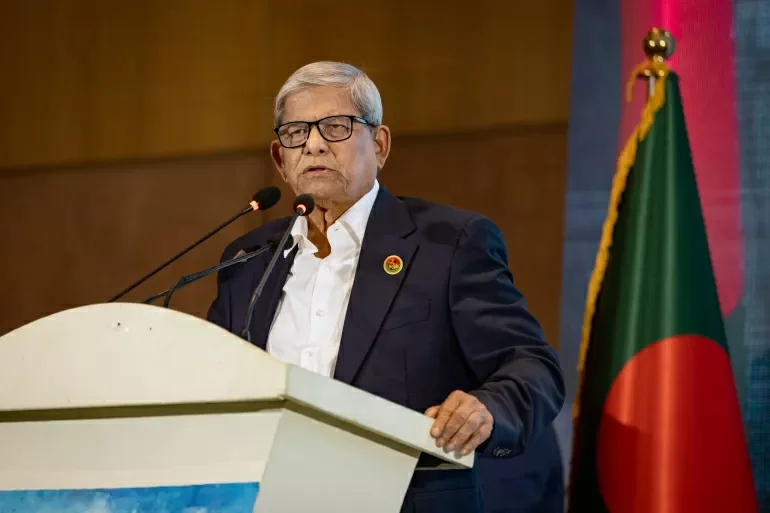
Bangladesh’s parliamentary body has elected veteran Bangladesh Nationalist Party (BNP) leader Mirza Fakhrul Islam Alamgir as the country’s new president, filling the vacancy left by former president Mohammed Shahabuddin’s early resignation over declining health.
The 78-year-old ruling party leader secured a clear victory in Thursday’s vote, garnering 255 votes against 88 cast for his challenger, 84-year-old retired colonel Oli Ahmed. Ahmed, chairman of the Liberal Democratic Party, ran as the candidate of an 11-party opposition coalition led by Jamaat-e-Islami.
Speaking ahead of the parliamentary vote, Alamgir outlined his core vision for Bangladesh: a prosperous, equitable nation where even marginalized communities and daily wage laborers can reliably afford two meals a day, according to Bangladesh’s official news agency BSS.
Alamgir’s ascent to the presidency comes nearly 18 months after the BNP returned to national power, following the 2024 collapse of Sheikh Hasina’s Awami League government amid widespread youth-led protests. The BNP won a two-thirds parliamentary majority in February 12 general elections, after which the party appointed Tarique Rahman to the post of prime minister.
Shahabuddin, who was elected in 2023 during the Awami League’s final term in office, stepped down in late July due to ongoing health complications. Under Bangladesh’s constitution, a new presidential election must be held within 90 days of a vacancy occurring to fill the role.
While the Bangladeshi presidency is largely a ceremonial position, the officeholder serves as the country’s head of state and supreme commander of the armed forces, giving the role symbolic and institutional significance in the nation’s political structure.
Alamgir’s political career began at the University of Dhaka, where he emerged as a leading figure in the 1969 student uprising against Pakistani military rule. During Sheikh Hasina’s successive Awami League governments, he was detained repeatedly on multiple occasions, detentions he has long described as politically motivated. Over his decades in public service, he has held a range of cabinet portfolios, including Minister of Local Government, Agriculture, Civil Aviation, and Tourism.
In the wake of the 2024 uprising that ousted the Awami League, Hasina fled to neighboring India, but the former prime minister has publicly announced plans to return to Bangladesh this coming December.
Political analysts view Alamgir’s election as marking a new chapter in Bangladesh’s post-transition political history, as the country continues to realign its power balance between competing political parties and leadership blocs following the 2024 transfer of power.