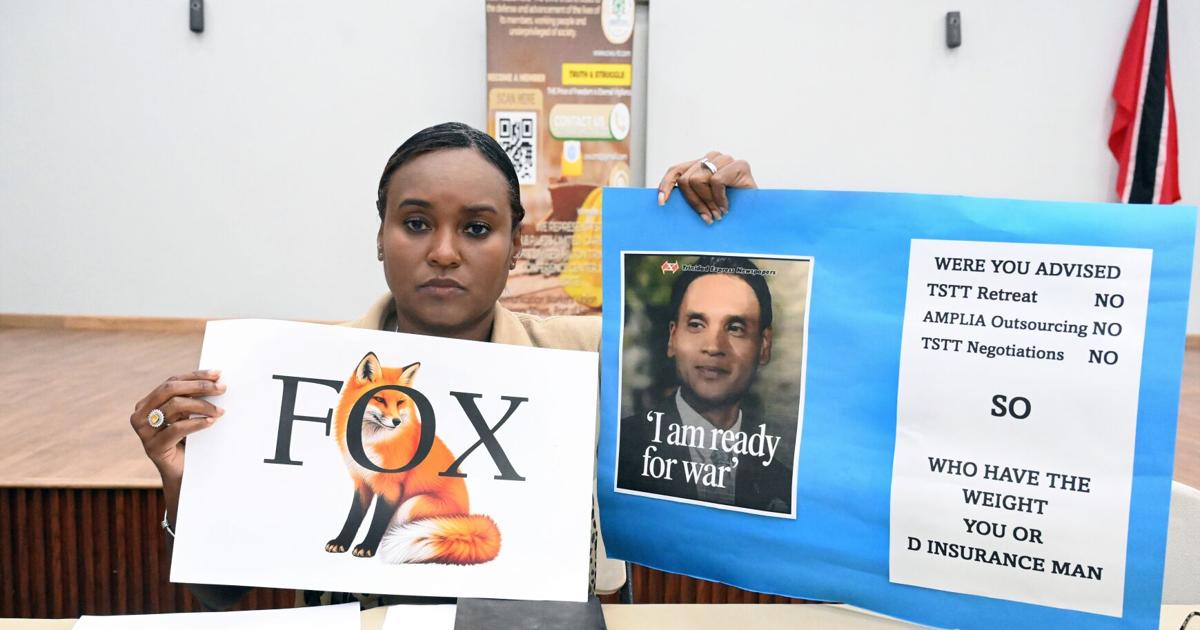
A growing rift between Trinidad and Tobago’s Communication Workers’ Union (CWU) and state-owned Telecommunications Services of Trinidad and Tobago (TSTT) has escalated this week, with CWU Secretary General Joanne Ogeer issuing a stark warning of coming turmoil as long-stalled negotiations and unaddressed worker grievances remain unresolved.
Speaking at a press conference hosted at the union’s Port of Spain headquarters, Ogeer laid out the union’s core demands: workers are only seeking compensation and resolution that they are legally owed, she said, while placing direct blame for the impasse at the feet of Public Utilities Minister Barry Padarath, accusing him of refusing to meaningfully engage with the union’s concerns.
In comments that underscored the CWU’s political independence, Ogeer stressed that the union has no formal ties or loyalty to any of Trinidad and Tobago’s major political parties, including the ruling People’s National Movement (PNM) and the opposition United National Congress (UNC). As a non-member of the UNC-led Coalition of Interest – a 2025 general election political alliance that includes several major trade unions such as the Oilfields Workers’ Trade Union, Public Services Association (PSA), Transport and Industrial Workers Union, Trinidad and Tobago Postal Workers’ Union, and Fire Service Association – Ogeer said the CWU expected to be sidelined by the current administration.
Beyond the government, Ogeer directed sharp criticism at TSTT chairman Kern Dass, accusing him of launching unprovoked attacks on the union and its leadership. “We are not warring with the minister, we are warring against anybody that oppressing workers and we are going to be warring with Kern Dass,” she stated.
Ogeer contrasted the CWU’s deadlocked negotiations with the recent breakthrough in wage talks between the PSA and government at the Water and Sewerage Authority (WASA), where Padarath intervened to break the impasse and reaffirm the government’s commitment to reaching a fair agreement. For the CWU, Ogeer said, no such intervention is needed – the union only demands fair treatment from officials and TSTT management. “I don’t want a hug up; all I want you to do is to be fair,” she added.
The conflict comes after Padarath pushed back against the union over the weekend, saying the government would not be intimidated by CWU pressure and denying that any formal discussions of a 10% wage increase have taken place. Padarath also noted that any wage adjustment must account for TSTT’s long-term financial sustainability, even after the company posted recent profitable results.
Ogeer rejected the government’s claims, refuting assertions that the union is attempting to intimidate or bully officials, and challenging claims that the wage discussions lack a factual basis. She confirmed that the CWU has held two formal negotiating sessions with TSTT management, most recently on July 9 with six union representatives in attendance, where the union reviewed the company’s full financial data in detail.
Far from pushing for an unaffordable wage hike, Ogeer said the CWU deliberately structured its demands to align with the $60 million maximum figure TSTT management itself said the company could afford. “We crunched the numbers,” she explained. “It was at that juncture that the company and the union sat down, not just to give workers money but to ensure that when workers get that money that they worked so hard for it doesn’t break the company.”
She issued a public challenge to TSTT Corporate Services Vice-President Roshan Babwah to publicly deny the union’s account of negotiations, saying the union is now calling for a formal investigation into statements Babwah made that created a legitimate expectation of a breakthrough agreement. Ogeer also said she has lost confidence in Babwah, alleging he previously told her that TSTT leadership planned to undermine the CWU, dismissing it as a small organization with only 300 members.
Beyond wage negotiations, Ogeer raised serious questions about TSTT’s recruitment and hiring practices, specifically calling out the alleged improper appointment of a staff member to the company’s legal department and a new corporate secretary. She said the CWU filed a Freedom of Information request to obtain details of the hiring process, and alleged the appointee has close political ties, lacks sufficient relevant experience, and was hired outside the formal competitive interview process. Ogeer accused Padarath of being aware of the alleged irregularities but choosing to ignore them. She also raised concerns about long-term acting employees who have not received permanent confirmation of their positions years after taking on the roles.
Despite the escalating confrontation, Ogeer moved quickly to reassure TSTT customers that the union has no plans to disrupt public telecommunications services amid the dispute. “Customers, we value you, fear not, we are not going to disrupt your service, we will not do anything that will affect you…we are here to make sure you get good service,” she said.
As of press time, local media outlet the Express had attempted to contact Kern Dass for comment on the union’s allegations via WhatsApp, but had not received a response.