For many residents of Belize, advanced robotics remains a far-off concept tied to science fiction, but a new initiative from the government is bringing this cutting-edge technology directly into university lecture halls to prepare the next generation for an increasingly automated global workforce.
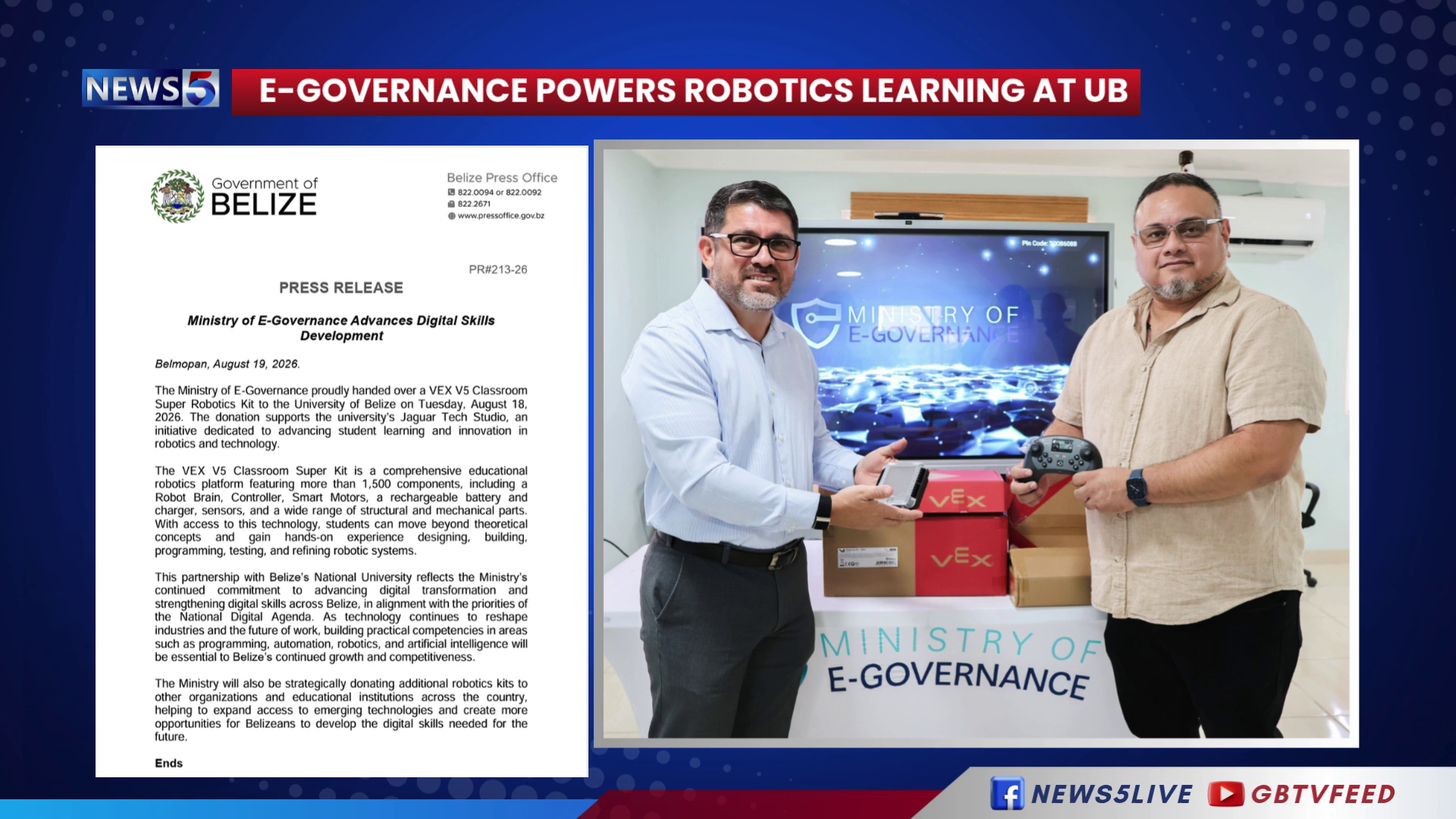
On August 19, 2026, Belize’s Ministry of E-Governance officially delivered a VEX V5 Classroom Super Robotics Kit to the Jaguar Tech Studio at the University of Belize (UB), marking a key milestone in the country’s National Digital Agenda strategy. Unlike generic educational equipment, this comprehensive kit includes over 1,500 individual components ranging from a central processing “robot brain” and wireless controller to precision smart motors, environmental sensors, rechargeable power systems, and modular mechanical parts. With these resources, students can move beyond abstract textbook learning to design, construct, code, test, and refine fully functional robotic systems from their own concepts.
Government officials emphasize that this donation is far more than a one-off gift of high-tech hardware. It is a core component of a broader national effort to expand accessible digital and technical skills across Belize’s education sector, as the world sees rapid shifts in labor markets driven by automation, artificial intelligence, and advanced manufacturing. The hands-on learning opportunity is designed to bridge the long-standing gap between theoretical computer science education and practical innovation, empowering students to develop the problem-solving abilities that employers across tech and advanced industries increasingly demand.
While the University of Belize is the first beneficiary of this national rollout, the Ministry of E-Governance confirmed that additional robotics kits will be distributed to other educational institutions and youth-focused organizations across the country in the coming months. The initiative reflects a growing recognition among Belizean policymakers that early investment in technical STEM (science, technology, engineering, and mathematics) education is critical to ensuring the country’s young people can compete and thrive in the evolving global economy, rather than being left behind by rapid technological change.