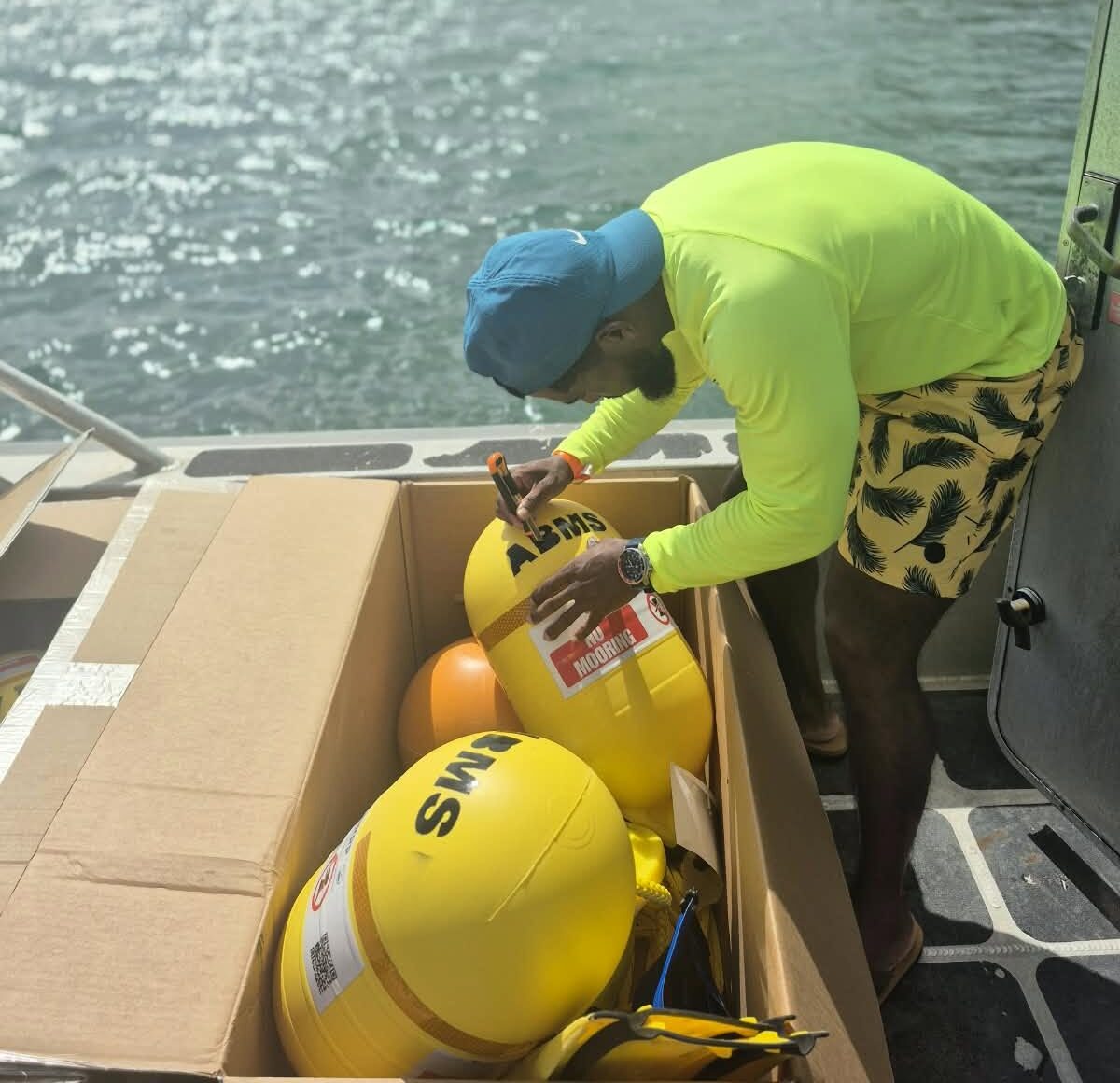
As the Atlantic basin enters its annual peak hurricane season, Antigua and Barbuda has taken a major step forward to boost its ocean observation infrastructure and regional climate adaptation efforts by joining a growing cross-Caribbean marine monitoring network. The Caribbean Institute for Meteorology and Hydrology (CIMH), which is leading the construction of the coordinated observation network across member states of the Caribbean Meteorological Organization, has now installed three new observation platforms in Antigua and Barbuda waters.
On Tuesday, national authorities took delivery of three SOFAR Spotter Buoy ocean data collection stations. One of the high-tech buoys was deployed immediately, with the remaining two scheduled to enter operation just two days later on Thursday. This initial deployment marks the third finished installation of buoys as part of the regional network initiative.
The newly established network combines the tracking capabilities of SOFAR Spotter Buoys and smart mooring technology to capture and send near real-time data on a wide range of critical marine conditions, including wave heights, swell behavior, and other key oceanographic parameters that shape regional weather and coastal safety. This continuous flow of standardized data will deliver far-reaching benefits across multiple sectors across the Caribbean: it will enable more accurate marine weather forecasts and more reliable early warning systems for hazardous conditions, directly improving maritime navigation safety, supporting sustainable fisheries management, strengthening coastal tourism infrastructure protection, refining national coastal zone management strategies, boosting overall disaster preparedness, and lifting long-term climate resilience across vulnerable small island developing states in the region.
Beyond immediate operational benefits, the standardized data collected through the network will also allow CIMH’s Regional Marine Forecast Support Centre to refine and improve the accuracy of regional marine forecast models, closing critical gaps in current oceanographic understanding for the Caribbean basin. The deployment project brought together a cross-institutional partnership, including the Antigua and Barbuda Meteorological Service, the national Fisheries Division, the Antigua and Barbuda Defence Force Coast Guard, and CIMH’s Regional Instruments Centre, demonstrating coordinated cross-sector action to address shared climate and disaster risks.
This expanding monitoring network is a core component of the Strengthening Institutional Capacity for a Resilient Caribbean Coastal and Marine Environment Project, widely known by its acronym RCCAME. The initiative receives financial and programmatic support from the Caribbean Development Bank through the Caribbean Regional Resilience Enhancement (CARE) Programme, with core funding allocated from the European Union’s 11th European Development Fund, designed to support climate adaptation and environmental resilience in small island developing states across the Caribbean.