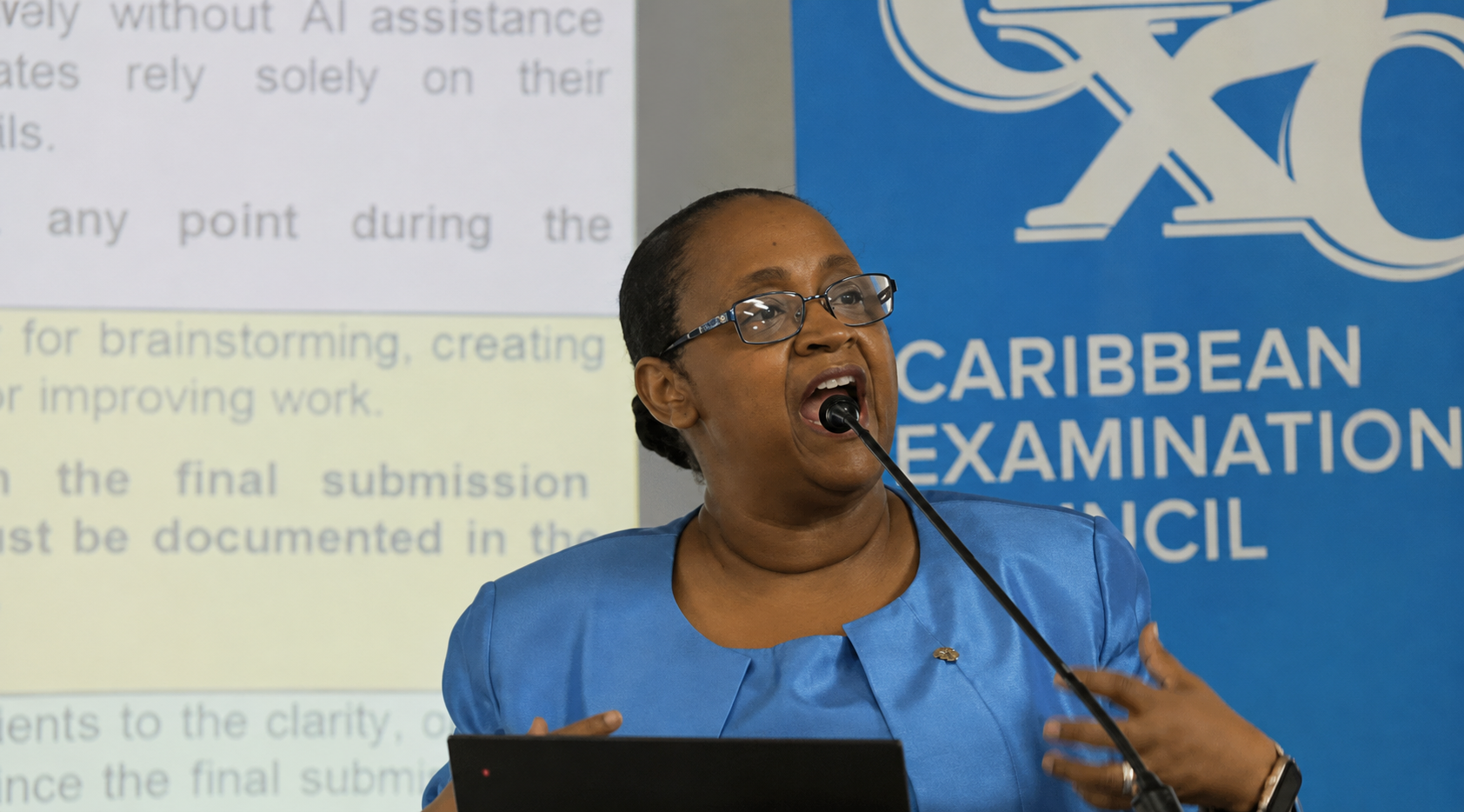
Newly released 2026 examination results from the Caribbean Examinations Council (CXC) show a promising four percentage point uptick in the regional pass rate for Caribbean Secondary Education Certificate (CSEC) mathematics, bringing the overall acceptable pass rate to 42%. While this improvement marks measurable progress for the region’s secondary education system, mathematics still remains one of the lowest-performing subjects across all CSEC offerings. Dr. Nicole Manning, CXC’s Director of Operations, emphasized that even incremental gains in mathematics proficiency deserve recognition as a sign of forward momentum for the education sector. “This is a four percent increase over the previous year, and this is a good story,” Manning stated. “Any improvement in math is a good improvement.”
Disaggregated data from the results shows uneven performance across the region’s 21 participating territories. Fourteen jurisdictions posted pass rates between 43% and 77%, all landing above the newly updated regional average, while the remaining seven territories recorded pass rates ranging from 30% to 38%, falling below the regional benchmark. The official results were formally presented at a public event held Tuesday in Anguilla, marking the official release of all May-June 2026 CSEC examination outcomes.
Alongside the release of the annual results, CXC has unveiled a bold new intervention strategy designed to tackle decades of persistent underperformance in secondary-level mathematics. The organization formally launched the Caribbean Targeted Education Certificate (CTEC), a modular alternative pathway to CSEC mathematics certification, following a year-long regional pilot program that included 2,535 test candidates across 42 test centers in 15 Caribbean territories.
Unlike the traditional single-examination CSEC mathematics assessment, CTEC splits the full existing CSEC mathematics syllabus into three smaller, skill-focused modules. This structure allows students to earn formal credentials for completed modules and bank these achievements as they work incrementally toward the full CSEC qualification. Early outcomes from the pilot program are encouraging: 88% of participants who completed the first CTEC module earned an acceptable passing grade. CXC officials have clarified that passing a single module does not equate to completing the full CSEC mathematics certification, but noted that the modular framework provides critical formal recognition for skills that students have already mastered, a motivation boost that has been missing from traditional assessment structures.
Pilot participants will retain access to the full program, with the remaining two modules offered at no additional cost, and candidates will have up to four years to complete all three required modules. Once all three modules are successfully finished, students receive the full standard CSEC mathematics certificate, identical to the credential earned through the traditional assessment pathway. CXC leadership anticipates that this incremental, skills-based approach will help more students stay motivated and engaged in mathematics study, all while upholding the rigorous academic standards that the CSEC qualification is known for across the Caribbean.