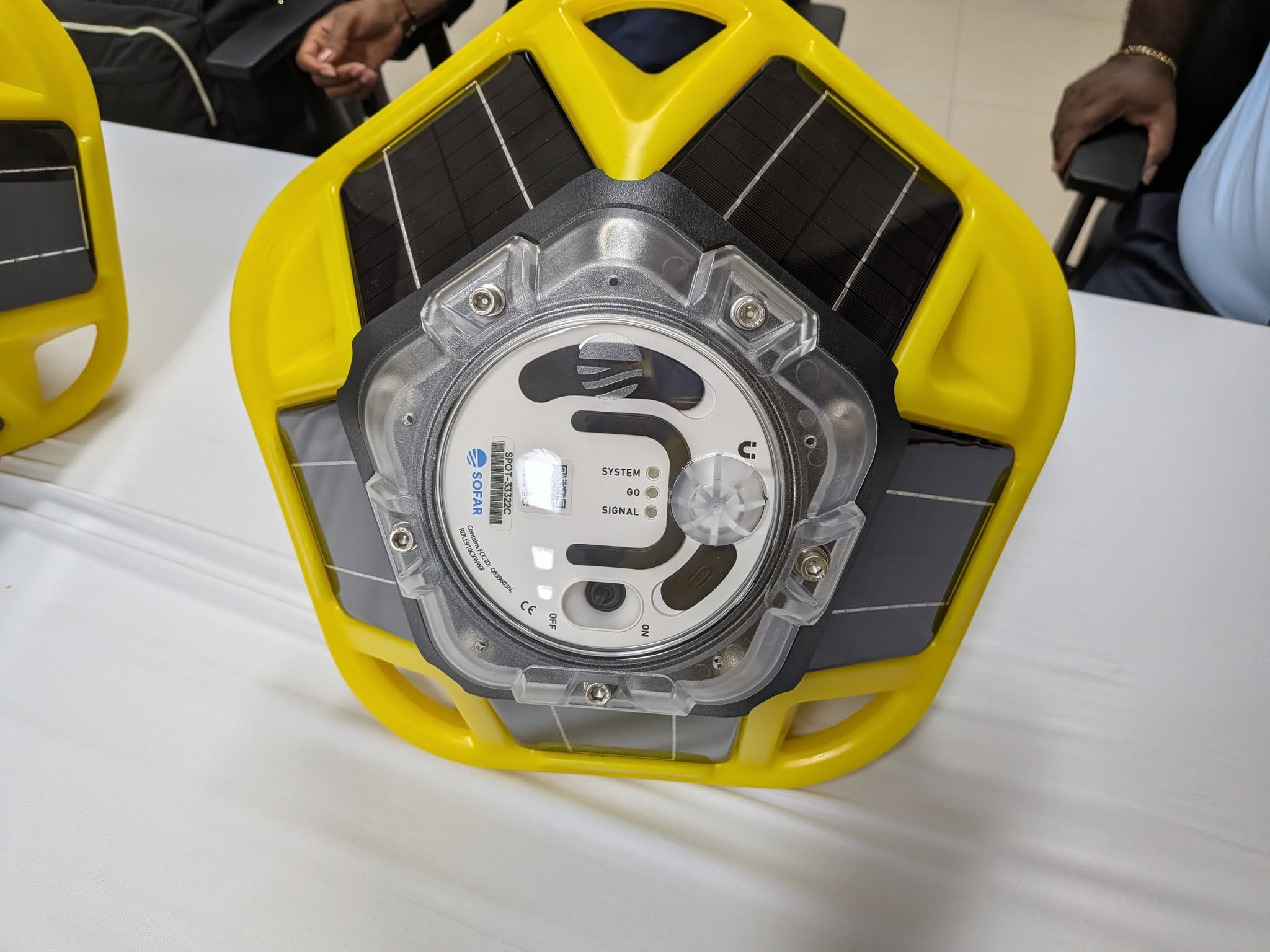
The twin-island Caribbean nation of Antigua and Barbuda has taken a major step forward in strengthening its coastal resilience and climate action with the delivery of three advanced SOFAR Ocean Data Buoy Stations. The new infrastructure, financed entirely through a European Union grant, was formally received by Minister of State Michael Freeland at an official handover ceremony held this Tuesday at Point Wharf.
Designed to fill critical gaps in the country’s current marine observation network, these buoy stations will deliver near real-time, high-precision data on ocean conditions and atmospheric meteorology. According to project planners, this continuous stream of granular information will directly improve the accuracy of marine weather forecasts, boost overall maritime safety for commercial and recreational vessel traffic, and enable more rigorous assessments of coastal hazards ranging from storm surges to rapid sea-level changes.
Alongside the deployment of the physical equipment, specialized technical teams from the program are currently leading hands-on training sessions for local personnel. The training covers every stage of the system’s lifecycle, from on-site deployment and day-to-day operation to regular preventative maintenance and troubleshooting. This focus on local capacity building ensures the buoy network will remain operational and effective for years to come, without relying on constant external support.
Government officials involved in the initiative emphasize that the upgraded monitoring network will deliver far-reaching public and economic benefits. By enabling earlier, more accurate warnings of impending coastal and weather hazards, the system will help protect the lives of residents and visitors alike, safeguard public and private property, and shore up the nation’s most critical economic sectors—including tourism, commercial fishing, and maritime trade, which form the backbone of Antigua and Barbuda’s economy.