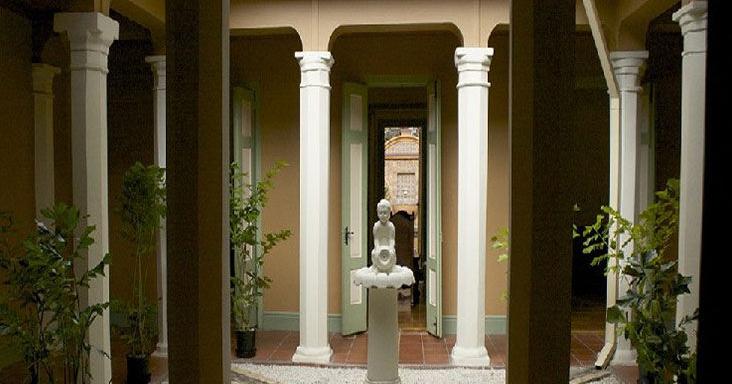
A heritage protection dispute has emerged between Trinidad and Tobago’s National Trust and the country’s Parliament, centered on unauthorised damage to a 230-year-old historic fountain located within the grounds of Port of Spain’s iconic Cabildo Building. In a formal four-page correspondence addressed to House Clerk Brian Caesar and dated August 3, 2026, National Trust Council representative Mark Franco has laid out the organisation’s non-negotiable position: only a complete, authentic restoration of the nationally protected heritage structure meets legal and heritage standards, and any lesser outcome would weaken both the rule of law and the country’s commitment to preserving its historical patrimony.
The formal demand comes after a joint inspection of the Cabildo Building on July 23, followed by closed-door discussions between National Trust officials and parliamentary representatives. Franco opened the letter by reaffirming the legal status of the site: the Cabildo Building, completed in 1802, is designated a Grade II Property of Interest under the National Trust of Trinidad and Tobago Act, a classification that extends statutory protection to every significant feature of the site, including the rear courtyard fountain at the center of the dispute.
Franco went on to outline the clear legal framework governing the site. Section 27 of the National Trust Act explicitly criminalises any alteration, damage, or destruction of a listed heritage property without prior written approval from the organisation, and grants courts the authority to order full compensation for repairs or restoration. “Restoration is not a remedy the Trust invented; it is the solution Parliament itself wrote into law,” Franco noted, adding that the organisation is only seeking the outcome already laid out as the standard consequence of unauthorised works under existing legislation. The core legal issue at hand, the Trust emphasised, is the complete lack of prior consultation or written approval for the works that caused the damage. While the organisation has not made any claims of bad faith on the part of Parliament, the absence of required consent is legally definitive in this case.
Crucially, Franco stressed that Parliament itself is not exempt from the requirements of the law. Section 3(1) of the Act explicitly binds the State to its provisions, meaning no government department, agency, or branch of the legislature can ignore its heritage protection obligations. “Parliament intentionally gave this legislation constitutional weight, and this is an opportunity to show it abides by the laws it has created,” Franco wrote. He added that upholding the requirement for full restoration would do more to bolster public trust in the rule of law than almost any other action, while failing to do so would erode that trust more than any other omission.
Beyond the legal dispute, the letter underscores the irreplaceable historical significance of both the building and the damaged fountain. The Cabildo Building is the only remaining example of 19th century colonial Spanish tropical civic architecture in Trinidad and Tobago, the sole surviving structure of its type from the period. The fountain, which is just years shy of its 230th anniversary, is an integral part of the building’s original 1802 design. It remains a functional example of Moorish-influenced hydraulic engineering, capturing rainwater from the courtyard and roof and directing it through brick-lined drainage channels running beneath the structure. Most notably, the hand-hewn stone blocks surrounding the fountain were cut by enslaved laborers working at the Laventille quarry. “Their destruction is not merely a loss to our built architecture; it is the erasure of ancestral evidence that no amount of money can ever replace,” Franco wrote.
The organisation has warned that time is critical for a successful authentic restoration. Every day that removed original stones and broken basin fragments remain unsecured and unprotected, the chance of a true, historically accurate restoration shrinks, making immediate action to secure the surviving original fabric a top priority.
While Franco acknowledged that full restoration will require significant public expenditure, he argued that the long-term costs of leaving the damage unaddressed would be far greater. Accepting the current damaged state, he warned, would set a dangerous precedent that would allow future violations of heritage protection laws to be waved through after unauthorised work is already completed. If that precedent stands, the national register of protected heritage properties would only offer protection on paper, with no real enforcement power.
Franco went on to outline the full range of consequences that would follow a failure to carry out full restoration: a damaging legal precedent for all future protected heritage sites, a systemic weakening of the rule of law across the country, damage to the National Trust’s credibility as a statutory heritage regulator, harm to Trinidad and Tobago’s compliance obligations under the 1972 UNESCO World Heritage Convention, and widespread erosion of public confidence in government accountability. If the State itself violates the laws that bind it and then avoids the legislatively required remedy, Franco argued, the moral authority of the State to enforce regulatory laws against private citizens would be severely undermined. The letter also warned that leaving the damage unresolved could weaken any future World Heritage nomination the country submits for its cultural sites.
Reflecting on the Cabildo Building’s history, Franco noted that the structure was previously saved from decline through public restoration efforts. For the current government to damage what a previous administration restored, and then refuse to make amends, would be a damaging legacy no public institution should want to leave behind. Conversely, moving forward with decisive full restoration would send a clear message that the Republic honors both its laws and its irreplaceable cultural and historical patrimony.
To resolve the dispute, the National Trust has put forward six specific demands for Parliament to act: immediately halt all further work that could impact the remaining historic fabric of the fountain and building, secure and properly store all original material removed from the fountain during the unauthorised works, conduct a joint conservation assessment between the Trust and parliamentary teams, develop and fully fund a comprehensive authentic restoration plan, agree to a firm implementation timetable for the restoration within 14 days, and adopt a permanent formal protocol requiring mandatory consultation with the National Trust before any work is undertaken on state-owned listed heritage properties.