Law enforcement leadership in Trinidad and Tobago’s Central Division has unveiled a proposal to establish permanent joint army-police security posts across five high-priority locations, part of a broader national crime reduction initiative announced earlier by Prime Minister Kamla Persad-Bissessar.
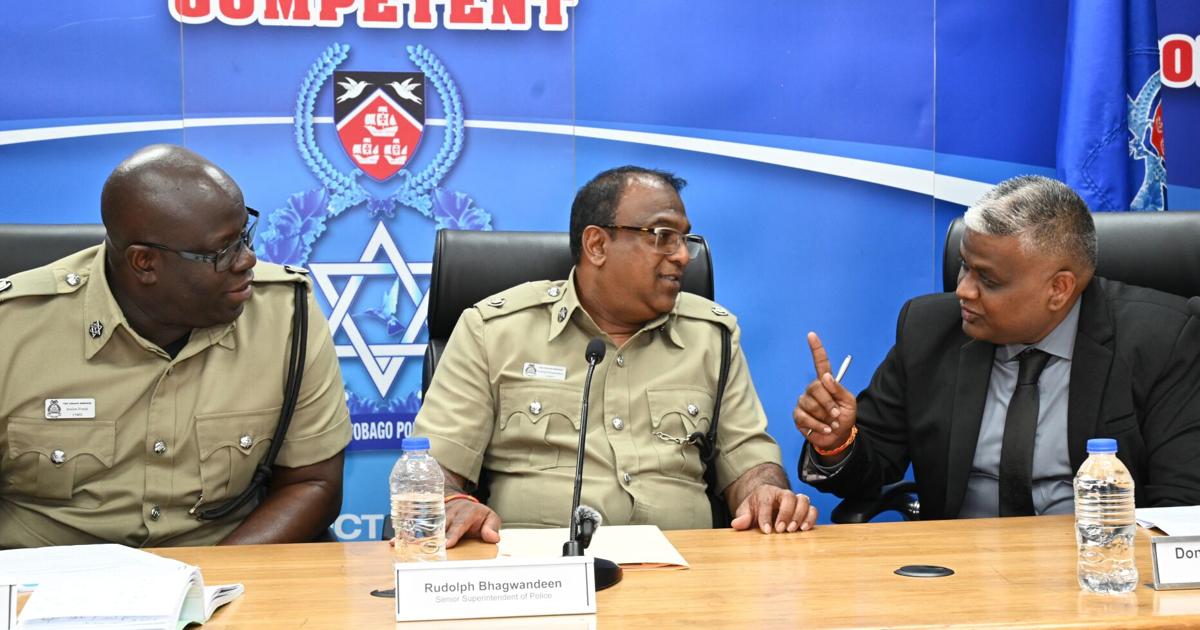
Senior Superintendent Rudolph Bhagwandeen, speaking at a press conference held at the Police Administration Building in Port of Spain on Wednesday, clarified that the identification of the five sites does not guarantee all posts will move forward, as formal approval and implementation planning are still ongoing. The shortlisted locations, mapped from south to north across the division, are: the Couva Interchange near the NP gas station, Carlsen Field east of the main highway, Brentwood adjacent to a local gas station and east of the highway, Felicity in Chaguanas on the highway’s western flank, and the St Helena district in Caroni.
Three of the five proposed sites — Couva Interchange, Carlsen Field, and Felicity — were already included in the Prime Minister’s earlier announcement of a national plan to roll out 30 joint army-police posts nationwide, with six additional locations still to be finalized.
Bhagwandean explained that the five Central Division locations were chosen following a rigorous data-driven assessment. Selection criteria included an in-depth review of historical crime statistics, actionable intelligence collected through ongoing police operations, feedback from community engagement initiatives, and data shared by cross-agency partners. The division also incorporated guidance from the Police Service’s Crime and Problem Analysis Branch (CAPA) to validate its site choices.
A key factor in site selection was proximity to major transit corridors, particularly the region’s main highway. Bhagwandeen noted that positioning mobile security units at these strategic intersections would cut response times and improve officers’ ability to intercept criminal suspects moving through the area.
The proposal comes as the Central Division grapples with long-standing operational challenges: it covers a sprawling policing territory that includes nine distinct districts, requiring officers to respond to everything from minor infractions to serious violent crimes, and already faces strain on existing personnel and vehicle resources.
To address these constraints, the Police Service is implementing a flexible shared-resource model, where personnel, vehicles, and specialist units can be reallocated across station districts based on real-time crime trends, intelligence reports, and emerging threats. “We’ll put resources where the problem is, not simply where the resource is normally stationed,” Bhagwandeen explained of the new approach.
Despite the progress in site selection, critical details about the posts remain unresolved. Discussions about staffing and resource allocation are still ongoing with the Police Service’s executive leadership, and no final decisions have been made about how the 24-hour posts will be manned. Additional resources will be required both to operate the posts and to enable officers to respond to incidents dispatched from the new locations, but no finalized staffing data is available yet.
Bhagwandeen also confirmed that no timeline has been set for the deployment of the first post, and he could not share specific details about on-site facilities such as holding cells. Early plans indicate the posts will likely be constructed from prefabricated buildings, though their exact layout and size have not been confirmed. Once operational, the facilities will be open to the public, allowing community members to file reports and interact directly with officers on-site.