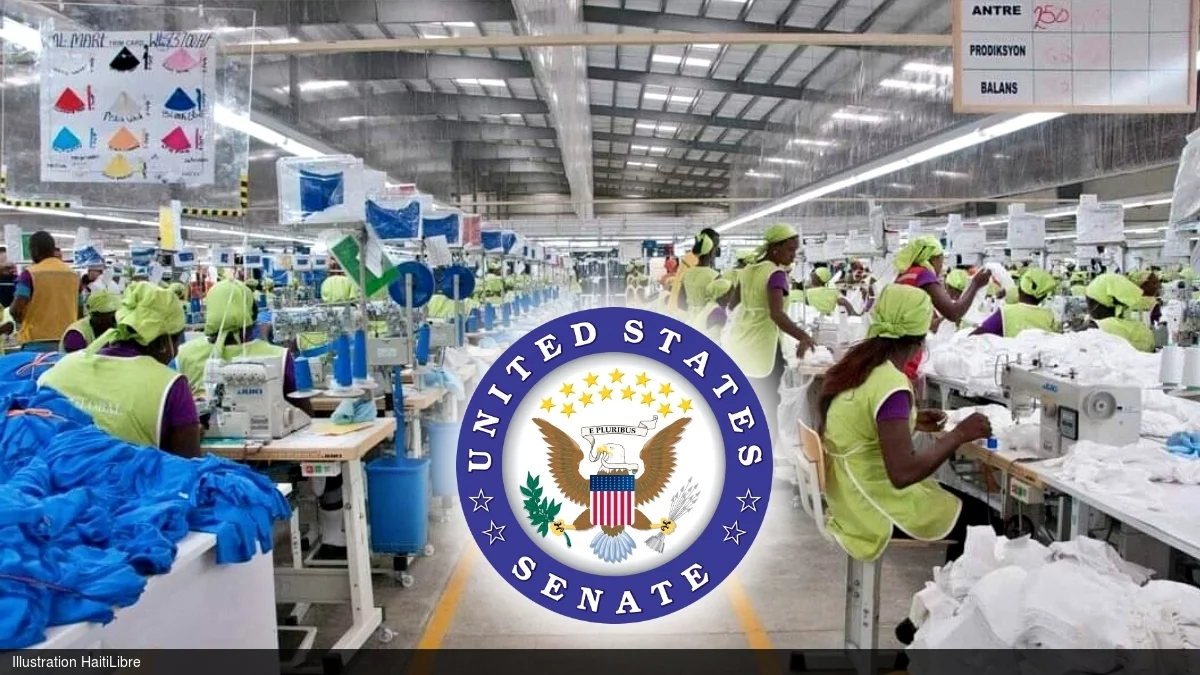
In a key development for U.S.-Caribbean trade relations, the U.S. Senate has passed its revised version of an interim funding resolution that would extend the duty-free access provisions of the HOPE/HELP trade programs for Haitian textiles for an additional two years. The legislation now heads back to the U.S. House of Representatives for a final vote, after the Senate introduced last-minute changes that require new legislative approval when members reconvene from recess in September 2026. Once the House signs off on the amended text, the bill will be forwarded to President Trump to be signed into law.
Originally, the bill to extend the HOPE/HELP programs sailed through the House of Representatives by an overwhelming bipartisan margin, with 340 votes in support and only 54 votes opposing the measure. The two-year extension is framed as a stopgap measure designed to preserve existing industrial trade partnerships between the U.S., Haiti, and regional supply chain partners, while giving private sector stakeholders time to plan for a more permanent, long-term reauthorization of the trade preference program.
U.S. Senator Raphael Warnock, a Georgia Democrat and senior member of the Senate Finance Subcommittee on International Trade, Customs, and Global Competitiveness, who was a leading advocate for the extension, framed the approval as a mutually beneficial outcome for both U.S. consumers and regional trading partners. “This extension is a win-win for Georgians and our trading partners in Haiti and Africa,” Warnock said in a statement following the Senate vote. “It will lower the cost of everyday goods for American families and improve our national security by helping stabilize the economies of our global partners. This victory shows what is possible when we center the people in policymaking.”
Industry leaders across the Caribbean have welcomed the Senate’s action, noting that the decades-old HOPE/HELP programs are foundational to the Haitian manufacturing and apparel sector, which is deeply integrated into regional supply chains that extend to the neighboring Dominican Republic. Capellán Peralta, president of the M/CODEVI Group, a major player in the regional textile industry, called the Senate’s approval an important step forward for securing long-term program continuity.
Even with the positive progress, Peralta and other industry stakeholders are pushing for a far longer 10-year extension of the program, arguing that a multi-decade reauthorization is critical to attracting new foreign direct investment, creating sustained formal employment across the region, and boosting the overall competitiveness of the Caribbean apparel manufacturing sector. Until the House completes its final vote on the amended legislation, the future of the extension remains formally unresolved.