The global public health community is racing to curb a rapidly accelerating Ebola outbreak in the eastern Democratic Republic of the Congo (DRC), where the cumulative death toll has surpassed the 2,000 mark, marking a devastating escalation of the crisis over the past three weeks. As of mid-August 2026, the World Health Organization (WHO) is moving forward with a critical Phase 3 clinical trial for an experimental vaccine targeting the Bundibugyo Ebola strain, the variant driving the current widespread transmission.
The United Nations confirmed in an update released on August 11 that humanitarian and health agencies have scaled up treatment capacity and disease surveillance efforts across affected regions, but ongoing armed violence in eastern DRC has created major barriers to effective outbreak response. UN Deputy Spokesperson Farhan Haq reported that national DRC health authorities recorded a doubling of fatalities in just 20 days, with an average of 50 people dying from the virus every single day. WHO data shows that 60 to 70 percent of all Ebola deaths occur in local communities, as many infected patients are unable to reach formal treatment facilities or arrive too late for life-saving intervention.
Persistent insecurity remains one of the biggest obstacles to containing the spread. On August 7, an attack on the village of Banana École in Ituri Province killed at least 13 civilians, abducted multiple residents, and destroyed local homes, according to the UN Office for the Coordination of Humanitarian Affairs (OCHA). The violence forced more than 28,000 people to flee to Mambasa Centre, a site already hosting 36,000 internally displaced persons who relocated there after earlier conflict starting in April. OCHA has reiterated its call for all warring parties to uphold international humanitarian law, protect civilian populations, and grant unimpeded, safe access for aid workers to reach communities hit by the outbreak.
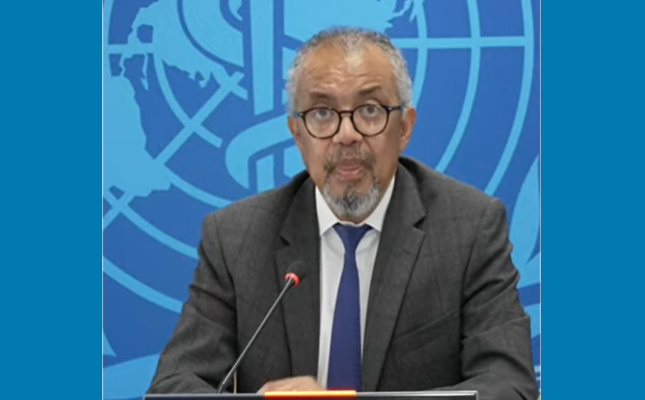
Speaking at a public briefing in Washington, DC on August 12, WHO Director-General Dr. Tedros Adhanom Ghebreyesus officially announced the launch of the Phase 3 vaccine trial. He emphasized that while researchers have not yet confirmed the candidate vaccine’s effectiveness against Bundibugyo strain infection in humans, the trial represents the fastest path to generating reliable clinical data that could help halt the current outbreak and prevent future epidemics. “We call on all partners to support and accelerate this trial,” Dr. Tedros stated.
In a positive update on research efforts, Dr. Tedros added that the WHO-sponsored PALM clinical trial for new Ebola treatments has already reached its initial milestone of enrolling 100 patients. “This trial demonstrates that even in the midst of a challenging outbreak, it’s possible to mobilise research rapidly and responsibly,” he said.
Despite advances in research, major gaps still threaten the global response. Dr. Tedros warned that the most pressing challenge is rolling out vaccines, treatments and public health interventions fast enough to outpace transmission. The African Continental Ebola Preparedness and Response Plan requires $518 million in funding to implement fully, but only $264 million — just over half of the total needed — has been disbursed to date. “We need financing that’s timely, impactful and sustainable,” Dr. Tedros said. “We also need access and security in the affected areas to ensure the response can operate safely and effectively.”
The WHO chief also paid public tribute to frontline health workers, who continue to risk their own safety to treat patients and stop the spread of the virus in active conflict zones.
In a separate statement during the briefing, Dr. Tedros raised concerns over recent changes to routine childhood vaccination policies in the United States, noting that the policy shifts do not align with the best available scientific evidence. He reaffirmed that all standard childhood vaccines, including the measles, mumps and rubella (MMR) vaccine, are safe, and decades of rigorous research have consistently debunked the false claim that vaccines cause autism. “Decades of research continue to support routine childhood immunisation,” he added.