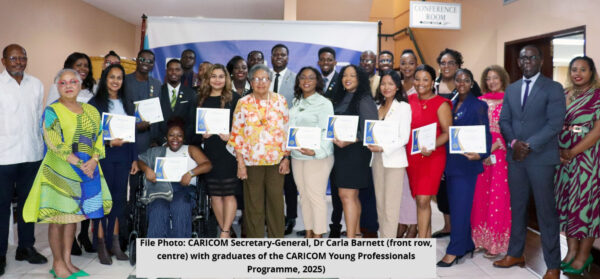
As the global community observes International Youth Day on 12 August 2026, CARICOM Secretary-General Dr. Carla Barnett has issued a formal message extending warm greetings to young people across the Caribbean Community and highlighting the transformative impact of youth contributions to national and regional progress.
This year’s International Youth Day theme, “Different Contexts, Common Aspirations”, captures a core reality for Caribbean youth: while they hail from diverse nations, cultural backgrounds and local communities, their core hopes for the future align closely across groups. Dr. Barnett notes that the vast majority of young people in the region share the same fundamental goals: access to high-quality education, stable and dignified employment, safe living environments, robust healthcare, equitable opportunity, and meaningful representation in policy decisions that shape their daily lives.
These shared aspirations are pursued against a backdrop of mounting global and regional challenges. Young Caribbean residents are navigating rapid shifts in the digital economy, growing frequency and severity of climate-fueled natural disasters, skyrocketing costs of living, persistent rates of community crime and violence, and rising public awareness of unaddressed mental health needs.
Across the CARICOM region, youth have long been foundational drivers of progress, shaping local economies, cultural identity, athletic achievement, public institutions and grassroots social movements across generations. Today, that legacy continues, with young people leading innovation across sectors: from small business entrepreneurship and digital technology development to sustainable agriculture, climate advocacy, community volunteer work, the creative economy, and local grassroots leadership.
CARICOM leadership has formally recognized that youth development is not a separate policy priority, but an intrinsic requirement for inclusive regional growth and long-term sustainable development. Dr. Barnett emphasizes that when young people’s lived experiences are excluded from policy design and decision-making processes, resulting policies fail to address their actual needs and priorities.
To address this gap, the bloc has updated its regional strategy through the revised CARICOM Youth Development Action Plan. The updated framework centers the most pressing needs identified by young people: expanded access to education, decent work opportunities, accessible financing for youth-led ventures, and scaled mental health support. It prioritizes four key focus areas: entrepreneurship advancement, environmental sustainability, digital transformation and technological access, and mental health resourcing, while also establishing clear, measurable milestones to track regional progress on these commitments.
Beyond the core action plan, CARICOM leverages a suite of existing initiatives to connect youth opportunity and regional integration. Programs including the CARICOM Single Market and Economy, the CARICOM Youth Ambassador Programme, and the CARICOM Young Professionals Programme work to break down barriers between education, employment, entrepreneurship, cross-regional mobility, and public service. These initiatives also create more structured, regular channels for dialogue between young people, national governments, and regional CARICOM institutions.
Dr. Barnett also highlights a key equity message woven into this year’s theme: opportunity remains unevenly distributed across youth populations in the region. Marginalized groups including rural and hinterland youth, young people with disabilities, Indigenous youth, migrant youth, unemployed young people, young women and girls, and youth disengaged from formal education or training face disproportionate structural barriers to achieving their aspirations.
In closing, the Secretary-General called on young CARICOM residents to continue advancing their ideas, building cross-border collaborative networks, and leveraging their skills to strengthen local communities and the wider region, working toward a shared Caribbean future defined by dignity, equal opportunity, and shared progress. “CARICOM remains firmly committed to partnering with you to build that future,” she wrote, concluding the message with a wish for a meaningful International Youth Day for all young people across the bloc.