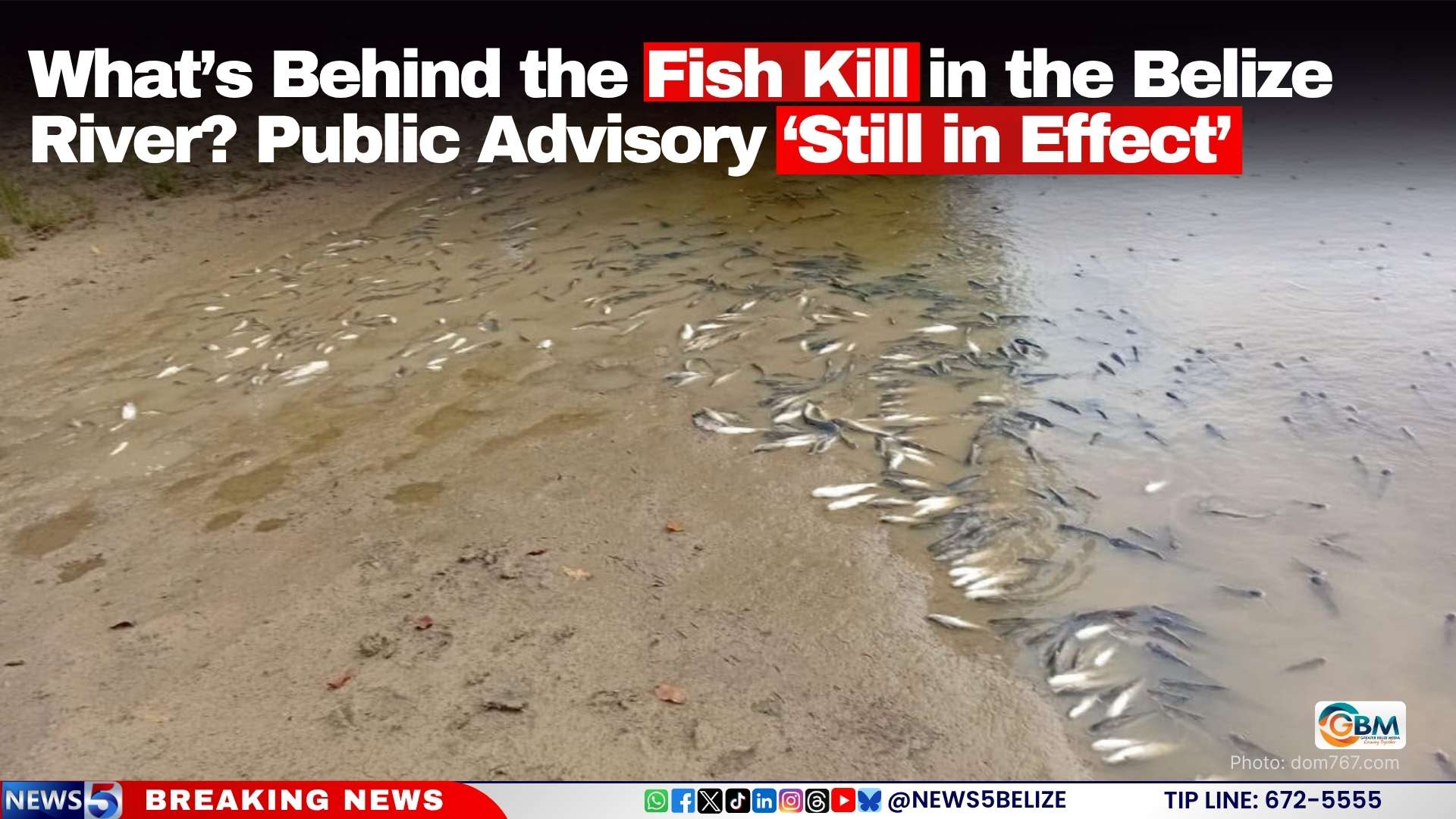
In a developing environmental emergency along Belize’s major waterway, officials have confirmed that a 17.5-mile stretch of the Belize River is grappling with severely depleted dissolved oxygen levels, the primary observed condition linked to a widespread mass fish mortality event first reported earlier this week.
As of the latest official update released Friday by Belize’s Department of the Environment (DOE), investigators have not yet identified the root cause of the die-off or pinpointed any party responsible for the contamination or conditions that triggered the event. The assessment area stretches from the vicinity of Banana Bank, located upstream of Santander Farms, all the way to the Burrell Boom Village bridge. Field teams recorded the most severe fish deaths and most dramatic shifts in water quality between the Isabella Bank and Grace Bank segments of the river.
Preliminary on-site testing uncovered additional worrying water conditions at multiple monitoring points: elevated conductivity, increased chlorophyll-a concentrations, and higher turbidity than normal. All of these factors are known to create hostile environments for native aquatic life, according to the DOE. To pinpoint the exact causes of the event, investigators have collected a range of samples for detailed laboratory analysis, including water samples from the Santander Farms drainage network and multiple downstream sites, as well as tissue samples from deceased fish and sediment samples from the affected stretch. These samples will be tested to confirm whether any man-made contaminants played a role in the mass die-off. Department officials are also reviewing high-resolution satellite imagery to identify other potential contributing factors that may not be visible through ground-based assessments alone.
A public health precautionary advisory first issued Wednesday remains fully in effect for all communities along the affected river segment. The advisory urges residents and visitors to avoid eating fish or any other aquatic resources harvested from the impacted area, and to refrain from using untreated river water for drinking, cooking, food preparation, or providing water for livestock and domestic pets.
In its own public statement released Friday, Santander Sugar Group, the agricultural operator that owns Santander Farms in the upstream area, said it has granted DOE investigators full, unrestricted access to all of its facilities and on-site operations to support the ongoing probe. The company pushed back against any implied connection to the fish kill, noting that its sugar processing factory operates a closed-loop water management system that does not allow for routine discharge of high-temperature process water into the Belize River. It also confirmed that its on-site irrigation and processing canals are not connected to Labouring Creek, a tributary that feeds into the impacted main stem of the Belize. Per Santander Sugar Group’s explanation, all process water generated at the facility is recovered, actively managed, cooled when required, and reused within the factory’s operations, with no regular discharge into surrounding waterways.