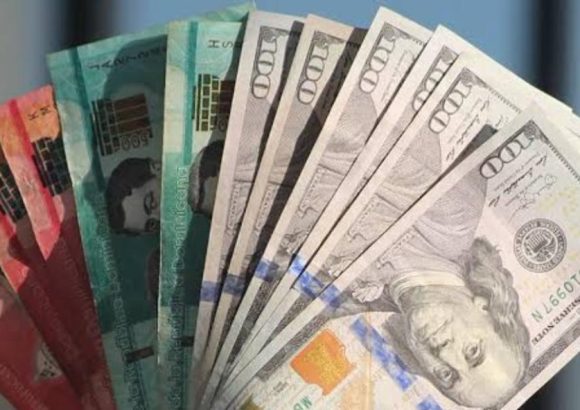
Two leading Dominican economists have sounded the alarm over the rapid appreciation of the Dominican peso against the U.S. dollar this year, warning that the currency shift is eroding the competitiveness of the country’s exports and cutting into the peso-denominated income of foreign currency earners ranging from international investors to households dependent on remittances.
Economists Henri Hebrard and Juan del Rosario note that this strengthening trend is not unique to the Dominican Republic. Several regional economies with similar structural profiles, including Costa Rica and Colombia, are navigating the same challenge, as large-scale inflows of foreign capital push their local currencies higher against the greenback.
So far in 2026, the Dominican peso has climbed 8.4% against the dollar, with the official exchange rate sliding from RD$63.30 per dollar at the start of the year to roughly RD$58.12 in current trading. Hebrard explained that this sharp shift means every dollar exchanged into pesos now delivers far less local currency than it did just 12 months prior. For businesses whose operating costs are mostly denominated in pesos, converting dollar-based revenue into local currency directly shrinks bottom-line profit margins and leaves them less able to compete against international rivals in both export and domestic markets.
The full negative impact of the currency shift has not yet shown up in official national economic data, the two economists pointed out, because exchange rates held at higher, peso-weak levels for the majority of the year to date. Full statistical reflection of the shift will likely emerge in later quarterly reports.
Del Rosario added that the headwinds facing Dominican exporters have grown even more complicated due to a recent change in U.S. trade policy. The United States has raised its tariff on Dominican goods from 10% to 12.5%, while several competing Central American exporting nations still benefit from the lower 10% tariff rate. The combination of a stronger peso and higher U.S. tariffs is putting dual pressure on the competitiveness of Dominican products, he emphasized, particularly for commodity and low-cost goods that compete almost entirely on price point.
On the consumer side, Hebrard noted that households receiving cross-border remittances are among the hardest hit groups by the currency appreciation. This year’s national budget was built around a projected exchange rate of 65 pesos per dollar, meaning remittance recipients are already seeing a nearly 11% drop in their peso income compared to official projections. The impact also extends to the country’s large tourism sector, hitting private accommodation providers who list properties on platforms like Airbnb: these hosts collect payment in dollars but cover all their operating and maintenance costs in pesos, cutting directly into their profits. Notably, Hebrard added that the currency shift has no negative impact on general tourism activity, as both visitor payments and industry sales are primarily denominated in dollars.