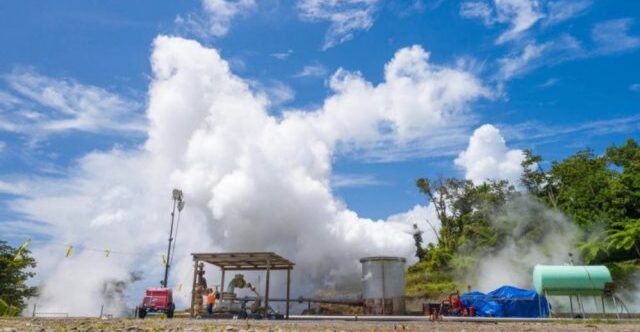
The small Caribbean island nation of Dominica has etched its name in regional energy history, achieving a groundbreaking milestone that sets it apart among CARICOM member states: it is now the first country in the bloc to generate utility-scale electricity from its indigenous geothermal resources, marking a major leap forward in its sweeping national renewable energy transition. This landmark achievement was formally highlighted by the Dominica government during the presentation of the 2026/2027 national budget, as the administration advances toward its ambitious long-term target of powering 100% of the country’s electricity demand through renewable energy sources. As of June 2026, already 68% of all electricity distributed by the Dominica Electricity Services (DOMLEC) comes from clean renewable sources. Of that share, geothermal energy alone contributes 43% of total national generation, with existing hydroelectric infrastructure adding a further 25% to the clean energy grid. Finance Minister Dr. Irving McIntyre framed the geothermal breakthrough as a transformative, foundational step that will steer the country toward long-term energy sovereignty. “Power from Dominican soil must power Dominican progress,” McIntyre stated emphatically during his budget address, underscoring the link between domestic energy production and national development. After months of rigorous technical evaluations, the new geothermal power plant has successfully completed all required reliability testing and is now on the cusp of launching full commercial operations. Over the first three months of commercial activity, the Independent Regulatory Commission will conduct continuous, comprehensive monitoring of the plant’s operational performance, while also evaluating how the introduction of geothermal power will affect end-consumer electricity prices. To support the integration of the new geothermal generation capacity into the national grid, the Dominica government has also carried out extensive upgrades to the country’s transmission infrastructure. These upgrades include modernization work on key substations located in Padu, Trafalgar and Fond Cole, alongside the installation of approximately 19 kilometers of new high-voltage transmission lines to carry power from the geothermal plant to population centers. Despite the progress already delivered, the administration is already turning its attention to expanding the country’s clean energy footprint beyond the current geothermal project. Government energy officials are currently conducting exploratory assessments of additional geothermal resource prospects across the island, including promising potential sites in northern Dominica. Parallel to this exploration, the government is also investigating technical upgrades to boost the hydroelectric output of the existing Roseau Valley reservoirs. McIntyre emphasized that while geothermal energy will not deliver an immediate elimination of all cost components in consumers’ monthly electricity bills, it will significantly reduce the country’s vulnerability to volatile swings in global fossil fuel prices, a major source of economic instability for many small island developing states that rely heavily on imported fuel for power generation.
Dominica becomes first CARICOM country to generate power from Its own geothermal resources