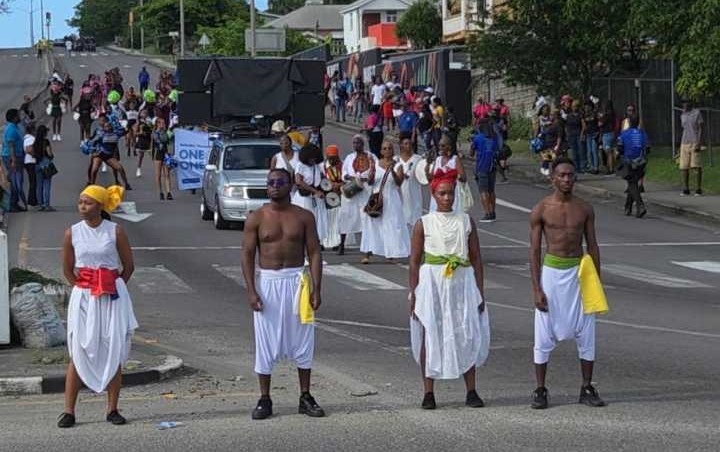
This year’s Emancipation Day observance in Barbados drew far fewer attendees than expected, prompting the island nation’s Minister of Pan-African Affairs and Heritage Trevor Prescod to issue a rallying cry for collective action to reclaim Black ancestral history, alongside the launch of groundbreaking new educational programs focused on reparations and Black studies.
Hosted at Haggatt Hall, the 2024 commemoration brought together a diverse cross-section of stakeholders, including cultural performance troupes, interfaith spiritual leaders, and senior government officials. The day’s schedule opened with a formal procession to the iconic Emancipation Statue – widely known locally as the Bussa Statue, a monument honoring the leader of one of Barbados’ most influential 19th-century slave rebellions. Key participating groups included delegates from the Nyabinghi Order and the Spiritual Baptist faith, whose members led opening prayers for the occasion. Cabinet members including Minister of Educational Transformation Chad Blackman and Minister of Agriculture Dr. Shantal Munro-Knight also joined the gathering to mark the historic date.
Speaking to the modest crowd, Prescod framed emancipation not as a one-off achievement locked in 19th-century history, but as an ongoing struggle that requires constant stewardship from successive generations. Drawing direct connections between the mass resistance that forced colonial powers to end chattel slavery across the Caribbean and contemporary fights for racial justice, he warned that hard-won freedoms cannot be taken for granted. “Freedom is not a fixed thing. If you don’t protect it, you lose it,” Prescod emphasized, noting that the 1834 abolition of slavery in the British colonies only came to pass after sustained, organized resistance from enslaved people across the region.
The minister publicly voiced his disappointment at the low turnout, arguing that the weak public turnout signals a troubling gap in historical consciousness among segments of the Barbadian public. He urged attendees to confront and honor the unthinkable hardships their enslaved ancestors endured to build the foundation for modern Barbadian freedom.
To address this gap in historical awareness and advance the movement for reparatory justice, Prescod announced a landmark new scholarship initiative that will fund fully funded master’s degrees in Black studies and reparations. The program will be run by the Ministry of Pan-African Affairs in formal partnership with two leading higher education institutions: the University of the West Indies and Scotland’s University of Glasgow. The partnership draws on Glasgow’s documented historical ties to the transatlantic slave trade and its ongoing work to acknowledge and redress that legacy.
Prescod also highlighted two recent cultural reclamation projects that he framed as critical stepping stones to rebuilding national collective memory: a well-attended tribute mass honoring iconic Jamaican Pan-African musician Bob Marley at St. Barnabas Church, and the successful recovery of a 300-pound plantation bell from the St. Joseph region, a physical relic of the island’s slavery era.
The commemoration included traditional rituals including ceremonial wreath-laying, formal speeches, community prayer, and a symbolic ringing of the recovered plantation bell by restoration specialist Shane Wiseman. In closing, the procession wrapped up with a vehicle and motorcycle tribute to fallen freedom fighters, a go-kart demonstration showcasing intergenerational engagement with the holiday, and a solemn moment of silence at the Bussa Statue to honor the sacrifice of all who resisted slavery and fought for emancipation.
Nyabinghi Order member Ras Martin echoed Prescod’s call for continued advocacy for reparations and the repatriation of African descendants whose ancestors were trafficked to the Caribbean during the slave trade. He noted that while Barbados is now widely marketed as a tropical paradise for visitors and wealthy residents, that transformation has not delivered equal justice and prosperity to the descendants of enslaved people who built the island’s economy. “Barbados was once thought of as hell on earth for the victims coming over from Africa,” Ras Martin said. “Over the years, Barbados was able to move from hell on earth to a paradise—but paradise for who? It is here that the reasoning on reparations and repatriation must be rooted. Freedom is not a fixed thing; if you don’t protect it, you lose it.”