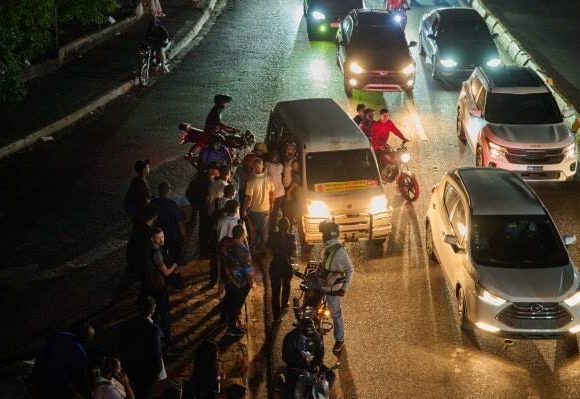
On a tense Thursday night in Santo Domingo Este, dozens of families from the Cayenas and Amalia neighborhoods took to a major city intersection to stage an impassioned demonstration against ongoing, extensive power outages they blame on the Eastern Electricity Distribution Company (Edeeste). Gathered at the crossing of Coronel Rafael Tomás Fernández Domínguez Avenue and Freddy Beras Goico Street, protesters made their frustration heard through the rhythmic clanging of pots and pans and loud, unified chants, turning a routine public intersection into a stage for widespread public discontent.
Many residents expressed that the cumulative strain of weeks of unreliable power service has finally pushed their communities past the breaking point. “We’re fed up, we can’t stand this anymore. We pay a lot for electricity here and we have no peace and quiet at any time,” one local protester stated publicly as the clamor of banging cookware echoed across the intersection. For residents enduring sweltering summer heat, the outages have created an unlivable daily situation: multiple protesters confirmed that many households have gone multiple days without enough power to run even basic cooling appliances.
“We don’t sleep; we haven’t slept for three days. We have to fan ourselves with our hands,” one female protester explained. She added one of the most contentious details fueling public anger: even with days of no power service, residential electricity bills still arrive with exorbitant, sky-high charges that families are forced to pay regardless of the lack of service.
Multiple community members described the ongoing crisis as a recurring nightmare that has upended daily life for working-class families in the area, and called on national Dominican authorities to step in and address the long-running problem. “Government, we are yours. Please, help us. We’re not sleeping. Electricity is incredibly expensive, up to 30,000 pesos, and when you go to Protecom (the Consumer Protection Office for electricity), you lose; you always have to pay,” a frustrated housewife told local journalist Harrison de Mora in a video recorded at the protest.
Another resident, holding his young child in his arms as he spoke, echoed the widespread despair among local households: “We are tired. The worst nightmare of all time has arrived. What a national tragedy. The pain has returned.”
As the demonstration progressed, protesters set fire to old tires in the street to draw more attention to their cause, prompting an immediate response from local law enforcement, with multiple National Police patrols deployed to the site to monitor the unrest. As of this report, Edeeste has not released any official statement responding to the complaints and grievances raised by the protesting residents.