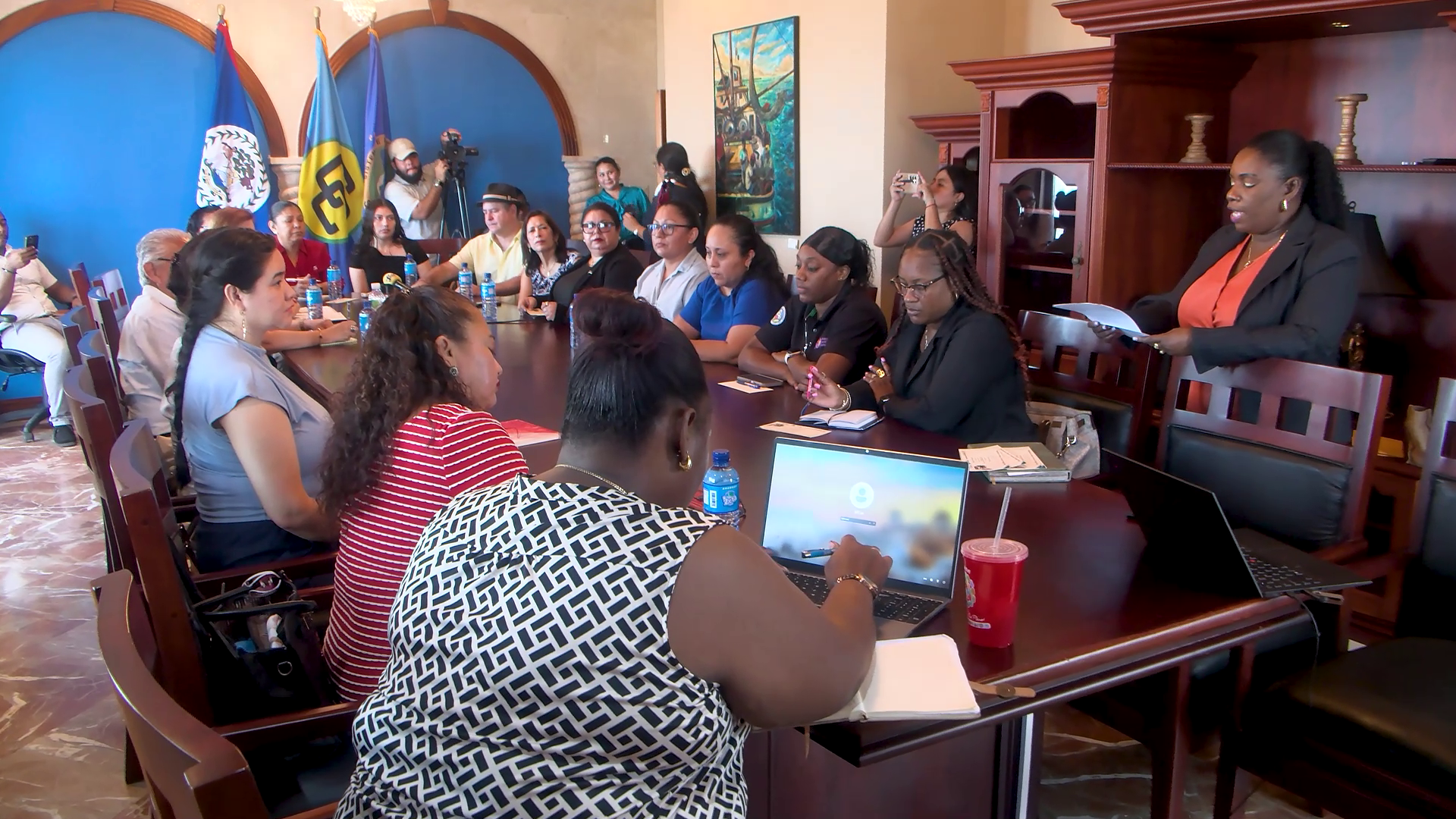
In a landmark diplomatic gathering held July 30, 2026 at Belize City’s Laing Building, Mexican diplomatic officials brought their country’s groundbreaking gender-centered foreign policy directly to neighboring Belize, sparking meaningful cross-border dialogue on advancing women’s empowerment and gender equity. The meeting, coordinated between Mexico’s embassy in Belize, Belize’s Special Envoy for Families and Children Rosanna Briceno, and the Belizean National Women’s Commission, featured a detailed keynote presentation by Mexican Ambassador to Belize Luisa Vallejo Barba that broke down the core framework and on-the-ground impact of Mexico’s new feminist foreign policy, launched after Claudia Sheinbaum made history in 2024 as Mexico’s first elected female president.
Under this new diplomatic approach, every Mexican government ministry, secretary-level department, and state institution is required to integrate gender equity considerations into all operational and policy work. While the policy does not always allocate dedicated new budgets to expand women’s participation, it reframes existing structures to create new pathways to balance for women already working in public service, unlocking fresh opportunities for diverse perspectives to shape national and international decision-making. Vallejo Barba, who brought more than three decades of public service experience to her ambassadorial role, opened up about her own complicated relationship with the gender quotas that have been a core tool of Mexico’s equity push. Admitting she initially felt ambivalent about advancing through a quota system rather than solely on the merit of her decades-long work, she emphasized that quotas have opened doors that were previously closed to capable women, and that recipients of these opportunities are committed to proving their worth through results.
“Most legal advances on equity built up over decades, but the quota system has driven real, tangible change,” Vallejo Barba noted during the discussion. “For me, it finally gave me the opportunity I’d worked toward for 30 years. Now it’s my job to deliver, and that validation matters.”
Briceno echoed the ambassador’s remarks, pushing back against common harmful stereotypes that frame feminism as aggressive or anti-male. She emphasized that for women across Belize, feminism is simply a demand for equal recognition of women’s capability and equal access to opportunity: “When people hear the word feminism, they often picture an angry woman causing trouble, but that’s not what this is about. We just want the world to know we are women, we are strong, and we can do anything that men can do. We just want equality.”
The discussion also highlighted the significant progress Mexico has made on domestic gender parity in recent years, thanks to constitutional reforms mandating equal representation. Today, women hold roughly 50 percent of seats in both Mexico’s Chamber of Deputies and Senate, bringing the country nearly to full gender parity in its national legislature. By comparison, just eight of the 44 seats in Belize’s national parliament are held by women, underscoring the gap that many Central American nations still face in gender-inclusive governance.
Local stakeholders in attendance reported that the information-sharing session offered valuable insights for Belize as it continues its own work to advance women’s political and social participation, laying the groundwork for deeper future collaboration between the two neighboring nations on gender equity initiatives.