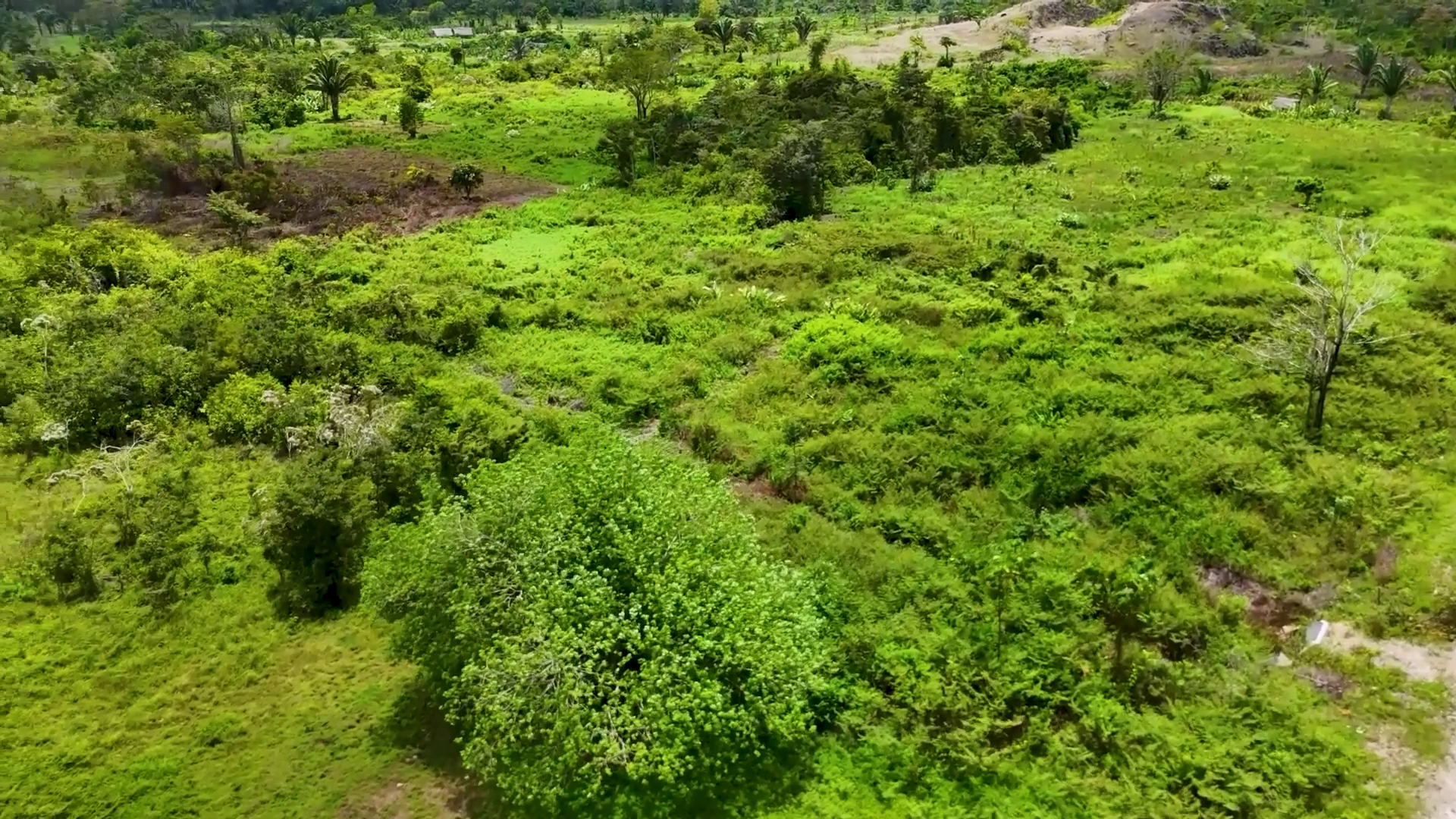
Eleven years after the Caribbean Court of Justice (CCJ) delivered a landmark decision recognizing the customary land rights of the Maya people of Belize, the long-running battle to fully implement that historic ruling remains unresolved. On July 30, 2026, Maya community leaders returned to the region’s highest appellate court, filing an application seeking clearer legal guidance on the terms of the 2015 consent order that was supposed to formalize the court’s original ruling. In a surprise dismissal, the court rejected the application, ruling that the court-ordered review process is already active and that all involved parties must continue working through the appointed review panel to settle outstanding disputes.
In his reading of the court’s decision, CCJ Justice Winston Anderson emphasized that the existing process must be allowed to run its full course before the court would consider intervening. “We think that process is now underway and that it should be given every allowance to complete its journey,” Anderson stated. “We therefore do not think we ought to intervene at this point in the way asked for by the applicants and instead would encourage the parties to continue working towards the culmination of the product that we have all looked toward for so very long.”
Senior Counsel Andrew Marshalleck, who represents the Maya leaders, outlined the current state of the ongoing review process following the hearing. A working draft of the land rights framework has already been completed, he explained, and the review panel is structured to include two government appointees and two representatives appointed by the Maya leadership. Recently, the Belizean government moved to add an additional representative for private third-party landowners to the panel, a decision that has deepened existing divisions between the negotiating parties.
Under the current process structure, the review panel is tasked with refining the draft framework before it is released for broad public consultation and ultimately submitted to Belize’s National Assembly for final approval. Marshalleck noted that the process remains in its early stages, with input currently limited to directly involved stakeholders before public consultation opens. “I doubt that there’ll ever be a situation where everybody is 100% in agreement with it, given the nature of what is being dealt with,” Marshalleck said. “There will always be some unhappiness about it. You won’t reach that ideal, but it’s about reaching something that works for everybody.”
While the Maya Leaders Alliance (MLA) did not secure the ruling it sought from the court, MLA spokesperson Cristina Coc rejected framing the decision as a step backward for the movement. Coc argued that the process had effectively stalled for years, and that the hearing produced one critical win: the court explicitly confirmed that the Belizean government does not have the authority to unilaterally define Maya customary land rights.
Coc emphasized that Maya communities have maintained formal, long-standing systems of customary land tenure for generations, and that only the Maya people themselves can accurately define those practices. Speaking in Kriol to emphasize her point, she pushed back against the government’s current proposal of a 5-acre per-person land allotment, calling the plan a misrepresentation of traditional communal land use practices.
“I don’t think it was a setback. We don’t see it as a setback at all,” Coc said. “I do think that what we’ve gained from today’s hearing is that the government is now more firmly on notice that it needs to adhere to the relevant standards and not just exercise its imaginations. […] When you come and you then begin to say, ‘I think you only need five acres. That enough fi make unu live pan.’ Da noh that da mi your job. Your job da mi fi see what we done the do, how we use the land, how we live on the land and then for recognize that and identify where it is we do those practices.”
Coc noted that Maya communities have already completed surveying and harmonizing the majority of their customary land boundaries, and repeated a call for responsible government ministers to engage directly with the Maya leadership to validate the community’s proposed boundaries, rather than imposing an external framework.
With deep divisions remaining on the review panel, exacerbated by the recent addition of the third-party landowner representative, what is already a decades-long fight for formal recognition of Maya land rights shows no signs of reaching a speedy resolution. This report is a transcribed excerpt from an evening television news broadcast.