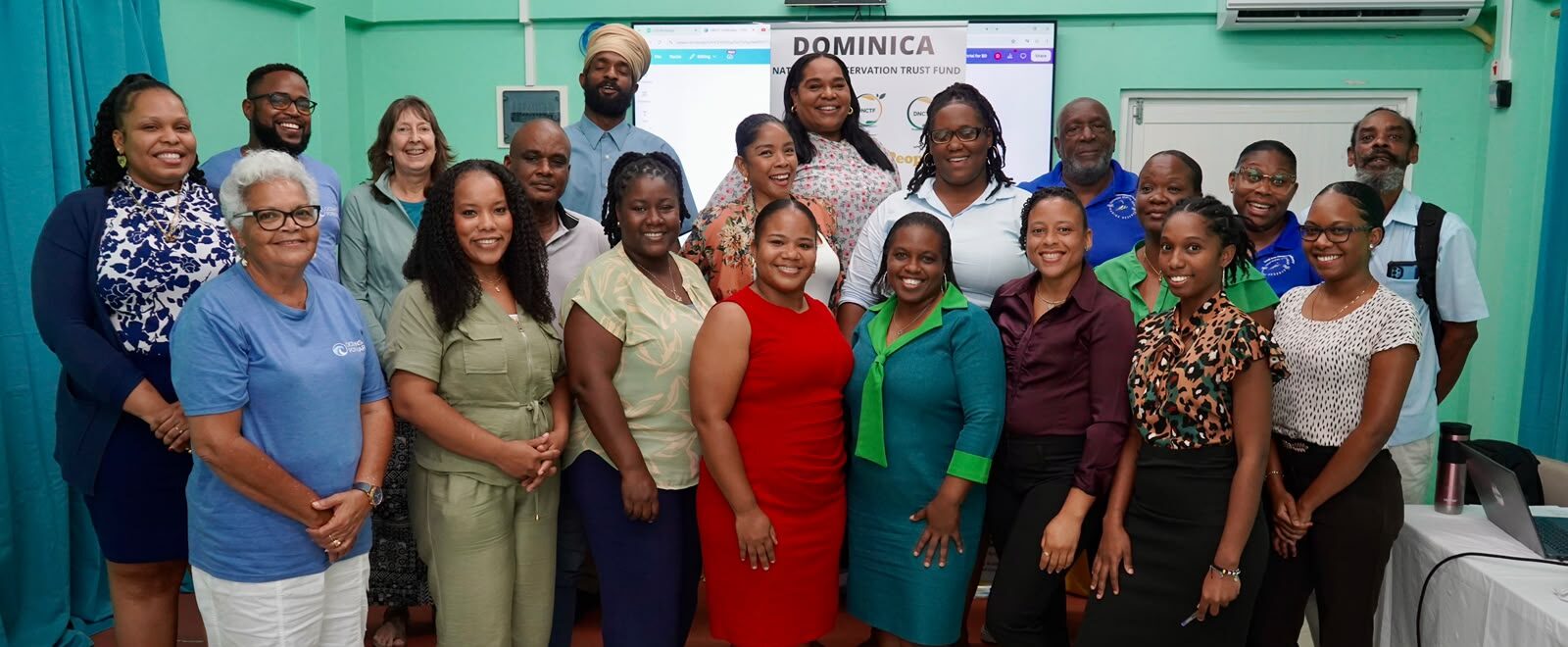
Grantees carrying out island-wide biodiversity conservation projects in Dominica have completed a targeted capacity-building workshop designed to sharpen their skills in project administration, financial transparency, and environmental protection compliance.
Hosted on July 28, 2026, the specialized training was organized for recipients of awards from the Caribbean Biodiversity Fund’s (CBF) CRAB Pro-Nature Grant Programme, according to an official statement released by the Dominica National Conservation Trust Fund (DNCTF). The workshop centered on two core competency areas: formal reporting to financial donors, and the development and implementation of Environmental and Social Management Plans (ESMP).
This regional capacity-building initiative forms part of the broader Caribbean Regional Architecture for Biodiversity (CRAB) Project, which receives backing from the Agence Française de Développement (AFD) and the Fonds Français pour l’Environnement Mondial (FFEM), with resourcing channeled through the Caribbean Biodiversity Fund.
The training session was tailored specifically to strengthen two high-priority conservation projects active on the island: the Rapid Response to Lethal Yellowing Disease Project, which targets a devastating palm pathogen, and the coral-focused initiative working to boost reef restoration, monitoring, surveillance, and regulatory compliance within the Soufriere and Scotts Head Marine Reserve.
Instruction was led by independent specialist Ms. Lyn Baron in partnership with DNCTF Chief Executive Officer Dr. Rhonda Linton. The pair walked all participating organizations through the strict financial and environmental governance requirements that come with international donor funding, clarifying expectations and addressing common implementation challenges.
Participants left the workshop with hands-on, actionable knowledge covering end-to-end financial management processes: from formal donor reporting protocols and budget allocation to standardized record keeping, required supporting documentation, and frameworks for maximizing the value of every grant dollar. On the environmental and social governance side, attendees explored critical topics including environmental and social risk mapping, inclusive stakeholder engagement, formal grievance redress mechanisms, integrating gender equity into project design, rights considerations for Indigenous Peoples, protocols for managing unexpected archaeological or ecological finds, incident reporting protocols, performance monitoring, and sustainable waste management.
Facilitators also emphasized evidence-based best practices for upholding robust environmental and social safeguards throughout project lifecycles. Key takeaways included the importance of conducting early risk mapping to flag potential harms before implementation, rolling out targeted mitigation measures for identified risks, maintaining consistent open communication with impacted communities, creating thorough documentation of all project activities, responding rapidly to community grievances and unplanned incidents, and conducting regular assessments to confirm safeguard measures are delivering intended results.
In its post-workshop statement, DNCTF emphasized that effective support for conservation goes far beyond cutting checks for local projects. Building the operational and governance capacity of grant recipients, the organization noted, is a non-negotiable foundation for ensuring projects are run efficiently, maintain full accountability to funding partners, and deliver long-term, tangible benefits both for Dominica’s unique native ecosystems and the local communities that depend on them.