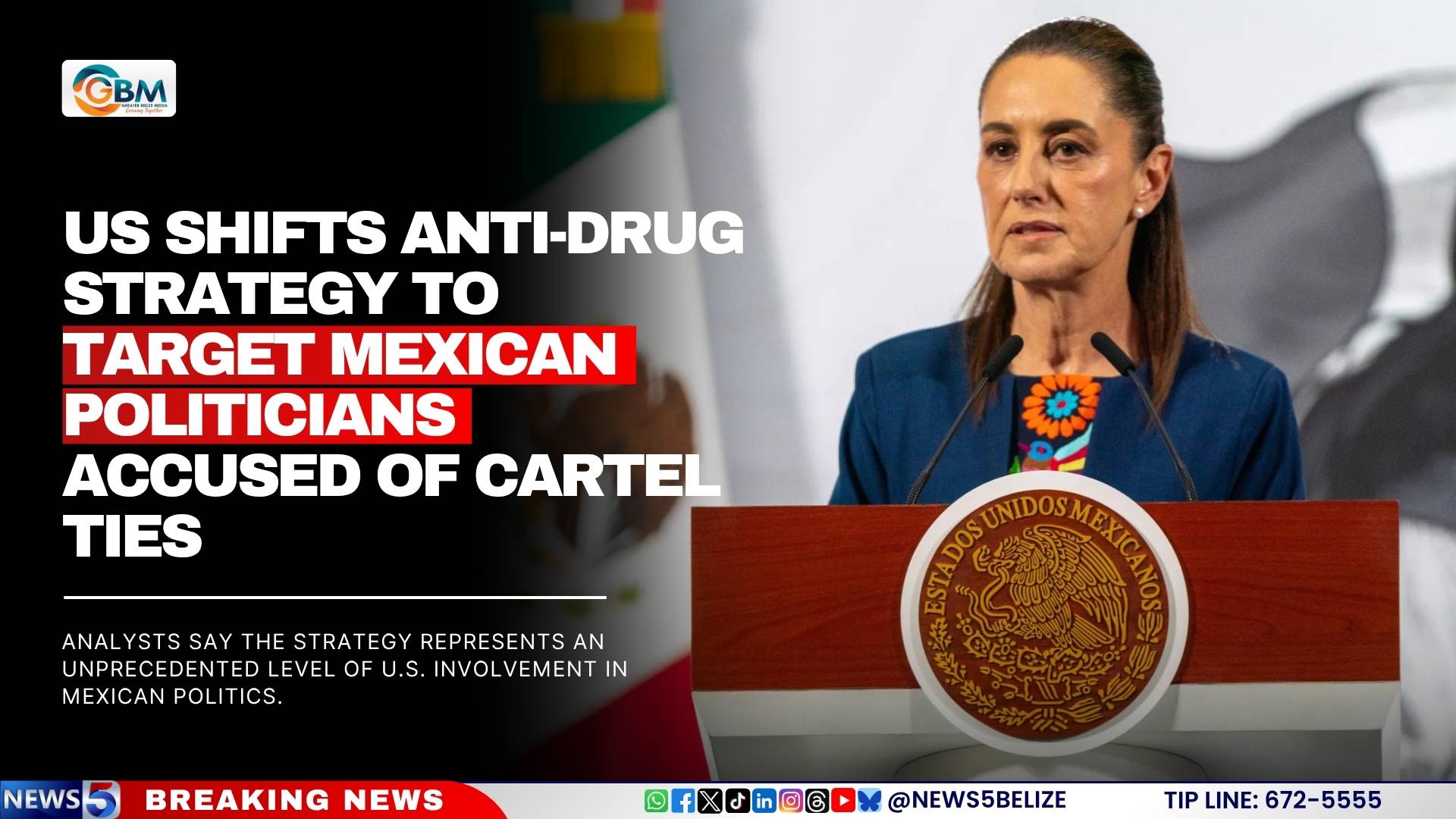
In a major departure from decades of counter-narcotics policy that centered on capturing or killing cartel kingpins, the United States has announced a sweeping new anti-drug strategy that directly targets Mexican public officials accused of accepting illegal funding and bribes from transnational criminal organizations.
The Trump administration’s new approach rests on the claim that drug cartels have systematically infiltrated Mexican politics by funneling untraceable cash into electoral campaigns to install candidates who will protect the cartels’ smuggling routes, production operations, and illegal business interests. This shift has already sent ripples through bilateral relations, igniting a fierce public dispute over national sovereignty between the two North American neighbors.
To date, U.S. authorities have already enacted concrete measures under the new policy: multiple Mexican officials have had their U.S. travel visas revoked, including Marina del Pilar Ávila Olmeda, the sitting governor of Baja California. In a highly unprecedented move, Rubén Rocha Moya, governor of the key cartel heartland state of Sinaloa, has been formally indicted by a U.S. federal court on charges of accepting hundreds of thousands of dollars in bribes and electoral support from the infamous Sinaloa cartel. Both governors, who belong to Mexico’s ruling Morena party, have issued categorical denials of all allegations against them.
Security and policy analysts note that this strategy marks an extraordinary escalation of direct U.S. involvement in Mexico’s domestic political affairs. Many observers suggest the new charges stem from fresh evidence obtained through recent high-profile arrests and extraditions of top cartel leaders, which have yielded detailed records of criminal payoffs to public officials at multiple levels of government.
Corruption researchers who study organized crime’s penetration of Mexican politics have long warned that cartel financing of electoral campaigns has grown increasingly pervasive, especially at the state and local level. Regional and local political campaigns in Mexico often rely heavily on unreported cash contributions that are nearly impossible to trace. A 2018 academic analysis found that candidates running for governor routinely spend two to three times the amount they officially disclose to election regulators, with the unaccounted funds linked to cartel donations, embezzled public funds, and private business interests seeking political favors.
Mexican President Claudia Sheinbaum has openly challenged the credibility of Washington’s accusations, warning that the U.S. campaign against Mexican elected officials poses a direct threat to Mexico’s national sovereignty. While her administration has implemented its own reforms to screen political candidates for ties to organized crime and has maintained ongoing military and law enforcement operations against cartel networks, Sheinbaum has rejected a U.S. extradition request for Governor Rocha. She emphasized that U.S. authorities have failed to share sufficient concrete evidence to justify the detention and extradition of a sitting Mexican governor.
The ongoing dispute has significantly strained already tense U.S.-Mexico relations, with Sheinbaum repeatedly accusing the United States of attempting to interfere in Mexico’s internal political processes. Independent security analysts have struck a cautious tone on the new U.S. strategy: while targeting corrupt officials who protect cartels can help weaken and expose criminal networks, they argue that lasting progress in dismantling transnational organized crime will require long-term, systemic reforms to strengthen Mexico’s independent judiciary, professionalize its law enforcement institutions, and root out systemic political corruption. Without such deep reforms, analysts warn, the strategy risks only exacerbating bilateral tensions without delivering meaningful progress in reducing drug trafficking and violence.