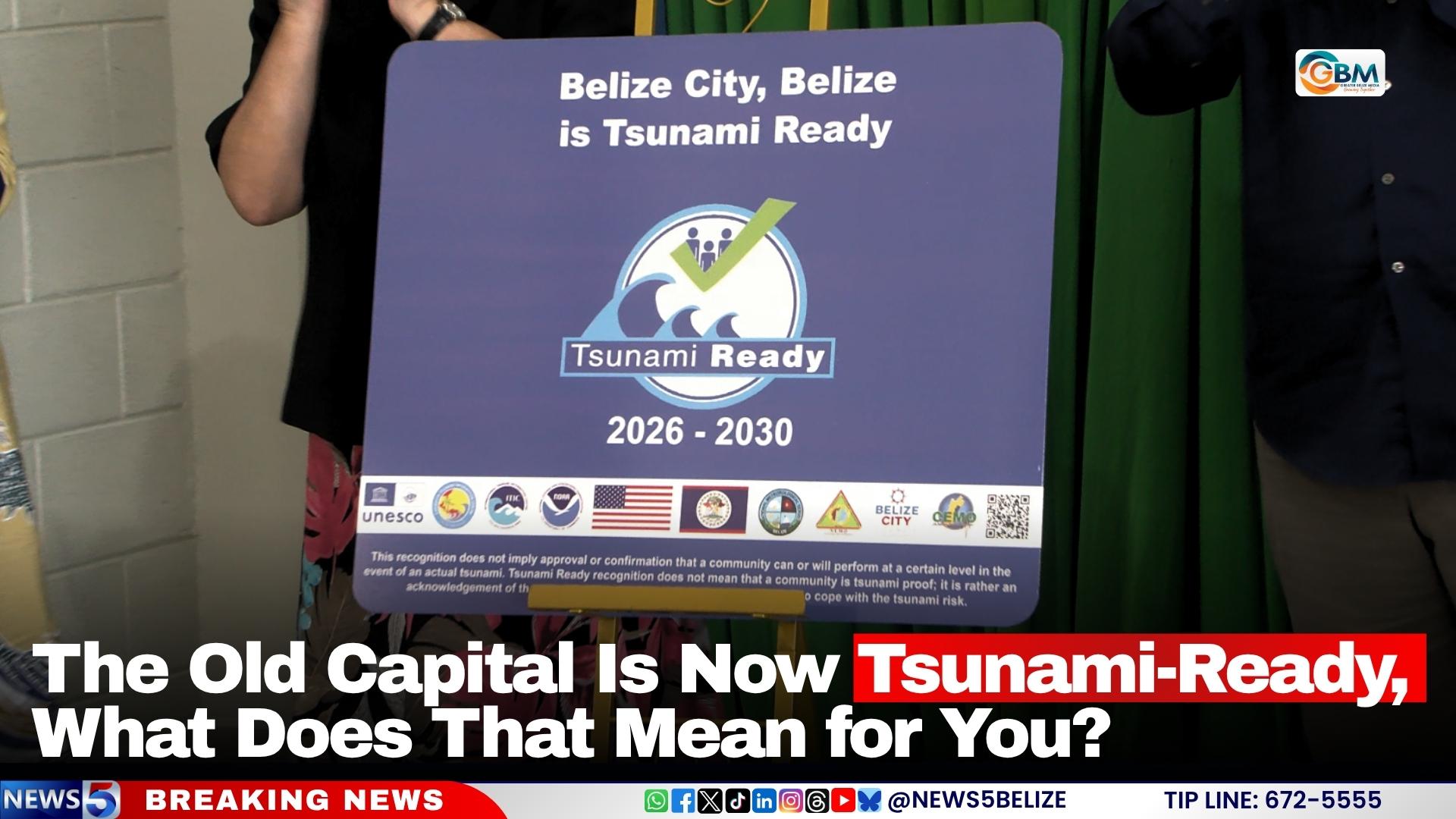
After nearly eight years of incremental planning, hands-on training, and widespread public outreach, Belize’s former capital city Belize City has formally received the UNESCO Tsunami-Ready designation, marking a major milestone in Caribbean coastal disaster risk reduction. As the 23rd community in the Caribbean region to meet the strict international preparedness standard, the milestone shines a spotlight on Belize’s years-long push to protect its vulnerable coastal population from one of the region’s deadliest natural hazards.
The journey to recognition has not been smooth. The initiative first launched in 2018, starting with preliminary hazard modeling and the drafting of public evacuation maps, but progress stalled soon after the initial phase. Christa von Hillebrandt-Andrade, Deputy Director of the International Tsunami Information Center-Caribbean Office, explained that the extended delay nearly cost Belize the designation entirely. With U.S. funding for the project set to expire, the international team was prepared to redirect its support to another community that ultimately secured its own Tsunami-Ready status in Belize’s place.
It was not until 2024 that momentum reignited, when Belize’s national and municipal authorities — including the National Emergency Management Organisation (NEMO), the National Meteorological Service (NMS), and the Belize City Council — restarted collaboration with the U.S. National Oceanic and Atmospheric Administration (NOAA) and the National Weather Service to push the project across the finish line.
Today, Belize City boasts a completed network of marked evacuation assembly points and clear directional signage installed across all high-risk coastal zones of the city. Henry Charles Usher, Belize’s Minister of Disaster Risk Management, clarified the function of these new gathering points for local residents: Designated staff from the Belize City Council, the City Emergency Management Organization (CEMO), and NEMO will be on site to coordinate crowds and guide evacuees to safe zones during an emergency, though transportation to the final safe areas is not guaranteed to be available for all evacuees.
Despite the celebratory milestone, both national officials and international partners emphasize that the designation does not eliminate Belize City’s inherent tsunami risk, nor does it mark the end of preparedness work. “This is really just the beginning of the process,” Usher noted. “This is all about continuing to be ready, continuing that community engagement, preparedness, and education and awareness when it comes to tsunami.”
Looking ahead, the government plans to expand the Tsunami-Ready framework beyond Belize City to build coordinated disaster preparedness across the entire country, with ongoing investment in public education, infrastructure upgrades, and community engagement to keep coastal populations safe as climate change increases the risk of extreme coastal events globally.