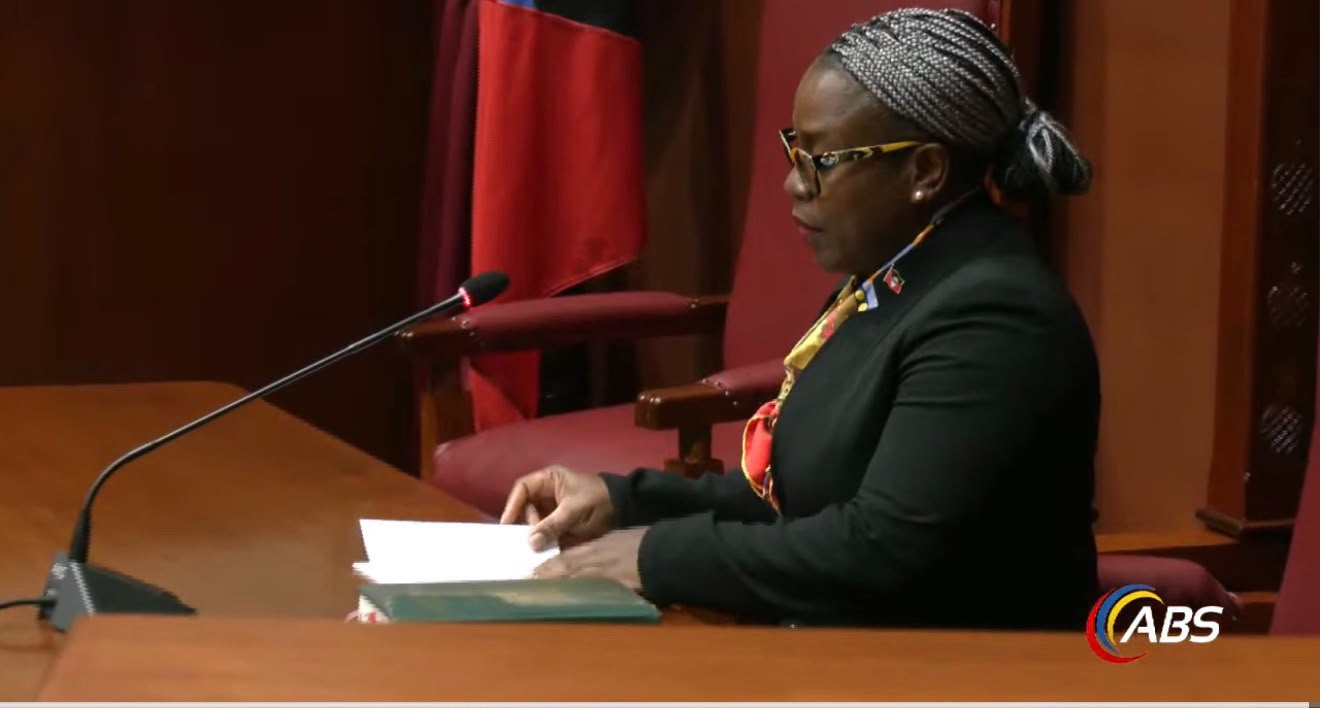
On July 23, 2026, a contentious senate debate marked a notable shift in the dynamics of the nation’s legislative chamber, according to an opinion piece shared by a regular observer of parliamentary proceedings, Alex. For years, this observer has followed senate debates from home via television broadcasts, but this particular session stood out for an unprecedented display of assertiveness from Senate President Alincia Williams-Grant.
Widely known for her calm, measured approach to presiding over senate business, Williams-Grant publicly expressed visible frustration during the debate, a departure from her typical composed demeanor. The observer notes that this outburst was not unprovoked: opposition senators, particularly senior Senator Malaka Parker, pushed the Senate President outside her usual professional comfort zone with aggressive procedural challenges and pointed questioning.
Public and political commentary has already split over Williams-Grant’s reaction, with some critics framing her response as evidence of partisan bias, while others dismiss it as a calculated political maneuver. But from the writer’s perspective, the Senate President’s conduct reaffirms her reputation as a thoroughly professional, even-handed leader who has consistently demonstrated remarkable patience and composure throughout her tenure.
Beyond her leadership skills, the author highlights Williams-Grant’s extraordinary linguistic command: she speaks the formal King’s English with striking eloquence and clear articulation, and has a unique, impressive ability to seamlessly code-switch to the local native dialect when emphasizing key points for legislators and audiences watching at home. This skill, the writer argues, makes her uniquely effective at uniting and guiding the chamber during tense moments, and deserves public recognition.
Turning to the newly seated opposition senate cohort, the observer offers rare praise, arguing that this group of legislators is the strongest opposition bloc assembled in decades. The performance during the July 23 debate makes clear that this is a cohesive, well-prepared team that will emerge as a formidable political force in the chamber over the coming term. Led by Senators Chester Hughes, Malaka Parker, Ashworth Azille, and Johnathan Wehner, the opposition has already demonstrated that they are fully prepared to tackle tough policy debates and push back against government initiatives aggressively.
This new, energized opposition means that ruling party senators, despite holding a numerical majority in the chamber, will not face an easy, unchallenged term. The July 23 debate was merely a preview of the tense, confrontational legislative battles ahead. In the coming sessions, observers should expect more frequent emotional outbursts, increased cross-talk between opposing sides, and more frequent procedural clashes than have been seen in previous terms.
Despite the rising tensions, the writer expresses unwavering confidence that Williams-Grant has the skill and authority to maintain order and keep all senators accountable. The stern public warning she issued during the July debate should serve as a clear wake-up call to legislators on both sides of the aisle: the rules of the chamber will be enforced firmly going forward, and business as usual will not be tolerated. As the writer puts it, Williams-Grant has already made her expectations clear, and all senators would be wise to heed her warning.