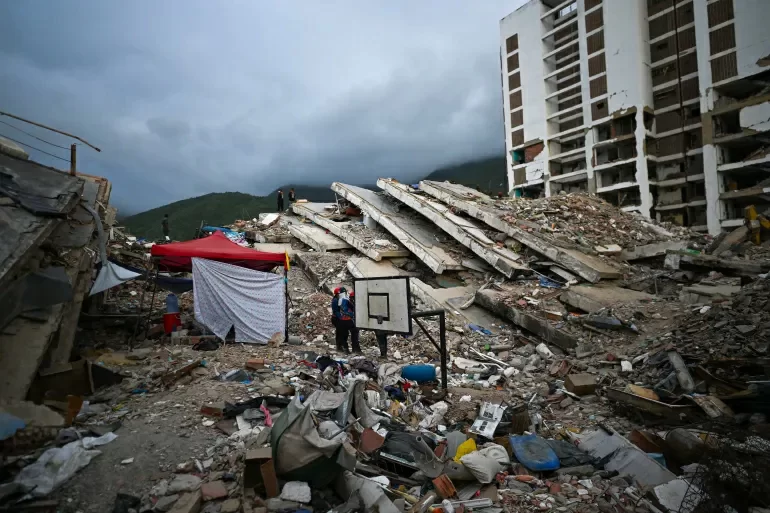
Nearly one month after a pair of powerful earthquakes struck Venezuela in late June 2026, recovery efforts are already underway, but a new World Bank assessment has laid bare the massive scale of the challenge facing the crisis-battered South American nation. The Washington-based global financial institution estimates that the back-to-back seismic events, which registered magnitudes 7.2 and 7.5 respectively, caused a total of $19.6 billion in physical damage across the country – a figure that underscores the long, difficult road to reconstruction ahead.
The breakdown of damage provided by the report paints a clear picture of which sectors have been hit hardest. Residential properties account for 47% of total losses, while critical public and private infrastructure makes up another 27%, and non-residential commercial and public buildings contribute the remaining 26%. In a statement accompanying the report, Susana Cordeiro Guerra, World Bank Vice President for Latin America and the Caribbean, emphasized that the earthquakes have upended countless lives, destroyed core community infrastructure, and added unprecedented new barriers to Venezuela’s already stalled economic recovery. “Effective, equitable recovery starts with reliable, data-driven understanding of the full scope of harm,” she noted.
Venezuelan national authorities have already confirmed a staggering human toll from the June 24 disaster. At least 5,000 people have been confirmed dead, nearly 17,000 more have suffered injuries, and roughly 18,000 citizens have been left homeless by the collapsed and damaged buildings. This tragedy unfolds against a backdrop of long-running economic crisis that has left Venezuela deeply vulnerable to large-scale disasters. Long before the earthquakes struck, World Bank data shows 76% of the Venezuelan population already lived below the poverty line, a crisis driven by decades of economic mismanagement and harsh, long-standing economic sanctions imposed by the United States.
Cordeiro Guerra warned that without timely, targeted additional investment from the international community, the cascading negative impacts of the disaster on Venezuela’s already weakened productive capacity and already low standards of living will significantly slow all recovery efforts. The World Bank’s damage estimate was compiled using the institution’s Global Rapid Damage Estimation framework, which combines local seismic data, high-resolution satellite imagery, and on-the-ground damage reports from Venezuelan government agencies and international humanitarian organizations to produce a comprehensive assessment. The report confirms that the coastal states of La Guaira and the Distrito Capital, the country’s national capital district, suffered the most severe destruction.
The assessment is designed to give both the Venezuelan government and international humanitarian aid organizations a clear baseline to plan relief and reconstruction efforts. Yet despite preliminary pledges of international support, major questions remain about where the billions in required reconstruction funding will come from. The United States, which has exerted significant influence over Venezuelan policy since January 2025, has recently announced a $200 million contribution to the International Committee of the Red Cross earmarked for conflict and natural disaster victims across multiple regions. Critically, however, none of these funds have been specifically allocated to Venezuela’s earthquake recovery efforts, leaving a massive gap in funding that threatens to derail progress on rebuilding.