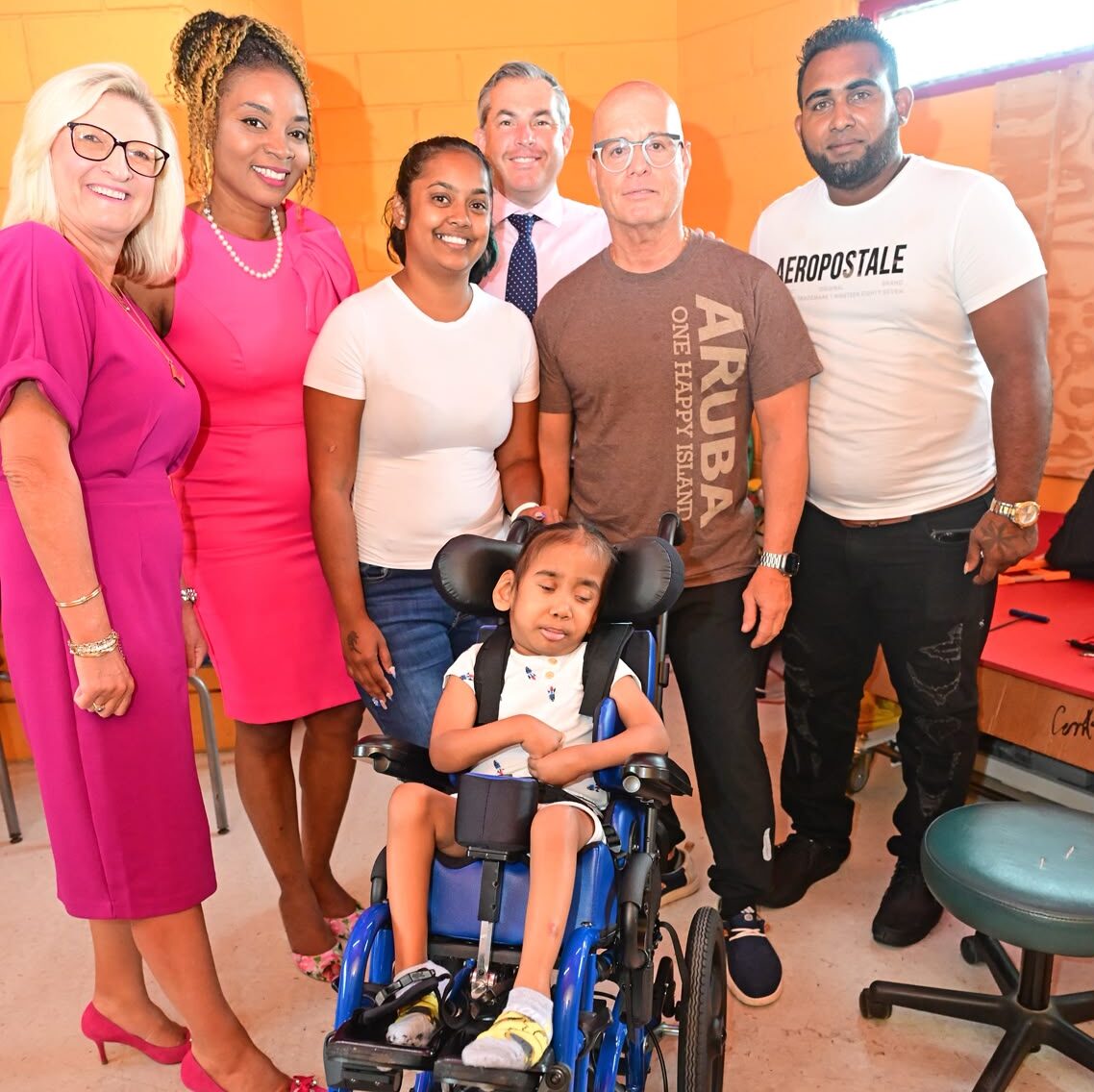
For more than 25 years, a life-changing annual program funded by the Sandy Lane Charitable Trust has been transforming the daily lives of children living with mobility challenges across Barbados, by delivering specially customized wheelchairs that boost comfort, correct posture, and foster greater independent living.
Hosted at the Albert Cecil Graham Development Centre, the annual clinic brings together local Barbadian physiotherapists and experienced wheelchair technicians from Puerto Rico to conduct personalized assessments, retrofit existing devices, and build custom seating and frame configurations tailored to each child’s unique physical needs. What began as a small community initiative in 1998 has grown into a vital support service that removes barriers to education and social inclusion for young people with limited mobility.
Yvonne Wnuck-Ward, a leading physiotherapist at the centre, explained that the custom-designed wheelchairs deliver far more benefits than basic movement support. Beyond enabling independent travel, proper body alignment provided by specialized seating prevents serious long-term health complications that often arise from prolonged incorrect positioning. For children with severe mobility impairments, extended periods of lying down or misalignment can lead to permanent muscle contractures, skeletal deformities, and scoliosis—an abnormal curvature of the spine. Correct alignment also directly improves core bodily functions, including breathing and digestion, that are often disrupted by poor positioning.
Every wheelchair delivered through the program is built around the specific needs of the individual child. The process begins with a referral to the centre’s physiotherapy department, where clinicians evaluate each child to confirm their need for mobility support and identify specific risk factors for secondary health conditions. The high level of customization comes with a significant price tag: advanced models with specialized features can cost up to $8,000 USD, with individual components such as adjustable headrests, custom support straps, and safety seatbelts adding substantially to the total cost. This makes achieving a precise, long-lasting fit a top priority for the clinical team.
To maximize the value and impact of every investment, the wheelchairs are engineered with adjustable components that can be modified as children grow. Frames can be extended, seating can be widened, and support structures can be repositioned to accommodate changes in height and body size as children age. Once a wheelchair is outgrown completely, it is refurbished and reissued to another child in need, extending the lifespan of each device and stretching program funding further.
Unlike many one-time outreach programs, the centre offers ongoing wheelchair support year-round, in addition to the annual specialist clinic. Wnuck-Ward noted that the centre runs weekly wheelchair clinics, serving roughly 30 additional patients annually. Local physiotherapists have received specialized training to handle routine adjustments, repairs, and refitting, meaning only the most complex cases require input from visiting external specialists. Common repairs, from faulty brake systems to broken tilt mechanisms, can be addressed in-house quickly, minimizing disruption to a child’s daily routine. This continuous support ensures that children always have access to well-fitting, functional equipment that supports their quality of life, participation in school, and engagement in community activities.
Pippa Challis, a trustee with the Sandy Lane Charitable Trust, which provides core funding and logistical support for the program, credits the local clinical team for the initiative’s decades-long success. “It’s their passion. They do it day in and day out, and it really is their dedication to these very, very special children that drives this,” Challis said. While the trust secures funding and coordinates the annual specialist visits, the local physiotherapy team works directly with children and families on an ongoing basis, developing deep understanding of each child’s evolving needs and communicating exactly what resources are required to keep the program running effectively.