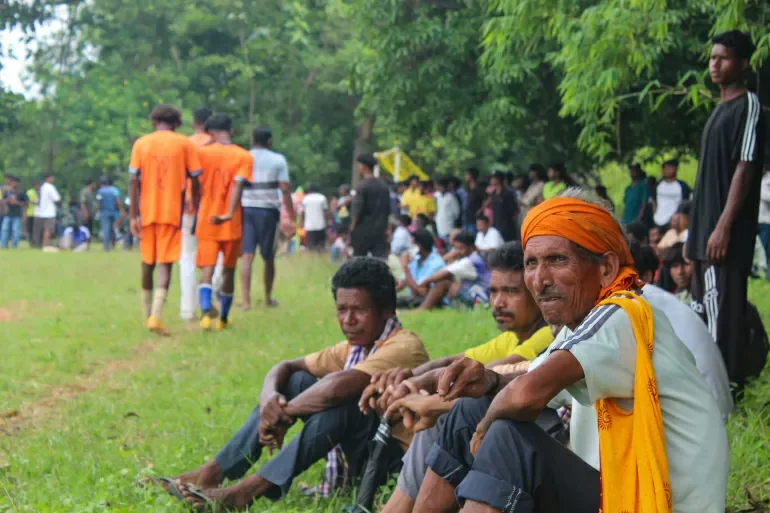
As the world turned its collective attention to Spain’s historic second FIFA World Cup victory this July, a remote tribal village in eastern India has marked the global football frenzy with a one-of-a-kind local tournament that blends global sport with centuries-old indigenous tradition.
Nestled in the tribal-dominated Chaibasa district of Jharkhand state, the village of Tirilbasa played host to the Rangila Star Tirilbasa Tournament, a community-driven football competition that draws teams from across the region to celebrate both the love of the game and the cultural identity of the local Ho tribe, the area’s original inhabitants. Held from July 14 to 17, the tournament welcomed 64 teams from surrounding villages, but what sets it apart from mainstream competitions is its distinctive prize structure: alongside cash awards, winning teams take home live goats, known locally as *khassi*, that hold deep cultural significance for the Ho community.
For the Ho people, khassi are far more than livestock. Beyond their value as a food source, the animals play a central role in traditional tribal ceremonies and community gatherings, making them a meaningful symbol of victory rather than just a practical reward. This year’s champion side, NCS Maudi, claimed the top title, walking away with 15,000 Indian rupees in cash and three goats. Winning teams often slaughter the goats during community feasts to share the joy of victory with the entire village, strengthening social bonds, while some choose to keep the animals as living trophies of their success.
While the tournament adheres to most core FIFA rules, it includes thoughtful local adjustments to fit the needs of rural tribal communities. Squads are limited to nine players per side, at least six of whom must be permanent residents of the team’s home village, and the offside rule is eliminated entirely. These tweaks not only reinforce village solidarity but also create a level playing field that allows young talent from small, marginalized communities to showcase their skills without the barriers of mainstream competitive football.
Beyond the on-pitch action, the four-day tournament serves as a major annual social gathering for the entire region. Thousands of villagers travel to Tirilbasa to cheer on their local teams, sample traditional tribal cuisine, share homemade rice beer, and take part in additional festivities including folk games and community competitions. The event has become a cornerstone of social connection in the sparsely populated district, bringing dispersed tribal communities together around a shared love of sport.
As a state, Jharkhand is one of India’s least economically developed, but it boasts an extraordinarily rich cultural heritage rooted in its large indigenous population. In recent years, the region has quietly emerged as an unexpected hotbed for grassroots football, with community-run tournaments like the Rangila Star Tirilbasa event providing critical platforms for young talent to develop and helping nurture a growing, inclusive local football culture.
Ultimately, the tournament stands as a powerful reminder that football is far more than a global commercial spectacle. While the FIFA World Cup unites billions of fans across the planet, this small tribal tournament in eastern India demonstrates how the love of the game can be deeply woven into local culture and community identity, creating a uniquely joyful, inclusive celebration that honors both global sport and ancient tradition.