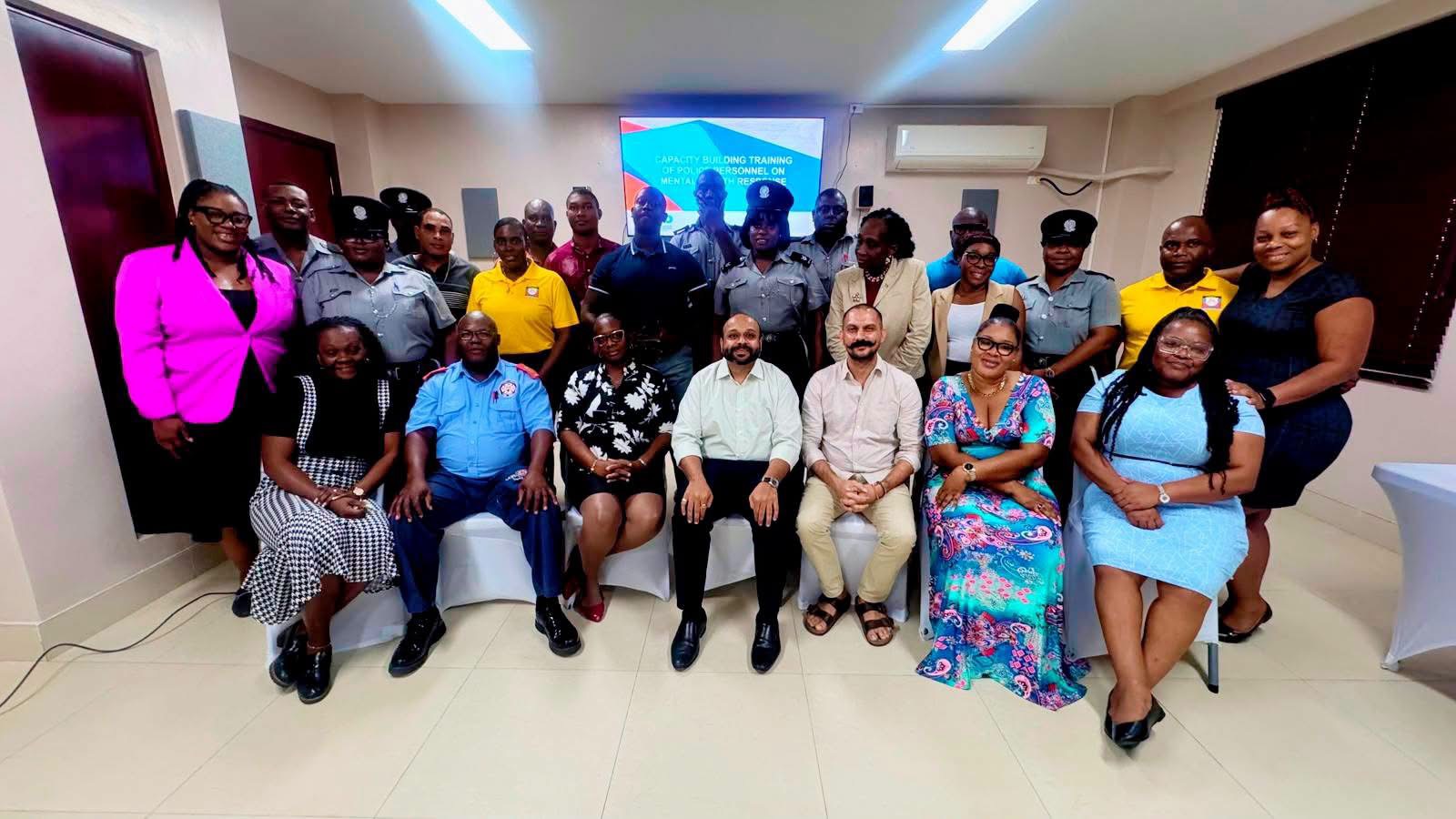
Frontline public safety and emergency responders in Antigua and Barbuda have completed a targeted four-day training program focused on crisis management and de-escalation for mental health emergencies, a joint initiative between the country’s Ministry of Health, Wellness, Environment and Civil Service Affairs and the Pan American Health Organization (PAHO).
Held between July 14 and 17, 2026, at the Antigua and Barbuda Port Authority Conference Room, the training gathered participants from across six key first responder and public safety agencies. Trainees included representatives from the Antigua and Barbuda Police Force, Antigua and Barbuda Defence Force, His Majesty’s Prison, the National Office of Disaster Services (NODS), the Office of National Drug and Money Laundering Control Policy (ONDCP), and the Antigua and Barbuda Fire Service.
Unlike generic emergency response training, the program centered on delivering evidence-based, practical skills tailored specifically to interactions with people experiencing acute mental health crises. Trainees learned evidence-based frameworks to conduct safe on-site assessments, communicate effectively with individuals in distress, and de-escalate tense situations before they escalate to harm. The curriculum also addressed critical systemic and social barriers to quality mental health response, including sessions on reducing widespread stigma around mental illness, upholding the human rights of people living with mental health conditions, and building stronger cross-agency coordination for emergency responses. As the most frequent first point of contact for mental health crises, these frontline teams are now better positioned to deliver appropriate, compassionate support.
This initiative is part of the Antigua and Barbuda government’s longstanding, ongoing commitment to upgrading the country’s national mental health care system. Leadership from the Ministry emphasized that training first responders fills a critical gap in local emergency infrastructure: equipping frontline staff to handle mental health crises effectively not only improves outcomes for people in distress, but also protects the safety of both responders and the broader community.
Through targeted investments in upskilling frontline emergency personnel, Antigua and Barbuda is continuing to strengthen its national mental health response framework and improve long-term outcomes for the thousands of residents living with mental health conditions across the twin islands.
In closing statements following the training, the Ministry of Health, Wellness, Environment and Civil Service Affairs publicly thanked PAHO for its sustained partnership and technical expertise in advancing local mental health initiatives. The Ministry also extended gratitude to all participating agencies and individual trainees for dedicating time and effort to building their capacity in this high-priority, life-saving area of public safety.