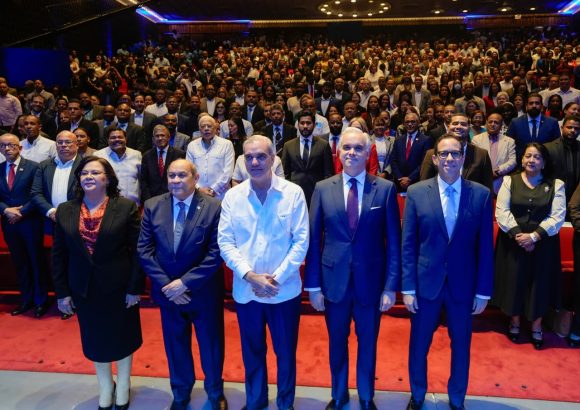
SANTO DOMINGO — On Wednesday, Dominican Republic President Luis Abinader formally accepted the final results of the country’s landmark National Consultation on the Future of Education, promising to translate the widespread public consensus forged through the multi-stakeholder process into actionable policy that will reshape the nation’s education landscape for decades to come.
The handover ceremony, held at the National Palace, marked a key milestone in the government’s push for systemic educational reform. The consultation, organized and executed by the Executive Commission for Educational Transformation, represents one of the broadest exercises in citizen engagement in Dominican education policy in recent history. Stakeholders from every corner of society — including classroom educators, higher education institutions, private sector leaders, civil society groups, local families, and Dominican citizens residing overseas — contributed insights and recommendations that were consolidated into the final report.
Speaking at the event, President Abinader highlighted that the consultation’s outcomes reflect a unified national vision for the future of education, and will act as the foundational blueprint for a completely updated legal framework governing the sector. “The law we will draft will not codify the outdated system we currently operate under; it will pave the way for the modern, responsive system our country will need for future generations,” Abinader stated.
The president outlined five core priorities that will guide the upcoming reform process: expanding and strengthening early childhood education, growing access to inclusive education for marginalized groups, upgrading technical and vocational training programs to meet labor market demands, reinforcing the quality of higher education, and equipping students with the adaptable skill sets required to thrive in a fast-evolving global economy.
The final report codifies a clear set of priorities identified through the consultation process. Key among these are revisions to outdated school curricula, more rigorous and ongoing teacher training initiatives, and the deeper integration of digital technology, artificial intelligence, innovation practices and academic research into daily learning. The report also emphasizes the urgent need to foster critical thinking, creative problem-solving, ethical reasoning, and strong civic values among students.
Moving forward, the consultation’s findings will form the backbone of new national public education policies, as well as the drafting of an updated General Law on Education, Science, and Technology. The overarching goal of the reform push is to modernize the Dominican education system and create a skilled, competitive workforce that will drive long-term, inclusive national development.