From July 1 to 3, 2026, two landmark regional gatherings – the Antilles Regional Security Conference and the 19th Antilles-Guyane Regional Cooperation Conference (CCRAG) – convened at the Université des Antilles in Martinique, bringing together political leaders, security officials, and regional bloc representatives from across the Caribbean and beyond to address interconnected modern challenges and deepen cross-territory collaboration.
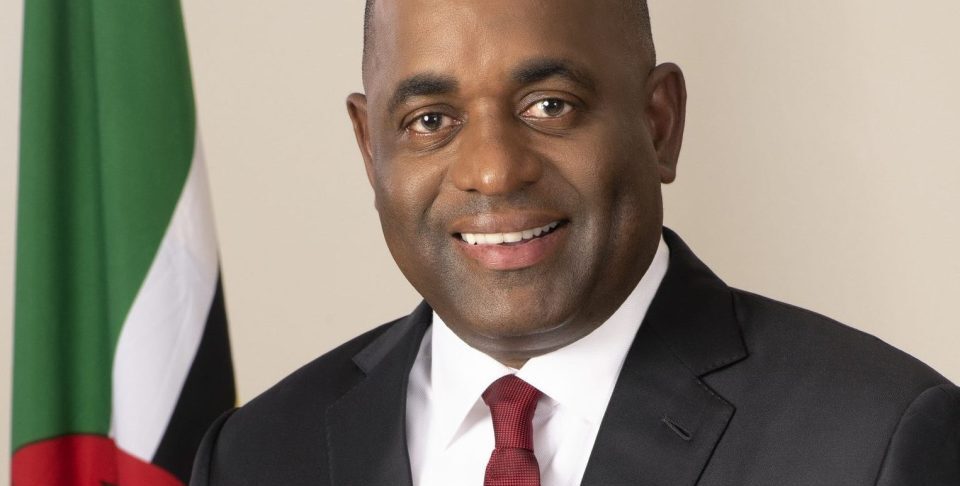
Hosted by the Territorial Collectivity of Martinique (CTM) and overseen by France’s Ambassador-at-Large for Regional Cooperation in the Atlantic Region Arnaud Mentré, the conferences centered on a redefined vision of regional security, one that moves far beyond traditional law enforcement and countercrime frameworks. Opening the discussions, Dominica Prime Minister Roosevelt Skerrit, a key voice for Caribbean small island states, emphasized that 21st-century security encompasses a broad spectrum of interconnected priorities that no single nation can tackle alone. “Security today must be viewed differently,” Skerrit told assembled delegates. “It extends well beyond policing and defense. It includes protecting our maritime borders, strengthening cybersecurity, securing energy and food systems, and building resilience to natural disasters. These issues are felt collectively, and our response must be fully integrated. We cannot speak about security in isolation. For countries like ours, security is inseparable from climate resilience and economic stability.” Skerrit’s call for a comprehensive, coordinated cross-regional approach resonated across the three days of talks, aligning with growing recognition among Caribbean nations of overlapping shared vulnerabilities.
Territorial leaders used the gathering to advance both regional integration and domestic autonomy priorities. Martinique President Serge Letchimy framed regional integration as a cornerstone of the territory’s long-term economic growth, noting Martinique’s unique dual position as an outermost region of the European Union and a recent member of the Caribbean Community (CARICOM). Letchimy called for renewed negotiations with France and the EU under the EU-ACP partnership framework to secure Martinique a stronger voice in trade negotiations between the Caribbean bloc and Europe. On the first day of the conference, Letchimy also oversaw the signing of a new agreement with the French central government to launch talks on expanding Martinique’s local legislative powers, a reform designed to increase the territory’s autonomous decision-making capacity while preserving its status within the French Republic. Echoing Letchimy’s call for deeper collaboration, he noted that shifting global supply chain realities leave Caribbean territories with no alternative but to build new partnerships: “We have no choice but to seek different supply chain pathways; we have no choice but to work with all the Caribbean countries in research and development, innovation and biodiversity.”
Louis Mussington, President of the Collectivité of Saint Martin, echoed the call for governance structures tailored to local needs within the EU framework, and highlighted the urgency of cooperation amid rising global economic uncertainty. Saint Martin joined the Organisation of Eastern Caribbean States (OECS) in 2025, a step Mussington said reflected the growing importance of regional alignment. “Regional Caribbean cooperation never made as much sense as of now, given the rise of the economic insecurity sentiment in this global context,” Mussington said. “We need to be creative to imagine a multisectoral cooperation which takes into account our status.” He added that it was past time to resolve long-standing contradictions in regional governance: “It is time to go beyond paradoxes. It is time to modernize our working methods, for [the] convergence of our interests in the region supported by the reinforcement of our capacity of action.”
Beyond security and governance, the conference also prioritized unlocking growth for the Caribbean’s creative economy. Saint Martin formally presented its long-planned proposal for a Caribbean Audiovisual and Cinema Network, to be hosted through the OECS. The initiative was first unveiled at the 49th OECS Commissioners Meeting in April 2026 and submitted to the OECS Authority for review in June 2026. OECS representatives also shared key findings from the 2025 OECS Creative Sector Survey during targeted workshops, data that will inform the development of the bloc’s new Orange Economy Strategy. The strategy aims to boost cross-regional collaboration across creative sectors, supporting joint production, improved access to financing, targeted skills development, and expanded distribution networks for Caribbean creative content. Patrick Sellin, representing the Regional Council of Guadeloupe, emphasized that meaningful regional integration cannot be mandated from above, but must be built through consistent, practical action: “Experience teaches us that regional integration cannot be decreed. It is built with consistency, confidence, and method. It relies on an affirmed political will, solid institutions, and projects useful to our populations.”
The dedicated Antilles Regional Security Conference focused heavily on coordinated action to disrupt transnational drug trafficking and organized crime, bringing together senior officials from France, Caribbean and Latin American partner states, and major multilateral security bodies. Attendees included French Minister for Europe and Foreign Affairs Jean-Noël Barrot, Minister for Overseas France Naïma Moutchou, and Minister Delegate to the French Minister of the Interior Jean-Didier Berger, alongside representatives from the Regional Security System (RSS), Association of Caribbean States (ACS), Organisation of American States (OAS), and United Nations Office on Drugs and Crime (UNODC). French authorities used the conference to announce new plans to ramp up anti-drug trafficking operations across its Caribbean overseas territories and deepen operational cooperation with neighboring Caribbean nations. Officials also disclosed that nearly 52% of all drugs seized by France nationwide in 2025 – 42 tonnes of a total 81 tonnes – were intercepted in the Caribbean region, highlighting the critical role the area plays in global counter-narcotics efforts.
By the conclusion of the conference on July 3, delegates had established new cross-border working groups focused on joint criminal investigations, judicial cooperation, and real-time intelligence sharing. The gathering closed with the formal adoption of the “Martinique Declaration,” a collective regional commitment to accelerating coordinated action against transnational criminal activity and advancing the integrated security agenda outlined by Skerrit and other regional leaders. The OECS was represented at the conferences by General Counsel Dwight Lay and Cooperation Officer Mendy Kilo.