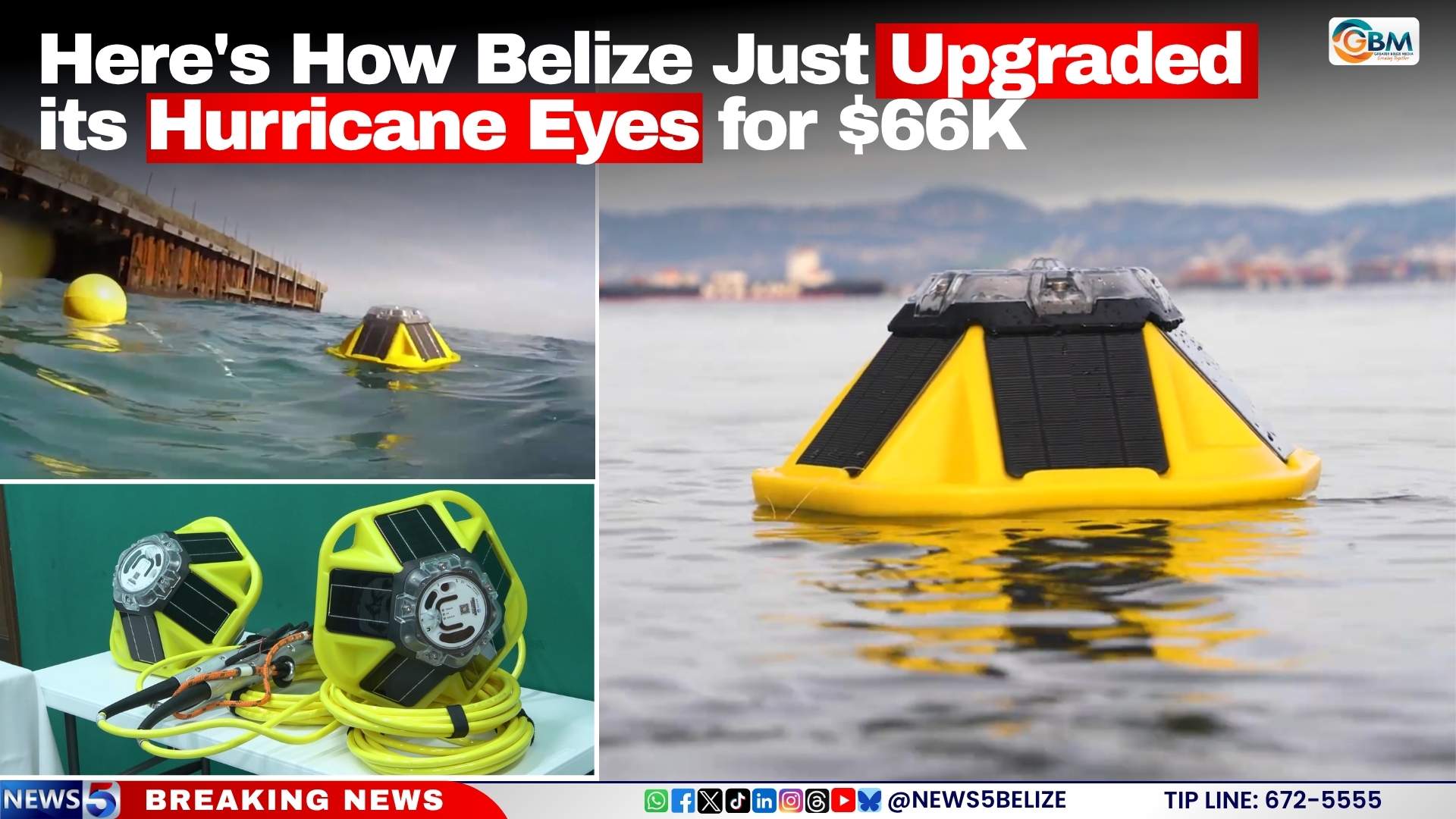
As a low-lying Caribbean nation highly vulnerable to extreme Atlantic storm systems, Belize has taken a critical step forward in improving its hurricane and ocean condition monitoring with the addition of three new offshore marine monitoring stations. The new infrastructure, which carries a total value of $66,000, was donated through regional climate cooperation and will deliver continuous, real-time data from the country’s offshore waters to forecasters.
Ronald Gordon, Belize’s Chief Meteorologist, explained that the new stations fill a long-standing critical gap in the country’s weather monitoring network. For years, Belize has operated an extensive network of atmospheric weather stations across its mainland and a small number of existing installations on its offshore cayes. However, these older stations are only equipped to track atmospheric conditions such as barometric pressure, air temperature, and wind speed, with no capacity to measure key ocean variables that drive hurricane development and intensity.
Authorities have selected three ecologically and strategically important locations for the new installations: Glover’s Reef, English Caye, and Southern Turneffe Atoll. Each monitoring site is outfitted with a fully integrated package of solar-powered, satellite-connected weather buoys, moorings, anchors, and high-resolution sensors. This equipment is designed to capture a wide range of critical data, including wave height and activity, sea surface temperatures, near-surface wind patterns, and atmospheric pressure over open water.
Courtney Forde, mission lead for the Caribbean Institute for Meteorology and Hydrology (CIMH), which provided the equipment, noted that the new buoy network represents an important incremental advance for regional climate resilience. “This buoy project is just another step… into monitoring the marine space and maybe improving models, improving hurricane prediction and so on,” Forde said. The $66,000 in funding for the infrastructure came from the European Union, disbursed through the Caribbean Development Bank as part of broader regional climate adaptation support.
For a small coastal nation where hurricanes pose annual threats to lives, infrastructure, and coastal ecosystems, the upgrade is expected to deliver meaningful improvements in early warning capacity and storm forecasting accuracy, helping communities prepare more effectively for extreme weather events.