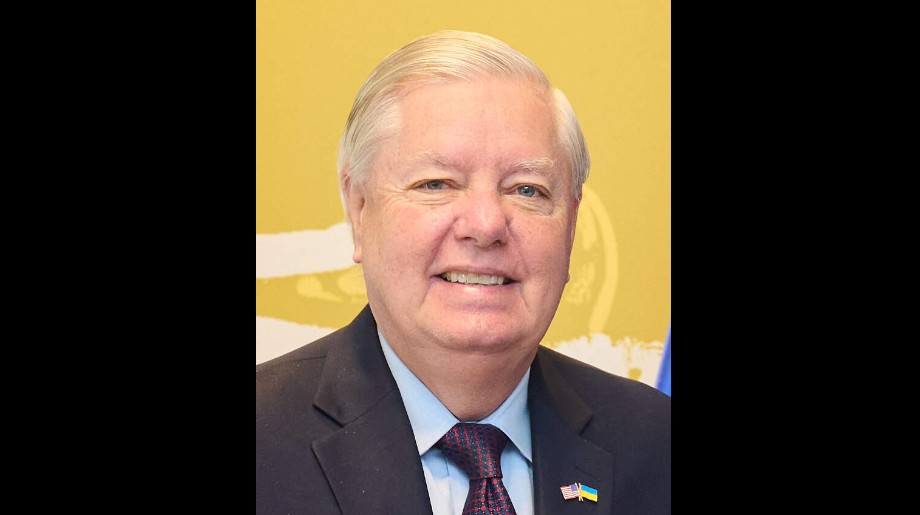
Veteran Republican Senator Lindsey Graham of South Carolina, one of the most high-profile figures shaping United States foreign policy and a late-in-career close ally of President Donald Trump, has passed away at age 71 after what his Senate office termed a “brief and sudden illness.”
Graham’s death was announced shortly after he died at his Washington, D.C., home on Saturday evening. The senior lawmaker had only returned one day prior from an official trip to Kyiv, Ukraine, where he held talks with Ukrainian President Volodymyr Zelensky. While Graham’s office has not released an official cause of death, multiple major US media outlets have confirmed that first responders were dispatched to his residence following reports of a cardiac arrest incident.
President Trump was among the first to issue a public tribute to Graham, remembering the long-serving senator as a “true American Patriot” whose absence will be deeply felt across the country. Speaking exclusively to NBC News, Trump revealed he had spoken with Graham just hours before the senator’s passing. “He sounded great, but a little tired,” Trump said, adding that “[Graham] was a tough cookie in many ways and a good person.”
First elected to the US House of Representatives before winning a Senate seat in 2002, Graham built a decades-long reputation as one of Washington’s most unapologetic foreign policy hawks. Over his career, he consistently pushed for robust US military intervention across the globe: he backed the 2003 invasion of Iraq in the wake of the September 11 attacks, publicly opposed the 2021 withdrawal of US troops from Afghanistan, and emerged as one of the most vocal congressional supporters of sweeping military and financial aid packages for Ukraine amid Russia’s ongoing invasion. Just one month before his death, Graham made headlines for a televised interview warning that the US would “obliterate” Iran if it attempted to seize control of the strategic Strait of Hormuz, a statement that aligned with his lifelong hard-line stance on national security issues.
Graham’s passing came as a sudden shock to political circles in Washington. The senator had shown no visible signs of poor health ahead of his Ukraine trip, and was scheduled to appear as a lead guest on NBC’s flagship Sunday morning public affairs program *Meet the Press* the day after he died.
A defining throughline of Graham’s later political career was his dramatically shifting relationship with Donald Trump. During the 2016 Republican presidential primary, Graham stood as one of Trump’s most fierce critics, famously labeling the then-candidate a “race-baiting, xenophobic, religious bigot” and warning Republican colleagues that nominating Trump would guarantee a general election defeat. In the aftermath of the January 6, 2021 attack on the US Capitol, Graham publicly split with Trump, telling the Senate: “Trump and I, we’ve had a hell of a journey. I hate it to end this way. All I can say is count me out. Enough is enough.”
Yet the two political figures gradually repaired their rift. Graham voted to acquit Trump during his second impeachment trial, evolved into one of Trump’s most reliable allies in the Senate, and threw his full weight behind Trump’s successful 2024 presidential campaign. In a 2023 interview with the BBC, Graham acknowledged Trump’s well-documented flaws but defended his presidency, pointing to his record on border security, conservative judicial appointments, and the 2020 drone strike that killed top Iranian military commander Qasem Soleimani.
Tributes have poured in from world leaders in the days following Graham’s death. Israeli Prime Minister Benjamin Netanyahu called Graham one of the State of Israel’s greatest friends in US politics, noting that the senator “understood that the security of Israel and America are inseparable.” Zelensky also honored Graham’s unwavering support for Ukraine, releasing a statement thanking him for his consistent backing since the start of Russia’s full-scale invasion.
Born in the small town of Central, South Carolina, Graham faced devastating personal hardship at a young age: he lost both of his parents while still attending university, and stepped forward to raise his younger sister, whom he later legally adopted. After earning a law degree from the University of South Carolina, Graham launched his professional career as a military lawyer in the US Air Force, later serving in the Air National Guard and Air Force Reserve before retiring with the rank of colonel.
Graham never married and had no children. Earlier this year, he secured the Republican nomination to run for a fifth Senate term in the 2026 midterm elections.
His death creates an unexpected vacancy in the US Senate at a politically pivotal moment for the country. Per South Carolina state law, Republican Governor Henry McMaster will appoint an interim senator to fill the seat through the end of Graham’s current term, with a permanent successor set to be elected by voters in November’s midterms. Prior to Graham’s passing, Republicans held a narrow 53-47 majority in the Senate, meaning the upcoming special election to fill his seat will carry outsize importance in the ongoing battle for partisan control of the upper chamber.