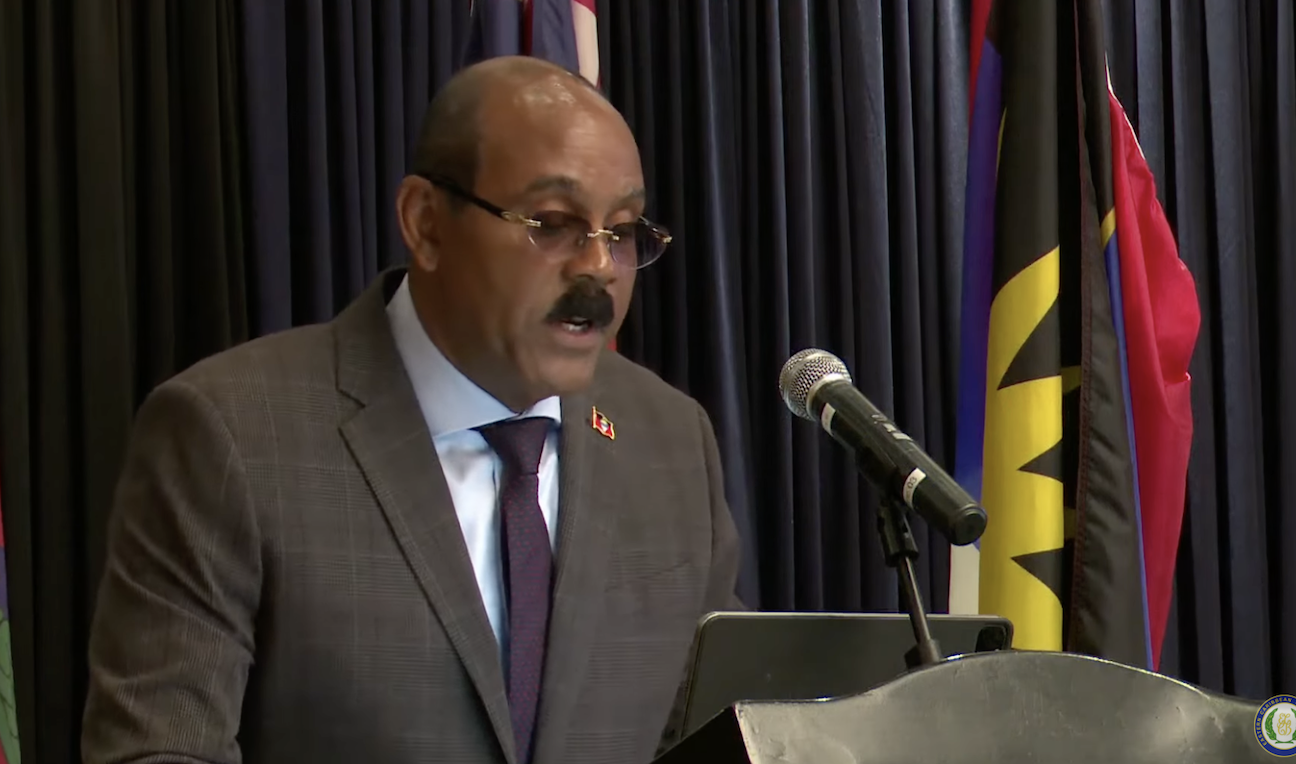
Leaders from the Organisation of Eastern Caribbean States (OECS) have rallied behind Antigua and Barbuda Prime Minister Gaston Browne to form a coordinated regional pushback against the European Union’s demand to eliminate regional Citizenship by Investment (CIP) programmes by June 2028. This unified stance emerged just 24 hours after Browne first called for collective action during the Eastern Caribbean Central Bank (ECCB) Monetary Council Meeting hosted in Dominica, where regional heads of government formally adopted a shared position and committed to a joint diplomatic strategy toward the EU.
In his opening address to the Monetary Council, Browne emphasized that CIP initiatives are irreplaceable cornerstones of economic growth and long-term fiscal stability for multiple small island nations across the Eastern Caribbean. He reminded attendees that regional governments have already implemented sweeping, rigorous reforms to reinforce the integrity, transparency and global standing of these programmes, most notably the creation of the Eastern Caribbean Citizenship by Investment Regulatory Authority. This body has established a harmonized regional regulatory framework that strengthens oversight and aligns the programmes with international standards.
Despite these meaningful reforms, Browne highlighted that the European Commission’s updated Visa Suspension Mechanism now singles out the existence of any CIP programme as a potential justification for revoking visa-free travel access to the EU for member states of the OECS. He also confirmed that the European Commission has formally delivered a demand that OECS nations with active CIP programmes phase them out completely by June 1, 2028, paired with a proposed 24-month transition period and a set of incremental interim requirements.
Browne stressed that the EU’s proposal fails to account for the harsh economic realities that shape small island developing states (SIDS). “Our Citizenship by Investment Programmes are critical pillars of our non-tax revenue base. They cannot simply be abandoned without viable, credible and sustainable replacement sources of revenue,” he said. He also warned that an abrupt shutdown of the programmes would trigger severe, far-reaching consequences for public budgets, major infrastructure projects, climate adaptation efforts, healthcare access, affordable housing, education systems and other core public services across every OECS member state.
In response to Browne’s call for regional solidarity, the assembled heads of government gathered in Roseau, Dominica to formalize their unified response. The leaders reaffirmed that CIP programmes have grown into a foundational source of development financing across the region, funding everything from climate resilience projects and post-disaster reconstruction to infrastructure expansion, public healthcare, affordable housing, education systems and overall fiscal stability.
The OECS leaders also agreed that any future adjustments to CIP rules must fully center the unique development vulnerabilities of small island developing states. Any changes, they stated, must be paired with concrete measures to protect existing economic development gains, preserve regional economic stability, and establish fully functional alternative sustainable financing mechanisms before CIP programmes can be altered or phased out.
A key outcome of the meeting was the formal endorsement of Browne’s plan for coordinated diplomatic action. Leaders agreed to launch a joint diplomatic engagement campaign with the European Union, which will include a high-level official mission to Brussels to meet directly with senior EU leadership and institutional representatives. They have also instructed their foreign affairs ministers, CIP programme leads, ambassadors and senior civil servants to maintain close coordination and present a consistent, unified regional position in all upcoming talks with European officials.
Following the meeting, Browne praised the outcome, noting that it sends a clear message of the region’s collective resolve to defend its legitimate economic interests while preserving constructive ties with longstanding European partners. “Our Governments will continue to engage the European Commission in a principled and constructive manner consistent with the spirit of our longstanding partnership,” he said.
Browne reaffirmed Antigua and Barbuda’s unwavering commitment to upholding the highest global standards for due diligence, transparency and regulatory oversight for its CIP programme, while also defending the fundamental sovereign right of independent nations to set the economic policies that best serve their development needs. He expressed confidence that through ongoing dialogue, mutual respect and collaborative partnership, the Eastern Caribbean and the European Union can reach a balanced resolution that addresses the EU’s legitimate policy concerns while also honoring the unique vulnerabilities and development priorities of small island developing states. Closing out the meeting, Browne celebrated the powerful demonstration of regional solidarity from his fellow OECS leaders, underscoring that a unified Caribbean voice will be critical in the coming months as negotiations with the EU progress.