In a press briefing held in Santo Domingo, Dominican Republic President Luis Abinader has outlined his nation’s clear position on the ongoing multinational security effort to stabilize crisis-stricken Haiti, confirming that while the country remains a committed partner to the mission, it will not deploy forces to take part in direct offensive operations against Haitian armed gangs.
Abinader elaborated that Dominican Republic’s contribution to the mission centers on three core areas: logistical backing, humanitarian relief, and cross-party coordination. Specifically, the country is providing critical medical humanitarian support to those affected by the violence in Haiti, while maintaining constant open communication channels with leadership of the international security force. The president also confirmed that Dominican security agencies regularly exchange intelligence with the mission to help prepare for and mitigate potential spillover security risks that could cross into Dominican territory.
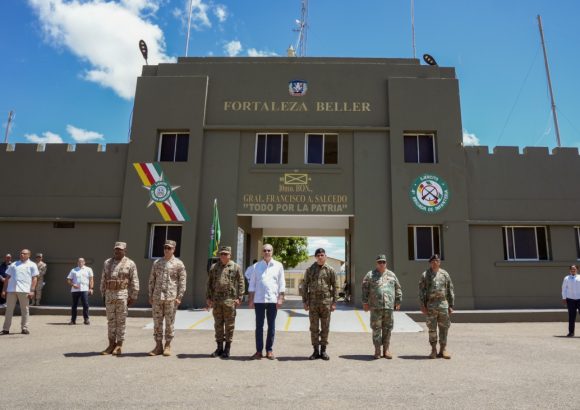
Beyond its support for the international mission, Abinader highlighted sweeping upgrades to Dominican security infrastructure and capacity along the shared 392-kilometer border with Haiti. A key centerpiece of these upgrades, the new smart perimeter fence, has already delivered measurable results, cutting down on cross-border criminal activity including cargo theft and illicit smuggling, the president noted. Abinader added that the Dominican Armed Forces have undergone comprehensive modernization in recent years, receiving new armored vehicles, upgraded infantry weaponry, and a substantial pay increase for personnel. Entry-level military salaries have jumped from the previous rate of 9,000 Dominican pesos to roughly 27,000 Dominican pesos, while troops deployed to border outposts receive additional specialized combat and hardship pay to recognize their increased responsibilities.
Turning to bilateral relations with Haiti, Abinader acknowledged that direct, regular communication with Port-au-Prince remains severely constrained due to Haiti’s months-long deep institutional crisis, which has left much of the capital city under the control of heavily armed gangs that have violently pushed out official government forces. When coordination with Haitian authorities is required for urgent cross-border matters, all interactions are currently handled through the Dominican Ministry of Foreign Affairs, he added.
In closing, the president reaffirmed the Dominican government’s dual long-term commitments: first, safeguarding Dominican national sovereignty and territorial integrity through robust border security, and second, standing with the international community to support efforts to bring an end to gang violence and restore lasting democratic stability to neighboring Haiti.