As an internal audit of pre-election state land allocations wraps up, a Caribbean government minister is calling on all individuals who received plots ahead of the 2025 general election to contact the national housing authority and formalize their land payments, clarifying that the review process is not designed to seize land from eligible, low-income claimants.
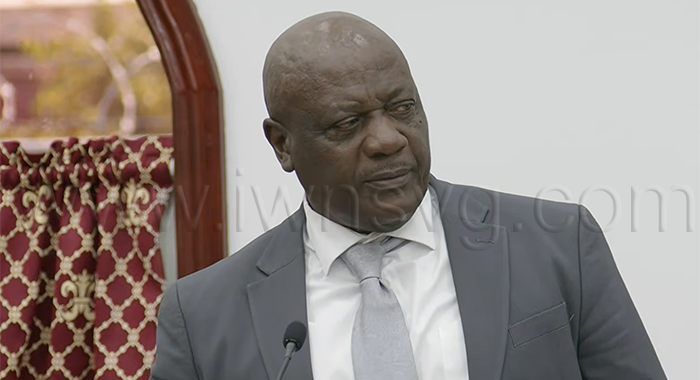
Andrew John, who serves as the region’s Minister of Land Management as well as Minister of Housing, Urban Development and Informal Settlement Upgrading, told NBC Radio that the review was launched after his New Democratic Party administration won the election to scrutinize roughly 250 parcels of land distributed by the previous Unity Labour Party government just one to two months before polls opened. John emphasized that the audit is focused on rooting out irregularities to ensure fair access to state land, not taking property from people who were rightfully allocated land.
During the initial review phase, investigators uncovered multiple significant inconsistencies in the last-minute allocation round. The most prominent issue was multiple allocations to a single individual, with some people holding as many as four plots – a direct violation of the government’s longstanding policy that allocates one housing plot per eligible person, prioritizing individuals experiencing housing insecurity. Additional problems include repeat beneficiaries who already hold government land, have not completed payments for their original plots, and still secured new allocations in the pre-election round. The review also found that many allocations went to individuals who already had stable adequate housing, while low-income households with critical housing needs remained on waitlists without land.
John drew a clear line between legitimate recipients and those who benefited from irregular allocations, rejecting partisan claims that the review is an effort to take land from low-income and vulnerable communities. “This is not a witch hunt,” he stated. The core goal of the process, he explained, is to correct the excesses of the rushed pre-election distribution and put state land into the hands of people who actually need it, ending scenarios where a small number of people accumulate multiple plots while other eligible applicants – including the children of current landowners – cannot secure a single parcel for their own housing.
With the review nearly complete, the government is moving into an individual case-by-case assessment phase, and John urged all pre-election allocation recipients to engage directly with the Housing and Land Development Corporation (HLDC) instead of relying on unsubstantiated rumors or partisan political commentary. Recipients are invited to meet one-on-one with HLDC officials to confirm their eligibility, and those who meet the requirements are encouraged to begin or resume payments on their allocated plots. For cases confirmed to involve multiple or irregular allocations, the government will make targeted adjustments or reallocations to restore equity.
Addressing early threats of legal action from lawyers representing some allocation recipients, John noted that every land allocation is formalized by a written contract that clearly outlines payment terms. He added that successive governments have long applied lenient payment policies to support low-income and unemployed beneficiaries, routinely extending payment timelines far beyond the standard 12-month full payment requirement outlined in most contracts, which reflects the government’s commitment to balancing compassion with enforcement.
John framed the current regularization process as a balanced reset that addresses the rushed, irregular distribution carried out by the previous administration. The broader objective of the effort is to open up fairer access to state land across all income groups and political affiliations, supporting the government’s expanding national housing program that positions the HLDC as a key player in delivering both public and private housing across the country.