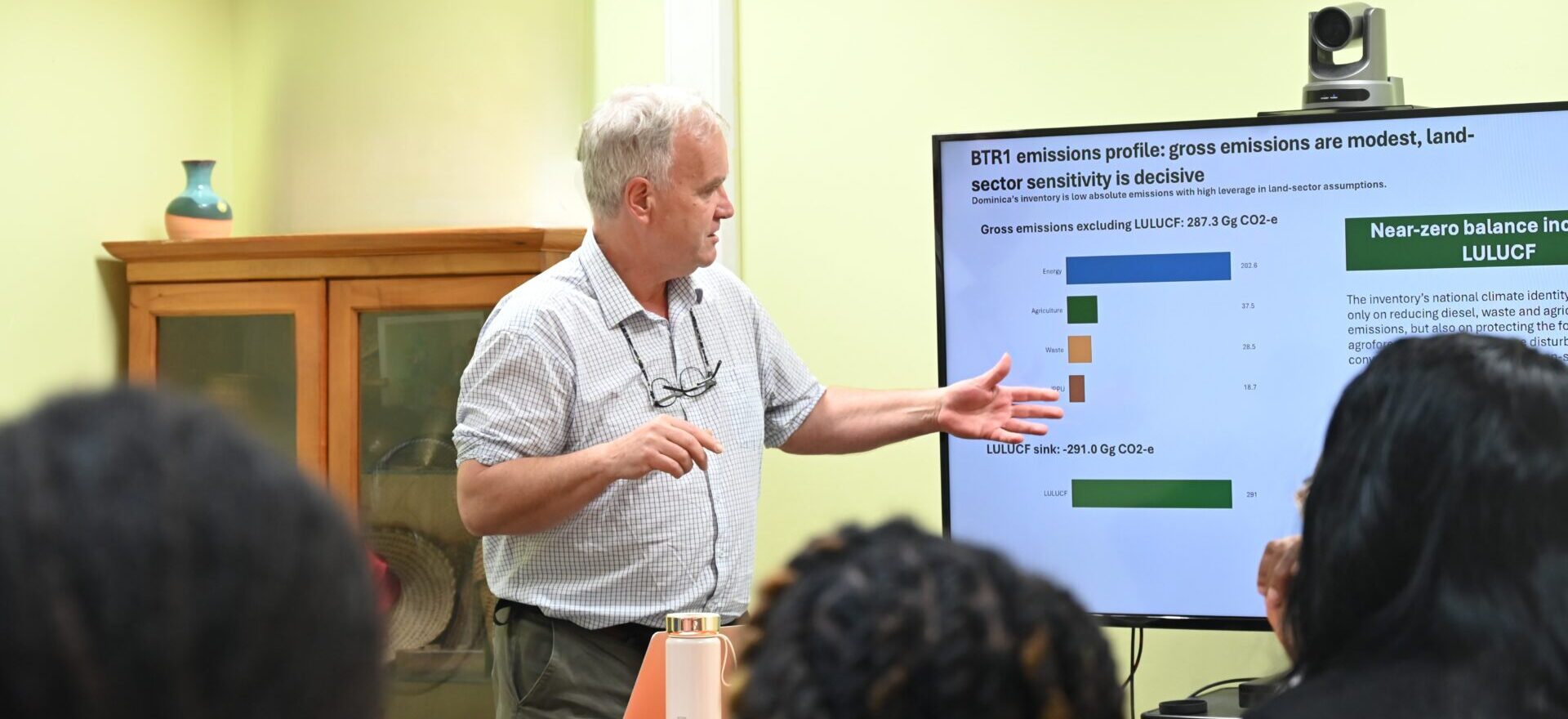
A high-level technical mission focused on advancing climate-resilient, low-emission farming has wrapped up successfully in Dominica, bringing five days of collaborative work between New Zealand’s Climate Smart Agriculture Initiative and local agricultural stakeholders to a close. Running from June 22 to 26, 2026, the mission was led by Programme Manager Lee Nelson and senior Project Consultant Dr. Julian Hill, operating under the formal project banner *Advancing Climate-Smart Agricultural Practices in Dominica to Increase Production and Mitigate Greenhouse Gas Emissions*.
This partnership represents a coordinated global effort to cut agricultural greenhouse gas output, and is being executed locally by the Inter-American Institute for Cooperation on Agriculture (IICA) on behalf of Dominica’s Ministry of Agriculture, Fisheries, Blue and Green Economy. Funding comes from the government of New Zealand through its regional Climate Smart Agriculture Initiative (NZCSA-LAC), which contributes to New Zealand’s commitments to the Global Research Alliance on Agricultural Greenhouse Gases (GRA), with administrative oversight handled by the Ag Emissions Centre.
Per an official statement released by IICA, the visiting delegation held high-level strategic meetings with two key stakeholders: Ryan Anselm, Permanent Secretary of Dominica’s Ministry of Agriculture, Fisheries, Blue and Green Economy, and Her Excellency Linda Te Puni, New Zealand’s Ambassador to the Organization of Eastern Caribbean States (OECS). During these talks, participants reviewed finalized project findings, assessed completed deliverables, and mapped out a clear roadmap for upcoming project activities.
Permanent Secretary Anselm expressed full backing for all evidence-based recommendations laid out in the project’s final report, and reaffirmed the Dominican government’s long-term commitment to embedding climate-smart agriculture into core national policy frameworks. This includes the country’s landmark Climate Resilience and Recovery Plan and its overarching National Resilience Development Strategy.
Beyond high-level policy discussions, the mission centered heavily on capacity building for local agricultural actors, with three targeted national workshops delivered over the course of the week. The first of these, a Train-the-Trainer session focused on Land Use and Watershed Management held June 23, covered critical practical topics including soil erosion control, protection of riparian buffer zones, slope stabilization, integration of agroforestry systems, and spatial planning for expanding livestock production without harming local forest ecosystems. Attendees included representatives from Dominica’s Physical Planning department, regional agricultural extension team leaders, and faculty and students from Dominica State College.
The next day, June 24, was dedicated to direct engagement with working farmers from across Dominica’s diverse agricultural regions. This interactive session opened space for dialogue on accessible, on-farm sustainable practices such as organic mulching, contour planting to reduce runoff, active soil cover management, optimized timing for fertilizer application, and evidence-based improvements to livestock health management.
A second Train-the-Trainer workshop, focused on sustainable Agricultural Production Systems, followed on June 25. This session delved into advanced practices including split nitrogen fertilizer application to reduce runoff and emissions, on-farm manure composting to cut waste and improve soil health, improved forage production systems for livestock, protected cropping to boost yield and reduce climate risk, precision irrigation monitoring, and farm-level record-keeping protocols for accurate measurement, reporting, and verification of emissions and productivity gains.
As part of their field visit, the delegation also toured the state-of-the-art Dominica-China Agricultural Science Complex located at the North Agriculture Station in Portsmouth. This cutting-edge facility houses a high-capacity tissue culture laboratory that can produce and hold up to 500,000 disease-free plant seedlings, a dedicated seed storage and national seed bank, a climate-controlled smart greenhouse, controlled plant propagation zones, hydroponic demonstration systems, and active research test plots. As Dominica’s largest centralized seedling production hub, it also functions as a key technology exchange hub and demonstration facility, offering hands-on farmer training in modern seedling propagation and controlled greenhouse cultivation techniques.
To expand public outreach for the initiative, mission leaders Lee Nelson, Dr. Julian Hill, and Dr. Al-Mario Casimir, the Dominican Ministry of Agriculture’s project focal point, appeared on a national radio program during the visit. The segment allowed the team to share key project outcomes and explain the long-term benefits of climate-smart agriculture to the general public across the country.
This five-day mission marks the official completion of the project’s core technical assessment and planning phase. Looking ahead, IICA confirmed that the next phase of the project will prioritize scaling up local capacity through ongoing in-country train-the-trainer programs. These programs will equip agricultural extension officers and local farmer leaders with the skills and resources needed to roll out climate-smart farming practices across every agricultural region of Dominica, laying the groundwork for long-term agricultural resilience and lower national greenhouse gas emissions from the sector.